Science
Artemis II Astronauts Re-Enter Earth’s Gravitational Pull
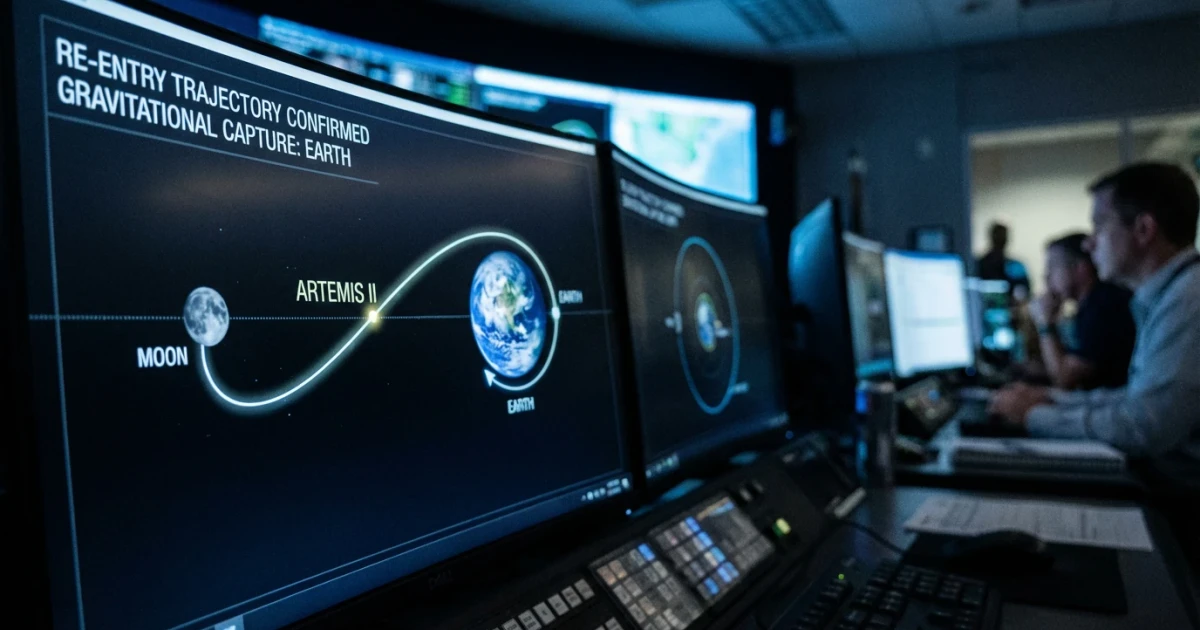
NASA’s Artemis II crew has successfully completed their lunar flyby and is now back under the influence of Earth’s gravity after leaving the Moon’s sphere of influence, marking a critical milestone as they prepare for their journey home. The transition from lunar to terrestrial gravity is a key moment in the Artemis II mission, which is the first crewed mission to orbit the Moon in over five decades.
Transition from Lunar to Earth Gravity
According to reports from Fox News, the Artemis II astronauts exited the Moon’s sphere of influence—the region where the Moon’s gravity dominates—after completing their historic lunar flyby. Once outside this boundary, the crew is now primarily affected by Earth’s gravity, accelerating their return trajectory.
The sphere of influence is a technical term used by NASA to describe the area around a celestial body where its gravity has the greatest effect on nearby objects. For the Moon, this sphere extends approximately 66,100 kilometers from its center. Crossing this threshold means the spacecraft’s movement is now dictated by Earth’s gravitational pull, rather than the Moon’s.
Key Milestones of the Artemis II Mission
- Lunar flyby: The crew completed a close approach to the Moon, reaching a maximum distance before looping around in preparation for their return.
- Sphere of influence crossing: As tracked by NASA’s real-time telemetry, the Artemis II spacecraft exited the Moon’s sphere of influence, signifying the start of their journey homeward.
- Re-entry phase preparation: Now under Earth’s gravity, the crew will conduct final checks and trajectory adjustments before re-entering Earth’s atmosphere.
Mission Objectives and Significance
The Artemis II mission profile includes a comprehensive test of NASA’s Orion spacecraft systems and life support in deep space, a crucial step toward future lunar landings. The mission aims to pave the way for Artemis III, which is planned to land astronauts on the lunar surface for the first time since Apollo 17 in 1972.
The safe transition from the Moon’s gravitational sphere back to Earth’s is a demonstration of Orion’s navigation and propulsion capabilities. This milestone also allows mission controllers to monitor the health and performance of the crew and spacecraft as they approach the critical re-entry procedures.
Tracking the Artemis II Return
NASA provides live data on the spacecraft’s position, velocity, and key mission events for the public and experts. As Artemis II continues its journey, the crew’s status is closely tracked by mission control, ensuring all systems are operating within expectations.
Looking Ahead
With the Artemis II astronauts now governed by Earth’s gravity, the mission enters its final and most critical phase: the return to Earth. Over the coming days, the crew will perform a series of maneuvers to align their trajectory for a safe splashdown. The mission’s success will serve as a cornerstone for future lunar and deep space exploration, reinforcing NASA’s commitment to returning humans to the Moon and eventually reaching Mars.
For readers interested in the technical details and official mission statistics, NASA’s Artemis II Reference Guide provides an in-depth look at the mission’s planning and execution.