Science
Artemis II Astronauts Report Unusual Smell from Orion Toilet
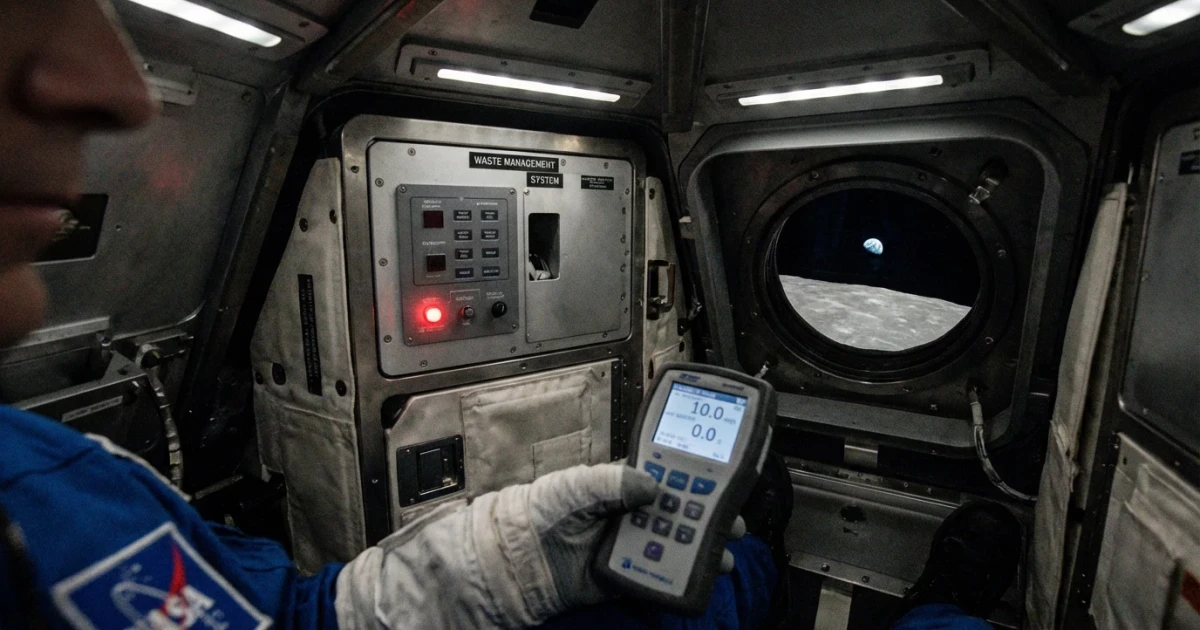
Artemis II, NASA’s first crewed mission to lunar orbit since Apollo, encountered an unexpected challenge as astronauts reported a 'burning smell' emanating from the Orion spacecraft’s toilet. While the incident raised concerns mid-mission, NASA confirmed that all systems remain safe and the crew is unaffected, highlighting both the complexities and advancements in space waste management.
Incident Details from the Orion Spacecraft
According to From Space, the astronauts detected the unusual odor roughly halfway to the moon. The smell, described as 'burning,' originated from the Orion crew survival system’s waste management unit, a crucial subsystem designed to support long-duration missions. NASA engineers monitored the situation from Mission Control, quickly assessing that the toilet issue posed no hazard to the crew or mission.
Safety and System Status
- No health risks have been reported for the Artemis II crew, and all environmental parameters in the Orion cabin remain normal.
- NASA’s official Artemis II mission overview confirms that the spacecraft’s life support systems, including air filtration and waste management, are functioning as intended.
- The burning smell was traced to the toilet’s internal components, with no evidence of fire or malfunction affecting other systems.
Space Toilets: Evolution and Challenges
The Orion toilet, formally part of the Orion spacecraft systems, represents NASA’s latest efforts in space waste management. According to a NASA technical review, toilets aboard spacecraft have evolved considerably since the early days of spaceflight, when waste collection was rudimentary and often problematic.
- Previous missions, including Apollo, relied on containment bags — a source of discomfort and, on occasion, system failure.
- Modern toilets must operate in microgravity, ensuring hygiene and containment while minimizing odors and technical faults.
- Even with advanced engineering, occasional anomalies—like the one on Artemis II—remain possible, especially on long-duration missions.
Medical and Engineering Considerations
Spacecraft waste management is not just a matter of comfort but of medical and engineering importance. Reliable systems protect crew health by preventing contamination and controlling the cabin environment. NASA’s ongoing research addresses failure modes and introduces redundancies to ensure safety.
In the case of Artemis II, the prompt detection and assessment of the 'burning smell' demonstrate robust monitoring protocols. The crew was able to continue their routine, and mission goals remain on track.
Looking Ahead: Artemis II Mission Continues
The Artemis II team remains focused on its objectives as the mission progresses toward lunar orbit. This minor incident underscores the realities of human space exploration, where even the most advanced technologies are tested in the harsh environment of space. With the waste management system stable, the crew’s attention returns to mission science and navigation.
For readers interested in technical details, the Artemis II mission timeline provides ongoing updates as the spacecraft approaches its historic lunar flyby.
As Artemis II continues, NASA’s response to the toilet issue reflects decades of progress in keeping astronauts healthy and comfortable far from Earth—reminding us that, in space, even the smallest system matters for success.