Science
Artemis II Astronauts Tackle Toilet Trouble En Route to Moon
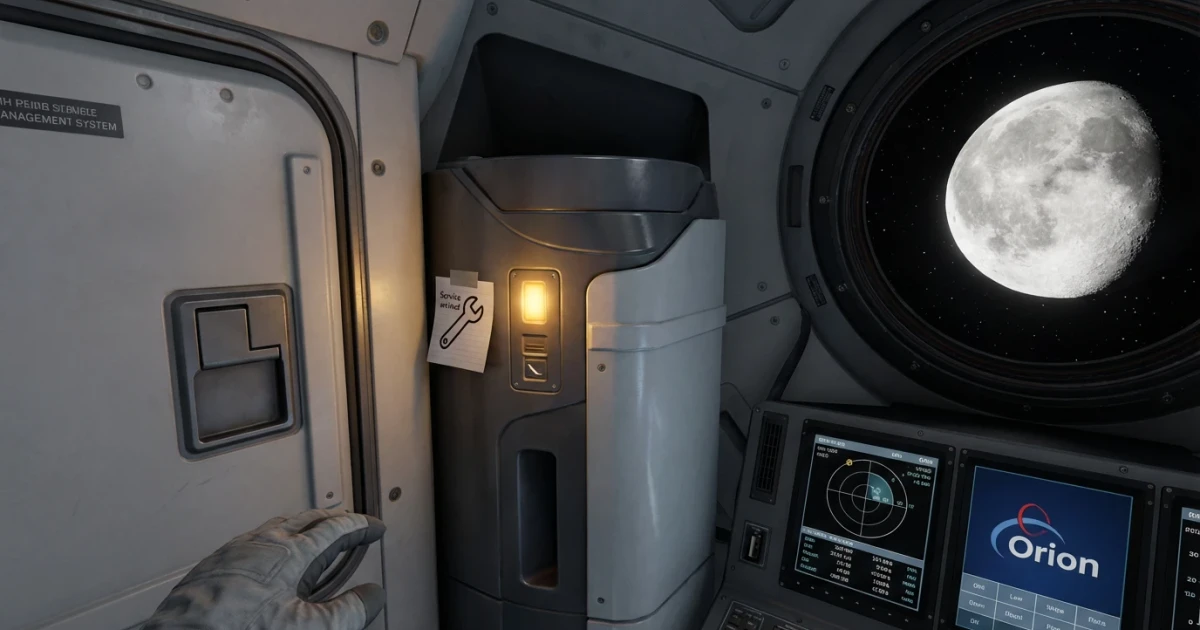
NASA's Artemis II mission continues its journey toward the Moon, and with major systems performing as expected, the crew's attention—and the public's—has turned to an unusual challenge: managing frozen urine aboard the Orion spacecraft.
Mission Progress: Smooth Sailing So Far
Ars Technica reports that Artemis II, the first crewed mission in NASA's Artemis program, has reached the halfway mark to lunar orbit with all major systems functioning reliably. The mission is a critical step in NASA's long-term plan to return humans to the Moon and eventually land astronauts on its surface. The crew's journey has so far been free of significant technical malfunctions, allowing focus to shift to the day-to-day realities of spaceflight.
Toilet Troubles in Microgravity
Midway through the voyage, astronauts encountered a minor but challenging issue with the Orion spacecraft's waste management system. Ars Technica highlights that the system, designed to collect and store human waste in microgravity, began accumulating frozen urine. While not a threat to the mission, the buildup required the crew to troubleshoot and ensure waste did not interfere with other life support functions.
The Artemis II Reference Guide confirms that Orion's Environmental Control and Life Support System (ECLSS) is engineered for such contingencies, with detailed protocols for managing waste and maintaining a safe cabin environment.
How Orion Handles Waste in Space
Unlike past missions, where waste was sometimes jettisoned or stored in less advanced containers, Orion's system is built for longer journeys and larger crews. According to NASA technical documentation, the system:
- Collects urine and fecal matter in microgravity using airflow and mechanical separation
- Stores waste in sealed containers to prevent contamination
- Features safeguards to manage unexpected freezing or equipment malfunctions
This technology, outlined in the ECLSS Overview, is crucial for astronaut health on longer missions, such as future Mars expeditions.
Minor Issues Reflect Mission Success
Ars Technica notes that the focus on a relatively mundane problem—frozen urine—underscores just how well Artemis II is performing. In contrast to previous missions where more serious technical or life support issues dominated headlines, the current crew's main challenge has been a manageable inconvenience rather than a mission-threatening fault. The incident demonstrates both the robustness of Orion's design and the crew's ability to adapt to the realities of deep space living.
Looking Ahead: Lessons for Lunar and Mars Missions
Though the frozen urine issue was minor, it provides valuable data for NASA engineers and mission planners. Improvements in waste management and life support are essential for the success of Artemis II and future lunar and interplanetary missions. Every challenge faced and overcome during Artemis II helps refine procedures and hardware for the next generation of space explorers.
As Artemis II continues its path to lunar orbit, the mission stands as a testament to NASA's preparation and the adaptability of its astronauts—proving that, sometimes, the biggest stories in spaceflight are the smallest details.