Science
Artemis II Crew Delivers Stunning Images of Moon’s Far Side
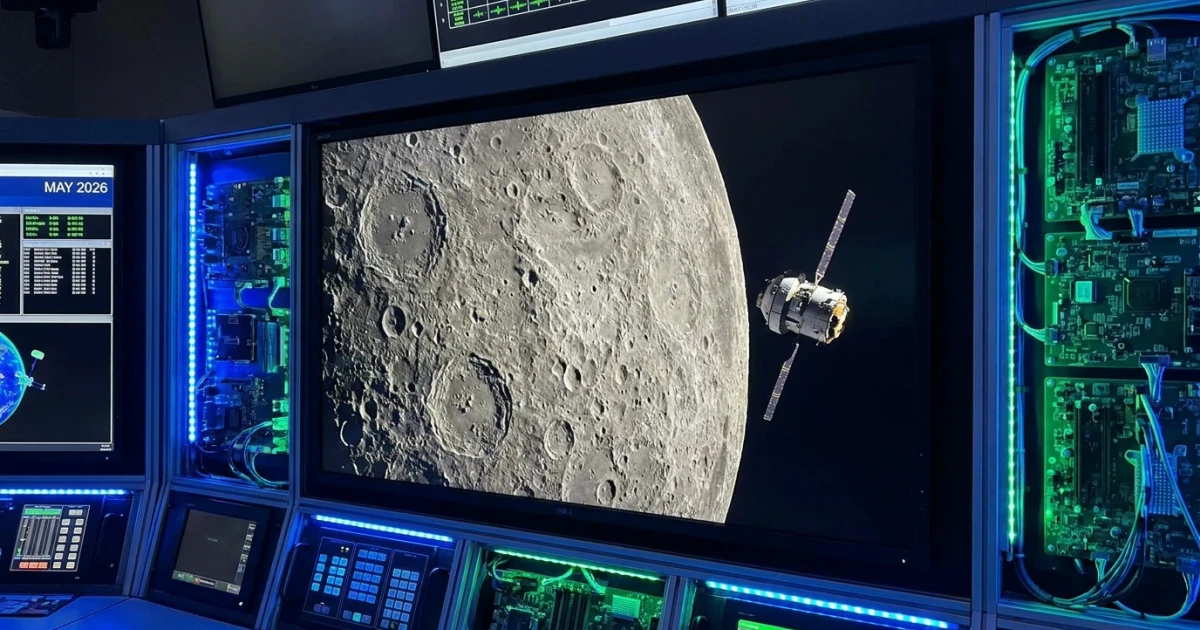
NASA’s Artemis II mission has unveiled a suite of high-resolution images of the Moon’s far side, marking a new milestone in lunar exploration. The mission, led by Artemis II’s commander and supported by a veteran astrophotographer, captured these never-before-seen shots during a crucial phase of their journey, offering scientists and the public extraordinary views of regions previously hidden from Earth’s view.
The Team Behind the Lens
The collaborative effort between the Artemis II commander and a seasoned astrophotographer was central to the mission’s imaging success. According to Space, the crew utilized advanced camera systems and orbital maneuvers to access vantage points that had never been documented in such detail. The commander’s precise navigation complemented the photographer’s expertise, ensuring optimal lighting and angles for each shot.
Unveiling the Lunar Far Side
The far side of the Moon has long been a subject of scientific curiosity due to its challenging accessibility. Artemis II’s new images map previously uncharted terrain, revealing intricate geological features and surface anomalies. NASA announced the release of thousands of photographs, which are now available through NASA’s Moon Images and Maps Dataset. These datasets include detailed metadata and spatial coverage, providing researchers with valuable raw material for further study.
- The images showcase crater formations, mountain ranges, and lava plains on the lunar far side.
- Many of the shots are the highest resolution ever recorded from lunar orbit, according to NASA’s official records.
- The mission has contributed to the USGS Lunar Farside Mosaic Map, enhancing global geospatial data for lunar science.
Scientific and Public Impact
The release of these images is expected to accelerate lunar research and exploration efforts. Scientists hope to use the data to refine landing site selection for future missions and to investigate the Moon’s geological history. NASA’s Artemis Science Objectives emphasize the significance of detailed imaging for understanding lunar surface processes and supporting ongoing exploration planning.
Public engagement has also soared, with TIME for Kids and other educational outlets highlighting the mission’s achievements. The new visuals are sparking curiosity among students and amateur astronomers alike, demonstrating the power of teamwork and innovation in space exploration.
Looking Forward
As Artemis II continues its journey, NASA plans to release additional datasets, including lunar far side observations and spectral analyses. The partnership between the commander and astrophotographer sets a precedent for future missions, emphasizing the value of multidisciplinary collaboration. With new technologies and human expertise converging, the boundaries of lunar exploration are expanding rapidly.
For those eager to explore the full range of Artemis II’s achievements, NASA’s Artemis II Mission Overview provides official details on objectives, crew, and technical milestones.
The Artemis II mission’s imagery release represents a significant leap in our understanding of the Moon’s far side, offering both scientists and the public a new perspective on our nearest celestial neighbor.