Science
Artemis II Crew Faces Critical Reentry Test
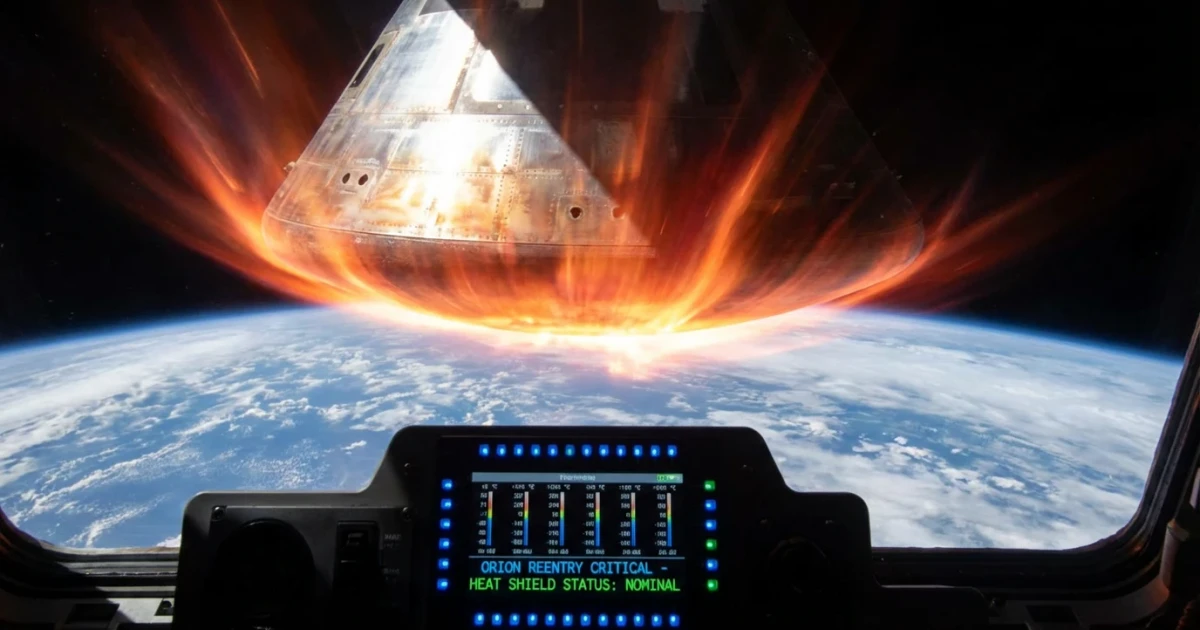
NASA’s Artemis II mission is entering a pivotal phase as its crew prepares for the perilous journey back to Earth. While the mission has showcased American engineering and international cooperation, experts emphasize that reentry remains the most dangerous stage, with astronauts’ lives depending on the performance of the Orion spacecraft’s heat shield.
The Stakes of Atmospheric Reentry
The Artemis II mission, NASA’s first crewed flight around the Moon in over five decades, represents a major milestone in the Artemis program. As the crew prepares to return, the spacecraft will slam into Earth’s atmosphere at speeds nearing 25,000 mph. The resulting friction will generate temperatures exceeding 5,000 degrees Fahrenheit, putting immense pressure on the Orion capsule’s primary line of defense: its heat shield.
- The Orion heat shield is the largest ever built for a human-rated spacecraft.
- Its ablative material, Avcoat, is designed to gradually burn away, carrying heat with it and protecting the crew module from destruction.
- During reentry, the shield must withstand not only extreme temperatures, but also the intense mechanical forces of deceleration.
Engineering a Safe Return
NASA engineers have conducted extensive testing on the Artemis II heat shield, building on data from the uncrewed Artemis I flight. According to NASA technical fact sheets, the heat shield is 16.5 feet in diameter and uses an upgraded form of Avcoat compared to Apollo’s era, tailored for deep space missions.
- NASA’s technical analysis shows the shield can handle both lunar and low-Earth orbit return profiles.
- The shield is assembled in segments, with each piece bonded and tested for integrity before installation.
- Testing included Earth-based arc-jet facilities and data correlation from Artemis I’s successful reentry in 2022.
Lessons Learned from Artemis I
The uncrewed Artemis I mission provided valuable data, confirming the heat shield’s performance under real flight conditions. NASA reported that although the shield functioned as intended, engineers identified areas for improvement, including how the Avcoat material ablated and how certain components withstood the reentry stresses. These lessons were incorporated into the Artemis II design, aiming for greater safety and reliability.
Why Artemis II’s Return Is Different
Unlike previous flights, Artemis II carries four astronauts, making the stakes higher. The transition from an uncrewed test to a live crew means every aspect of the system faces greater scrutiny. The crew’s survival depends on the shield’s flawless execution as they decelerate from lunar return velocities, which are significantly higher than reentries from low-Earth orbit missions like the Space Shuttle.
Looking Ahead
With Artemis II nearing its final and most hazardous phase, NASA mission controllers, engineers, and the crew remain vigilant. The mission’s outcome will not only impact the future of Artemis but also shape the prospects for sending astronauts to the lunar surface and beyond. As the world watches, the Orion heat shield—an engineering marvel years in the making—will be tested as never before.