Science
Artemis II Crew Welcomed Home After Landmark Moon Mission
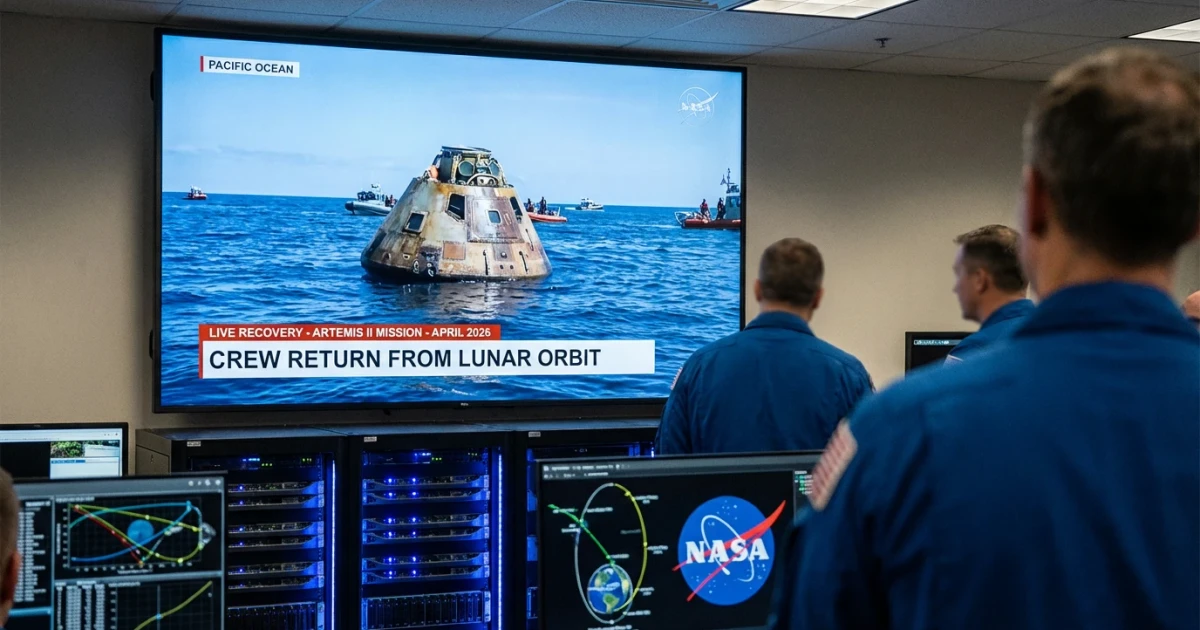
The Artemis II astronauts returned to Earth to enthusiastic celebrations after completing a record-breaking journey around the Moon. This mission marks NASA’s first crewed lunar venture in over half a century, making it a historic milestone for American space exploration.
A Triumphant Homecoming
After days spent orbiting the Moon, the Artemis II crew splashed down safely and was greeted by jubilant cheers from NASA personnel and supporters. Their return represents not only a technological achievement but also a significant step forward in NASA’s Artemis program, which aims to establish a sustainable human presence on the lunar surface and eventually pave the way to Mars missions.
Breaking Records in Lunar Travel
- Artemis II is the first NASA mission to send astronauts to lunar orbit since Apollo 17 in 1972.
- The crew completed a record-setting journey in terms of distance and duration for a crewed spacecraft since the Apollo era.
- The mission demonstrated new technologies and protocols, laying groundwork for future lunar landings.
According to NASA’s official mission data, Artemis II orbited the Moon, testing critical systems necessary for the Artemis III landing and conducting vital research to further deep space exploration.
Crew Accomplishments and Mission Objectives
The Artemis II astronauts achieved several key objectives:
- Validated life support and navigation systems aboard the Orion spacecraft
- Tested communication protocols between deep space and Earth
- Captured high-resolution imagery of the Moon’s surface, the best since the Apollo era
This mission not only proved the capabilities of NASA’s new hardware but also provided invaluable data to ensure the safety and effectiveness of future lunar expeditions.
Historical Significance and Next Steps
The Artemis II journey stands as a bridge between the iconic Apollo missions and a new generation of lunar exploration. NASA’s Artemis program is designed to deliver long-term scientific and technological returns, with Artemis II serving as a critical precursor to planned crewed lunar landings. The historical context underscores the magnitude of this achievement, as it reconnects modern spaceflight with the pioneering spirit of previous moon missions.
Looking Forward
With Artemis II’s successful completion, NASA and its partners are now preparing for the more ambitious goal of landing astronauts on the lunar surface with Artemis III. The achievements and lessons learned from Artemis II set the stage for a new era of deep space exploration, reaffirming NASA’s commitment to pushing the boundaries of human presence beyond Earth.