Science
Artemis II Delivers Major Advances for Lunar Science
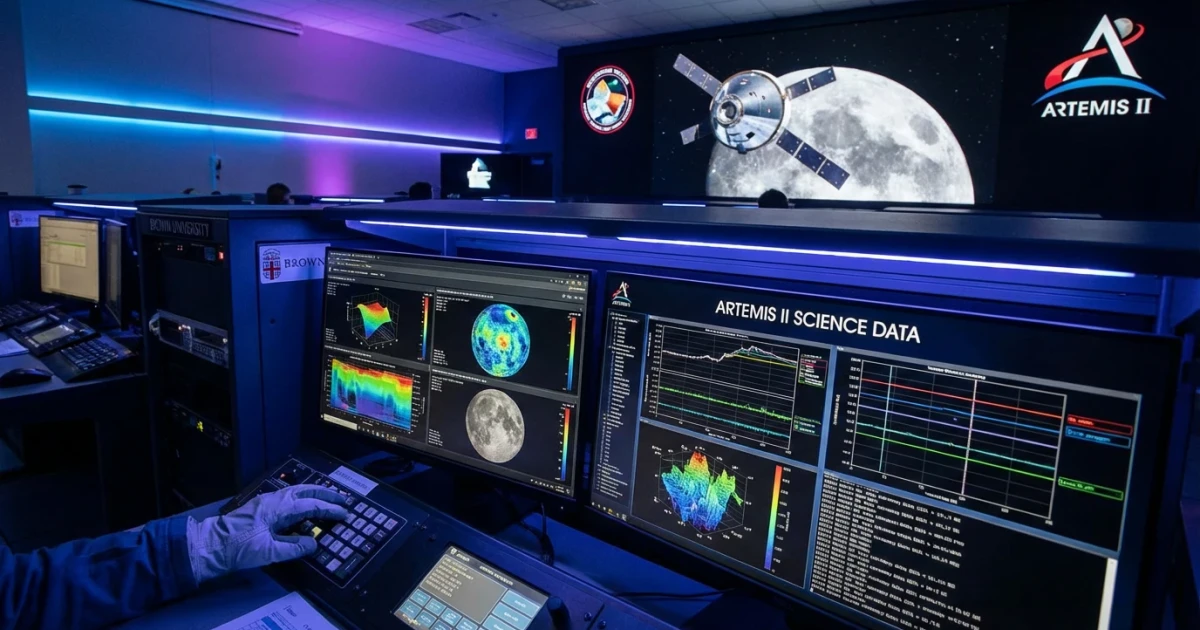
NASA’s Artemis II mission is being hailed as a breakthrough for lunar science, as researchers from Brown University and other institutions report an unprecedented influx of valuable data from the crewed lunar flyby. The mission, which marked the first human journey around the Moon in more than five decades, is now yielding scientific insights that could reshape our understanding of Earth’s closest celestial neighbor.
Significance of Artemis II’s Lunar Flyby
The Artemis II mission is a critical step in NASA’s broader Artemis program, designed to return humans to the lunar surface and establish a sustainable presence on and around the Moon. While Artemis II’s primary objective was to test systems and operations with a crew in deep space, the mission also carried advanced scientific payloads and instrumentation to collect data during its journey.
Brown University researchers, as reported by The Boston Globe, described the scientific returns from Artemis II as a "jackpot" that is already transforming lunar science. The mission’s flyby allowed for remote sensing of previously unexamined regions of the lunar surface, including the far side and polar areas, which are of high interest for future exploration and resource utilization.
Data Collection and Early Findings
- High-resolution imaging of lunar terrain and mineralogy, providing new maps of surface composition
- Thermal measurements that help identify potential landing sites and regions with water ice
- Radiation environment data crucial for astronaut safety on future missions
- Tests of deep-space communications and navigation systems under real mission conditions
According to NASA’s Artemis Science division, the data gathered includes detailed charts and tables of surface composition, as well as measurements of the Moon’s exosphere and magnetic field. The official Artemis II mission overview confirms that scientific payloads operated as planned, transmitting large volumes of information back to Earth for analysis.
Implications for Future Lunar Exploration
The bounty of data is already influencing planning for future Artemis missions, including Artemis III, which aims to land astronauts near the lunar south pole. Insights from Artemis II are helping scientists prioritize landing zones, design experiments to search for volatile compounds like water ice, and refine models of the lunar surface environment.
Brown University’s research teams are particularly excited about the new datasets, which offer opportunities for groundbreaking discoveries in fields ranging from planetary geology to astrobiology. As the Artemis program continues, the collaborative analysis of these data will support not only NASA’s goals but also the broader scientific community’s efforts to unlock the Moon’s secrets.
Broader Impact and Next Steps
With Artemis II’s success, NASA’s strategy of blending human spaceflight with robust scientific objectives is being validated. The mission’s technical achievements—demonstrating the Orion spacecraft’s systems and gathering critical environmental data—pave the way for increasingly ambitious lunar and deep space endeavors.
For those interested in exploring the data further, the Lunar and Planetary Institute and NASA’s Artemis Data Portal provide access to mission summaries, datasets, and technical documentation.
As Artemis II’s findings are published and shared, the scientific community anticipates fresh insights into the Moon’s history, resources, and potential for supporting future human exploration. The mission’s success demonstrates the value of pairing exploration with rigorous science, setting the stage for new discoveries in the years ahead.