Science
Artemis II Embodies New Era in U.S. Space Exploration, Contrasts with China’s Closed Approach
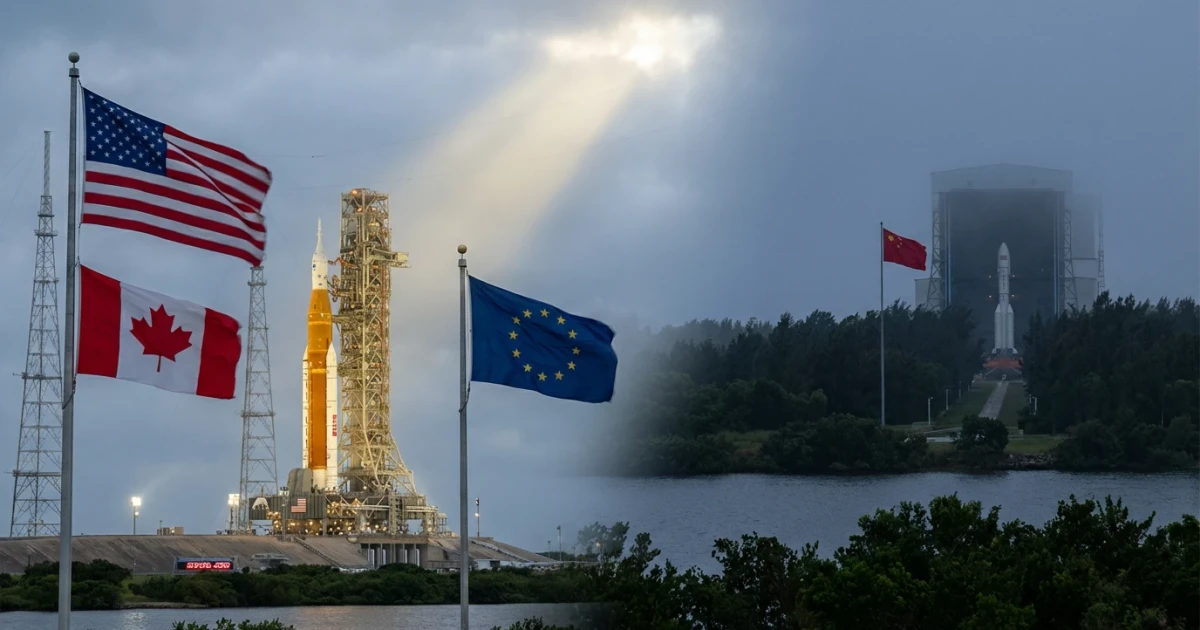
Artemis II is poised to become a defining moment in American space exploration, representing not only a technological leap but also a strategic shift in how the United States approaches lunar missions. As NASA prepares for the critical wet dress rehearsal—a comprehensive pre-launch systems test—the mission stands as a symbol of America's renewed commitment to transparency and international cooperation in space, setting itself apart from the more closed and insular approach of China’s space program.
Artemis II: A Shift from Apollo to Openness
The Artemis II mission, building on the legacy of Apollo, reflects a fundamentally different philosophy. While the Apollo era was marked by Cold War competition and rapid, secretive advancements, Artemis II underscores a deliberate pivot toward openness, collaboration, and engagement with the global scientific community.
- Artemis II will be the first crewed mission of the Artemis program, aiming to send astronauts around the Moon and pave the way for a sustainable human presence.
- The mission's preparatory phase includes the upcoming wet dress rehearsal, a crucial systems test on the launch pad to ensure all procedures are mission-ready.
- NASA has consistently highlighted its commitment to sharing data, research findings, and mission progress with the international community, inviting partners and the public to participate in the next era of lunar exploration.
Contrasting Approaches: U.S. Transparency vs. China’s Closed Program
One of the defining aspects of Artemis II is its contrast with China’s space strategy. While China has achieved significant milestones with its own lunar program, its approach remains largely closed, with limited data sharing and international engagement. This divergence highlights competing philosophies in space exploration:
- NASA’s Artemis II embraces international collaboration through programs like the Artemis Accords, fostering partnerships with agencies from Europe, Canada, Japan, and beyond.
- China’s lunar efforts, impressive in their technical achievements, are conducted with less transparency, with mission details and data often restricted to domestic audiences and select partners.
- The U.S. strategy seeks to build trust, establish shared norms, and encourage peaceful use of space, while China’s approach prioritizes national achievement and strategic advantage.
Countdown to the Wet Dress Rehearsal
The upcoming wet dress rehearsal for Artemis II is more than a technical milestone—it’s a public demonstration of NASA’s commitment to safety, precision, and openness. This test will see the launch vehicle and systems go through a simulated countdown, fueling, and other launch-day procedures, with results and insights expected to be shared widely.
- The rehearsal is a critical step toward the eventual crewed launch, ensuring that all systems operate seamlessly under real-world conditions.
- NASA’s practice of broadcasting key moments, sharing updates, and engaging with the public stands in contrast to China’s more controlled media strategy.
Analysis: What Artemis II Means for the Future of Space Exploration
As the Artemis II countdown begins, the mission reflects more than a technological upgrade—it signals a strategic evolution. NASA’s new openness and emphasis on international partnership could shape the future of lunar exploration, setting standards for transparency, scientific sharing, and peaceful cooperation. The contrast with China’s program highlights the broader geopolitical competition unfolding in space, where values and approaches may prove as consequential as rockets and astronauts.
Looking ahead, Artemis II’s success could reinforce the U.S. position as a leader in space—one that prioritizes not just reaching the Moon, but doing so in a way that invites the world to share in the journey.
Sources
- [1]PBS