Science
Artemis II Moon Rocket Rolls Out for Launch Preparations
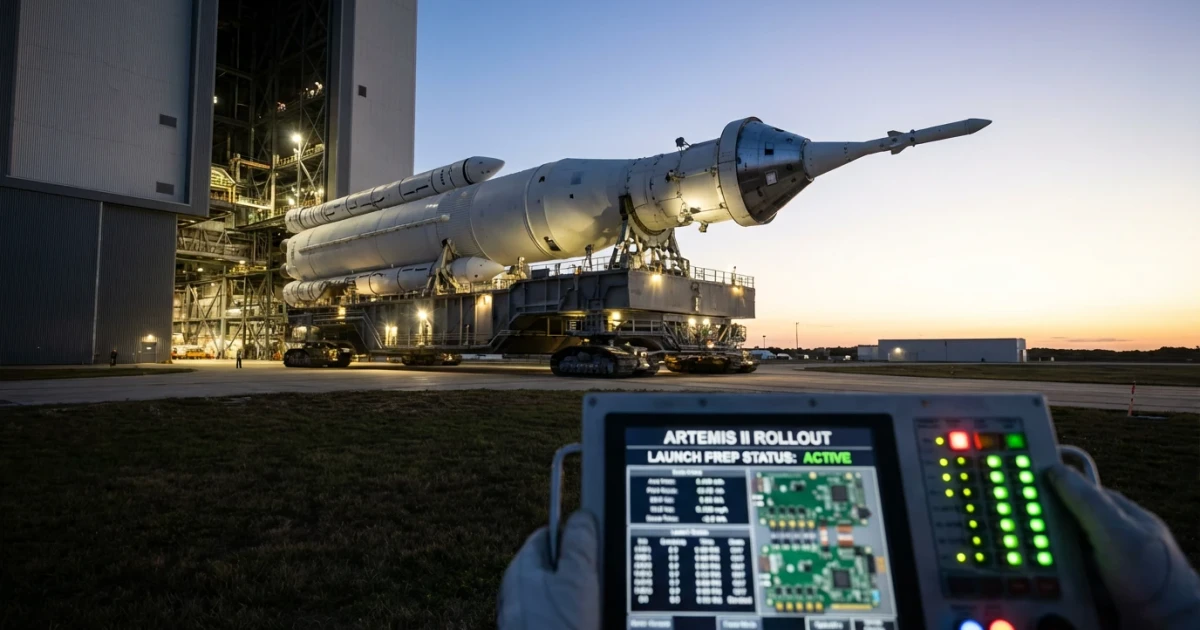
NASA's Artemis II moon rocket has begun its journey to the launch pad, a critical milestone in the agency's plans to return astronauts to lunar orbit for the first time in more than 50 years. The rollout, scheduled for March 19, marks a major step toward the upcoming crewed mission as preparations intensify at Kennedy Space Center.
Rollout Marks Key Milestone for Artemis II
The Space Launch System (SLS) rocket and the Orion spacecraft are being carefully transported from the iconic Vehicle Assembly Building to the launch pad. According to NASA's official rollout schedule, the move will take several hours and involves a slow, methodical process using a massive crawler-transporter.
This rollout is a necessary precursor to a comprehensive series of tests and checks that will ready the rocket and spacecraft for flight. NASA officials have emphasized that the event not only signals progress for Artemis II, but also serves as a crucial trial ahead of the more complex Artemis III mission, which aims to land astronauts on the lunar surface.
Artemis II: Preparing for Astronauts' Return to Lunar Orbit
Artemis II is set to be the first mission of the Artemis program to carry astronauts beyond low-Earth orbit and around the Moon. This mission builds directly on the success of Artemis I, an uncrewed flight that tested the integrated system in 2022. The Artemis II mission will send a crew of four on a roughly ten-day journey to lunar orbit and back, testing life-support systems and critical navigation maneuvers required for future lunar landings. For a detailed overview of the mission objectives and crew details, readers can review the Artemis II mission overview provided by NASA.
The Artemis II crew has now begun their pre-launch quarantine, a standard protocol designed to protect both the astronauts and the mission from illness. This period, known as "health stabilization," further underscores the mission's readiness phase as the launch date approaches.
Technical Readiness and Final Checks
- The SLS rocket, NASA's most powerful rocket to date, underwent final integration and testing inside the Vehicle Assembly Building prior to rollout.
- Following arrival at the pad, teams will connect ground support equipment, conduct fueling tests, and simulate countdown operations to ensure all systems are "go" for launch.
- NASA's mission manifest lists Artemis II as a pivotal flight in the overall lunar exploration strategy.
Technical analysis available from NASA's mission design report highlights the complexity of coordinating rocket, spacecraft, and ground systems, especially for a mission involving human crews venturing far beyond Earth orbit.
What Comes Next
With the Artemis II hardware now at the launch pad, NASA will proceed through a rigorous sequence of tests culminating in the Flight Readiness Review. Pending successful completion, the agency remains on track to launch the first crewed Artemis mission, which will lay the groundwork for future lunar landings and long-term exploration.
For those interested in a deeper dive into the Artemis hardware and crew, NASA's Artemis II special feature offers interactive graphics and mission milestones.
The rollout of Artemis II signals NASA's commitment to returning astronauts to the Moon and advancing international space exploration partnerships. As final preparations continue, the world watches the next chapter in human spaceflight unfold.