Science
Artemis II Moonship Returns to Kennedy After Landmark Voyage
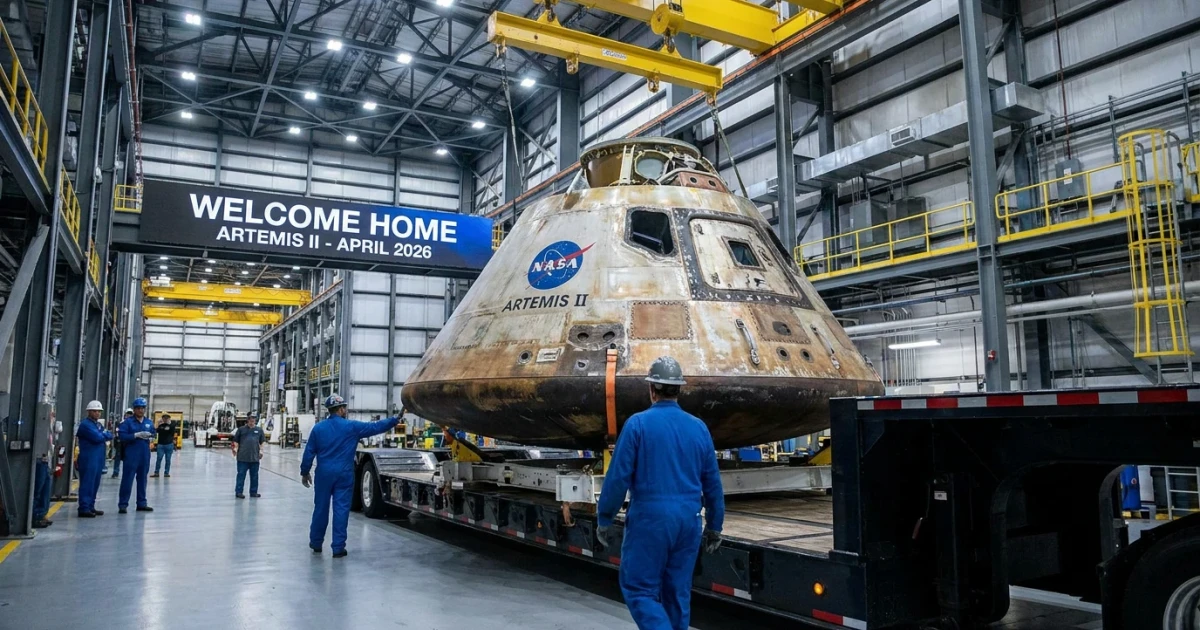
NASA’s Artemis II spacecraft has returned to its launch site at Kennedy Space Center, capping a historic lunar flyby mission that sets the stage for future U.S. endeavors on the Moon. The spacecraft’s arrival follows a successful journey that tested new technologies and provided critical data for the ambitious Artemis program.
Milestone Flight Returns Home
The Artemis II mission, described by NASA officials as a crucial step in America’s return to the Moon, saw the Orion spacecraft complete a circuit around the Moon before splashing down in the Pacific Ocean. After recovery and initial inspections, the spacecraft was transported back to Kennedy Space Center, where engineers will conduct thorough post-mission analysis.
- The Artemis II mission marked the first crewed lunar flyby since Apollo, paving the way for future Moon landings.
- The journey spanned over 600,000 miles and lasted approximately 10 days.
- NASA emphasized that Artemis II’s successful return is foundational for the next mission, which aims to land astronauts on the lunar surface.
Heat Shield Recovery and Ocean Landing
A key focus of the mission’s post-flight assessment is the Orion heat shield, which protected the crew capsule during its fiery re-entry through Earth’s atmosphere. According to AP News, the heat shield was recovered as a “sunken treasure” from the Pacific, part of NASA’s ongoing efforts to study material performance and improve safety for future crews. The meticulous recovery and examination of this component are expected to yield valuable insights for the design of Artemis III and beyond.
Looking Ahead: Future Artemis Missions
NASA leadership has signaled confidence in the program’s trajectory, stating that Artemis II’s success keeps the agency on track for its broader lunar ambitions. The agency plans to build on the lessons from this mission—especially the performance of the Orion spacecraft systems and the Space Launch System (SLS) rocket—to refine procedures and technologies for future flights.
- Artemis III is planned as the first mission to land astronauts on the Moon in decades.
- The Artemis program aims to establish a sustainable lunar presence and prepare for eventual missions to Mars.
- NASA’s schedule remains ambitious, but successful milestones such as Artemis II bolster hopes for staying on track.
According to NASA program statistics, the Artemis initiative represents one of the most complex and costly undertakings in the agency’s history, with extensive international partnerships and commercial collaborations.
Analysis: Significance of Artemis II’s Return
The return of the Artemis II moonship marks more than just a technical triumph; it signals renewed momentum in U.S. lunar exploration. While challenges remain—including rigorous analysis of mission data and continued development of supporting infrastructure—the program’s steady progress is seen as a positive indicator for future spaceflight milestones.
As the Artemis II spacecraft undergoes its post-mission review at Kennedy, NASA and its partners are already preparing for the next steps. This mission’s legacy will inform not only the next lunar landing, but also the evolving role of international and commercial partners in human space exploration.
With Artemis II’s safe return, the journey to the Moon is once again a central focus of American science and engineering. The coming months will reveal how these lessons shape the next phase of missions—and ultimately, humanity’s continuing presence beyond Earth.