Entertainment
Artist overcomes brain tumor after surgery changes his vision
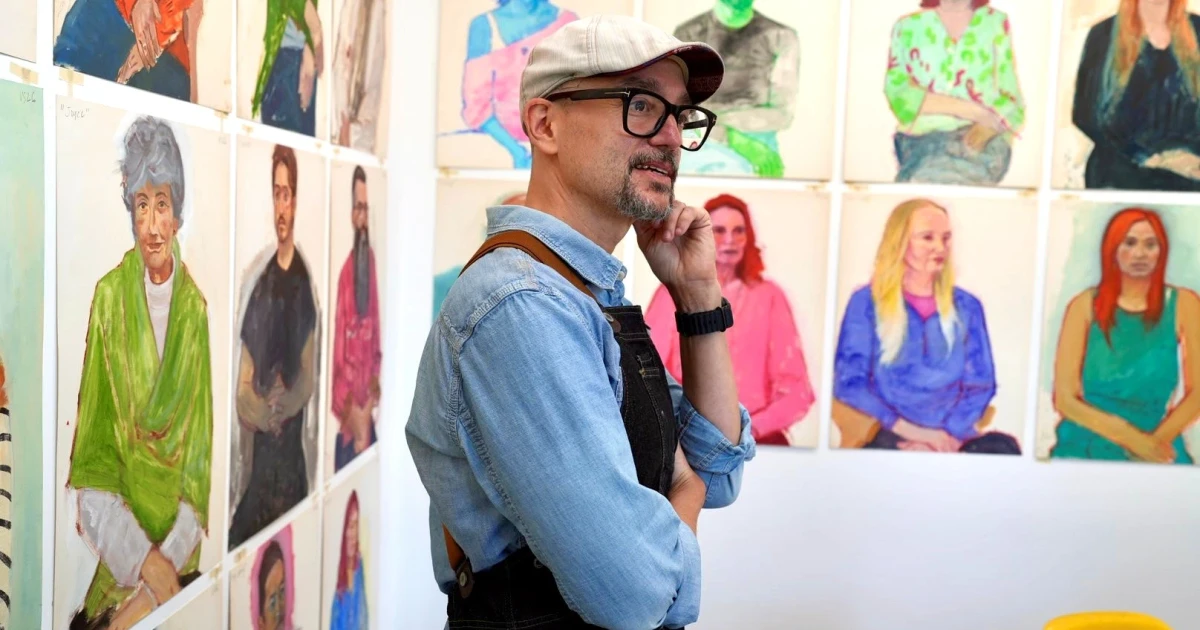
Vincent Serritella woke on Dec. 5 to flashing bursts of light at the far left edge of his vision, then realized something was wrong when he could not see his left hand at his computer. Within hours, the 50-year-old artist, filmmaker, engineer and former Pixar animator was in the emergency room at Sutter’s CPMC in San Francisco, where neurosurgeon Dr. Michael Zhang diagnosed a brain tumor pressing on his optic nerve.
The tumor was glioblastoma, the most aggressive form of primary brain cancer in adults. Serritella underwent surgery within days, then a second operation the next day when swelling obscured part of the tumor. His recovery was complicated by a cerebrospinal fluid leak that required another intervention and a lumbar drain, and he spent 20 days in CPMC’s ICU.
The diagnosis changed the way Serritella saw the world in a literal, neurological sense. The left side of his visual field was affected first, and the loss of that peripheral detail forced him to work differently as he moved through treatment and recovery. What might have been only a medical setback became the start of a new phase in his art, one shaped by adaptation, attention and a narrower visual field.
Serritella returned to painting while he was still processing the diagnosis. Art had been a constant since he was 5, and he used it to make sense of the experience and to thank the doctors and nurses who cared for him. He created portraits of caregivers, including Dr. Akanksha Sharma and Dr. Michael Zhang, and later coverage said he had painted at least 30 portraits, then at least 40.
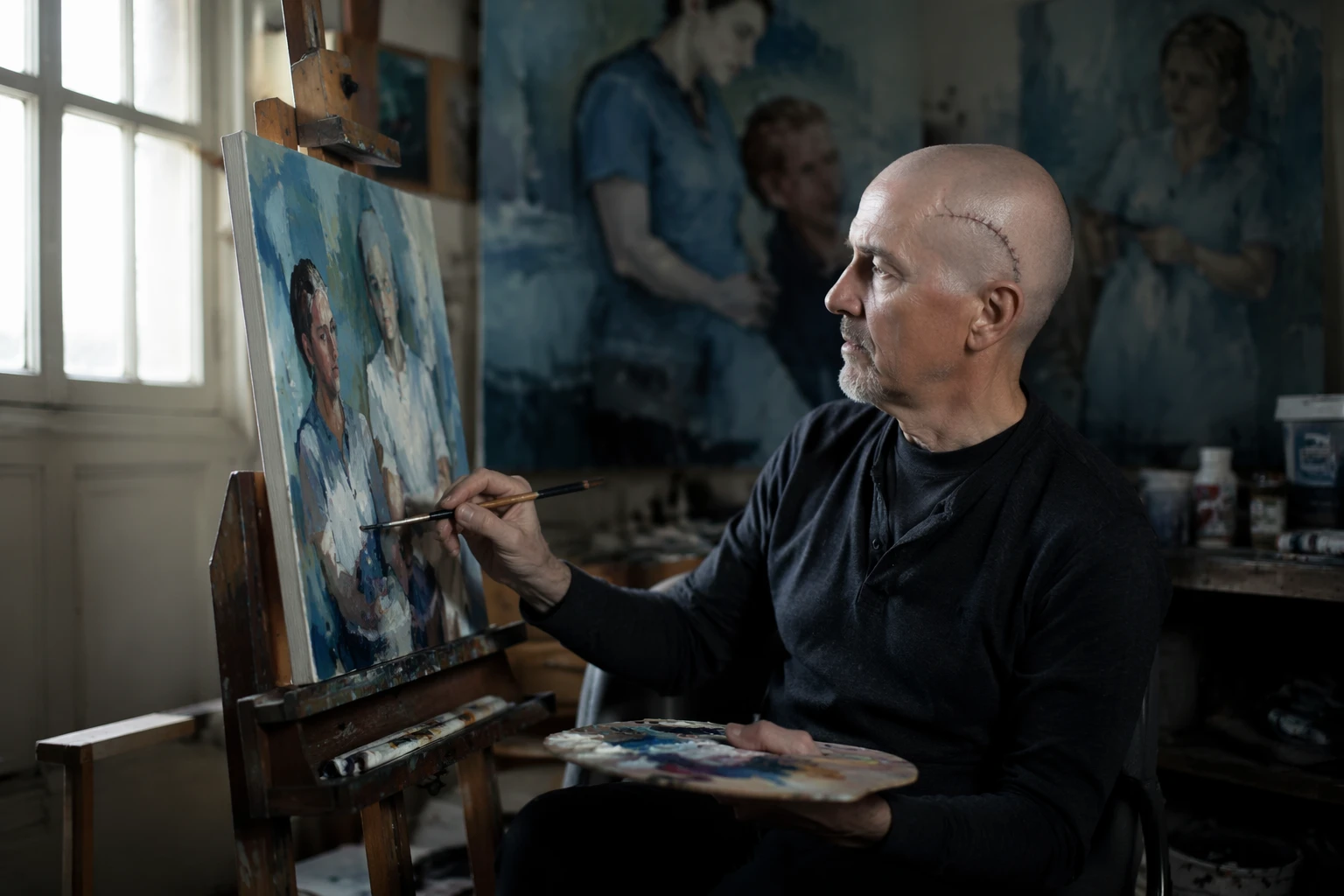
The paintings became his way of tracking survival as much as documenting gratitude. His consulting neuro-oncologist encouraged him to keep creating during treatment, describing art as potentially helpful for brain elasticity and recovery. Serritella said the care team’s small gestures, including handwritten notes and steady check-ins, helped him through the hardest part of recovery.
By June, Serritella was cancer-free and had received his second clean MRI scan on June 2. The man who arrived at CPMC fearing a stroke left with a different artistic practice and a body changed by surgery, but not a diminished one. In Serritella’s own work, the loss of vision became the foundation for what he has described as his strongest and most personal art yet.