Business
Asia stocks fall as South Korea’s Kospi drops nearly 7%

South Korea’s Kospi fell nearly 7%, its biggest drop since early March, as a global chipmaker selloff pulled most major Asian stock indexes lower and rattled sentiment across the region.
The slide centered on Samsung Electronics and SK Hynix, two of the market’s heaviestweights and the main engines of Seoul’s long rally. That concentration matters: when chip names lose altitude, the move can quickly spread beyond one exchange and become a broader test of appetite for technology, export-dependent manufacturers and other cyclical shares that have powered Asia’s risk trade.
The selloff also pointed to a wider shift in investor behavior. Traders were not just reacting to earnings pressure in semiconductors; they were reassessing foreign capital flows, valuation levels and the path of U.S. interest rates. For Asia, where fund managers often rebalance across Japan, South Korea, Taiwan, Hong Kong and mainland China in the same session, a sharp move in Seoul can trigger more caution elsewhere. For U.S. readers, the connection is direct: Korean and American tech stocks are tightly linked through chip demand, AI spending and the supply chains that run from factories in Asia to balance sheets in the United States.

The timing made the move more sensitive. Investors were also watching upcoming tech earnings and signals from the Federal Reserve on rates and inflation, two forces that can quickly change the value placed on growth stocks. If U.S. policy stays tighter for longer, high-valuation tech shares in both markets can come under pressure at the same time.
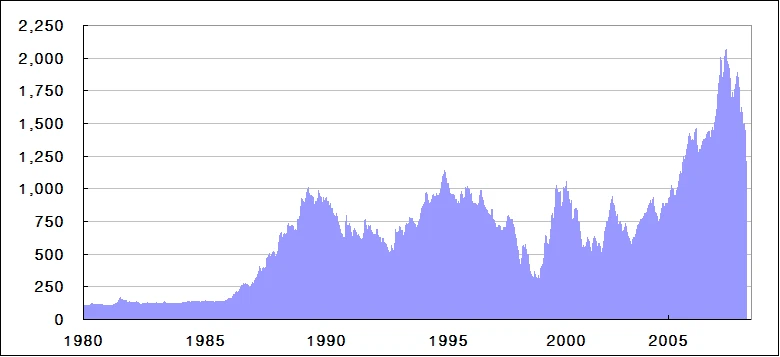
The scale of the decline stood out because it came after an enormous run. The KOSPI jumped 75.53% in 2025 and reached an all-time high, leaving the benchmark vulnerable to a sharp reversal after months of enthusiasm around semiconductors and broader Korean exporters. A June analysis had already raised the possibility that South Korea’s market boom contained bubble-like features, underscoring how quickly confidence could fray once chip stocks stumbled.
A sustained drop of this kind can also reach beyond trading screens. It can weaken the won, raise borrowing costs for Korean companies and make foreign investors more hesitant to keep money in Asia’s riskier corners. For households with retirement accounts exposed to semiconductor and growth stocks, the route from Seoul to Wall Street can be fast: when Korea’s chip leaders wobble, the same caution often shows up in U.S. portfolios and in the global supply chains that depend on them.
Sources
- [1]apnews.com
- [2]reuters.com
- [3]cnbc.com
- [4]csis.org
- [5]tradingkey.com
- [6]abcnews.com