Business
Asia stocks fall as U.S.-Iran peace deal talks hit snag
Asia stocks reversed lower Friday as traders treated the U.S.-Iran peace deal as a fragile truce, not a settled breakthrough. West Texas Intermediate rose 0.8% to $77.23 a barrel after signs of an early snag in talks, while the dollar firmed as investors looked past the relief rally and toward the risk that the agreement could unravel.
The pullback came after the United States and Iran agreed to a memorandum of understanding on June 15, after nearly four months of war, but the deal had not yet been signed and its text had not been released. The agreement was built around reopening the Strait of Hormuz and lifting the U.S. naval blockade of Iranian ports, with a formal signing expected in Geneva on Friday. CNBC said the ceasefire was set to be extended for 60 days to give negotiators more time on Iran’s nuclear program, sanctions relief and regional security, underscoring how much was still unsettled.
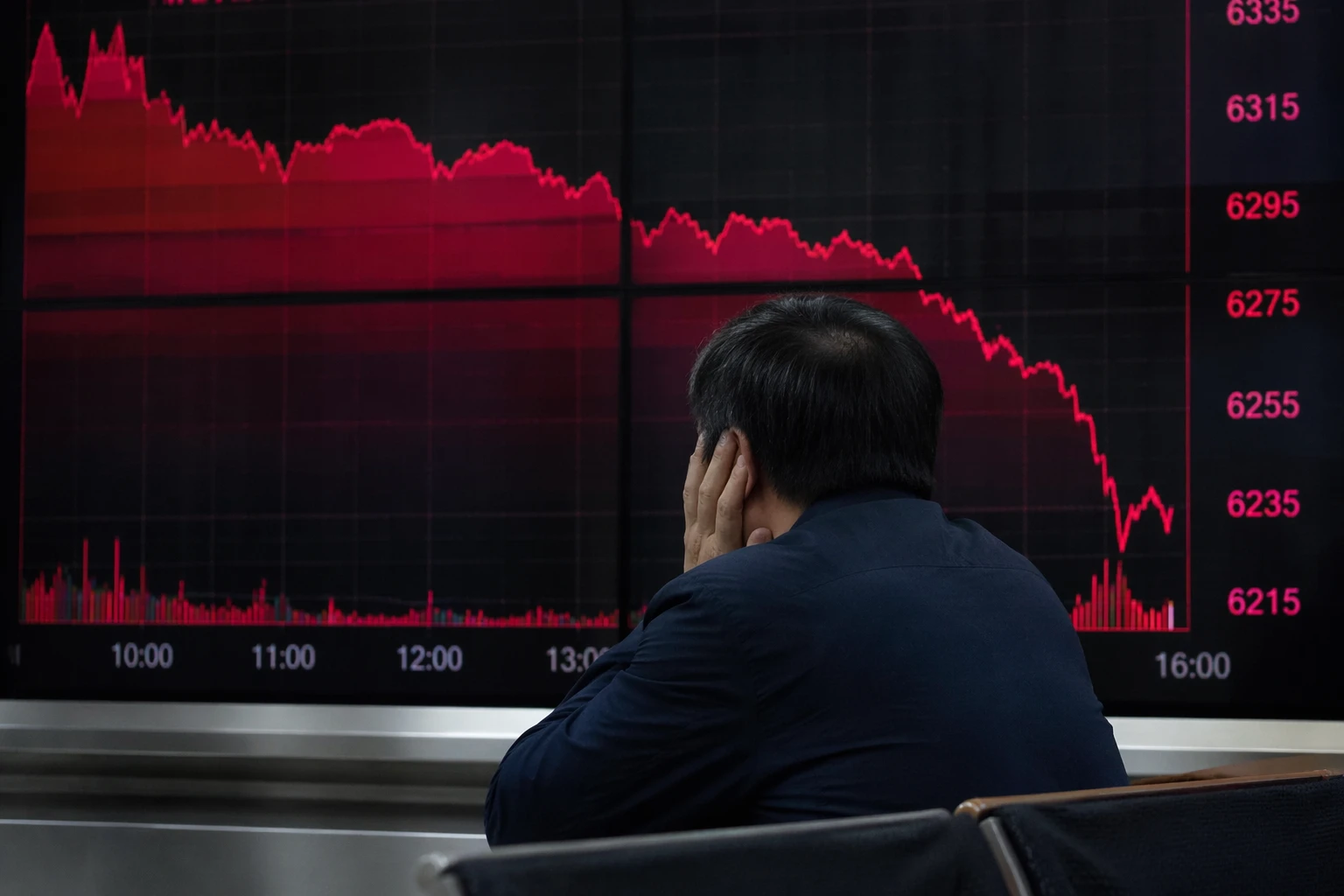
That uncertainty showed up quickly in markets. Reuters reported that Japan’s Nikkei fell 0.6% on Friday after hitting a record high for a fifth straight session, though it was still up 7% for the week. South Korea’s market dropped 1.8% but remained on course for a 9.5% weekly gain, a sign that investors were taking profits from a sharp geopolitical relief rally rather than betting on a lasting calm.
The oil market is sending the clearest warning. Brent crude had already climbed to $83.74 a barrel in earlier Asia trade, and shipowners in Asia and Europe said rebuilding confidence in transit through the Strait of Hormuz could take weeks. That matters because the waterway is the agreement’s central test: if reopening stalls, or if Tehran and Washington stumble over the mechanics, the market impact could outlast the first burst of optimism.
Analysts at Westpac said the durability of the deal was likely to be tested, with Iran’s nuclear program still unresolved. The Atlantic Council said public reporting described a 14-point plan and warned that there is likely to be a gap between the memorandum’s ambitions and any final deal, especially on the Strait of Hormuz, nuclear concessions and sanctions relief. Israel is not party to the agreement, adding another layer of geopolitical risk to a deal that has calmed markets only so long as the fragile diplomacy keeps moving.
Sources
- [1]news.google.com
- [2]cnbc.com
- [3]finance.yahoo.com
- [4]channelnewsasia.com
- [5]atlanticcouncil.org
- [6]apnews.com