Business
Asian shares slip as oil gains, investors reprice Fed bets

Asian stocks slipped and oil firmed as traders rebuilt bets that the Federal Reserve may have to keep rates higher for longer, a shift that can reach far beyond trading screens. MSCI’s broadest Asia-Pacific index outside Japan fell 0.5%, S&P 500 e-mini futures dropped 0.2%, and Brent crude rose 0.2% to $78.03 a barrel as investors recalibrated both inflation and growth risks.
The rate repricing was stark. Fed funds futures were implying a 54% chance of at least two quarter-point Fed hikes by year-end, up from 15.2% a week earlier, a jump that signals how quickly traders moved from expecting easier policy to bracing for another round of tightening. The dollar index hovered at 101.04, near its highest since May 2025, while the yen traded around 161.55 per dollar, a level that underscores pressure on Japan’s currency and raises the cost of imports for households and companies.
Those market moves matter because oil and interest rates both filter quickly into everyday bills. Higher crude can feed into gasoline prices and delivery costs, while stronger expectations for Fed hikes can keep mortgage rates elevated, make credit-card balances more expensive and reduce the appeal of long-duration bonds that many retirement accounts hold. If rates stay high, borrowers with variable debt feel it first, but savers and retirees are also exposed when stock valuations and bond prices lose momentum.
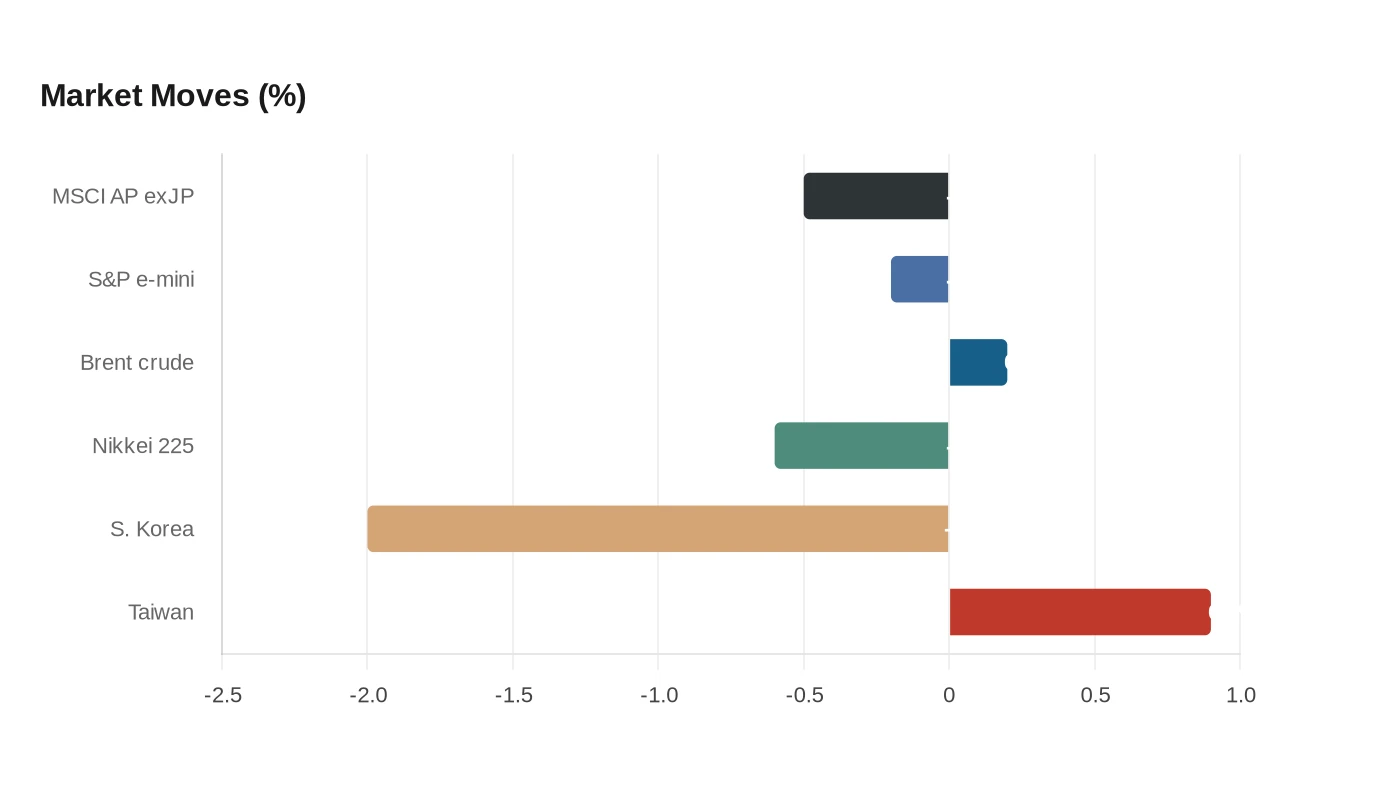
The Asia trading session reflected those cross-currents. Japan’s Nikkei 225 fell 0.6% even after June manufacturing data showed robust growth and new orders at a more than four-year high. South Korean shares were about 2% lower, while Taiwanese stocks opened 0.9% higher to a record. Chris Weston of Pepperstone said markets were “far from dull” and noted that investors were rotating away from more AI-focused names into more defensive, predictable cash-flow sectors.
Geopolitics kept the oil market unsettled. Oil had fallen more than 3% in the prior session after JD Vance said progress had been made in talks with Iran and that the Strait of Hormuz was open, but prices regained strength as traders weighed whether any deal would truly secure supply routes. CNBC reported that the United States and Iran had agreed to a memorandum of understanding, though it had not been signed and the text had not been released, with Israel not party to the agreement. For households, that mix of fragile peace hopes and firmer oil is exactly the kind of backdrop that can keep gasoline, borrowing costs and portfolio returns under pressure at the same time.
Sources
- [1]news.google.com
- [2]money.usnews.com
- [3]cmegroup.com
- [4]cnbc.com
- [5]jpost.com
- [6]channelnewsasia.com