Technology
Asia’s AI challengers race to bypass U.S. export controls
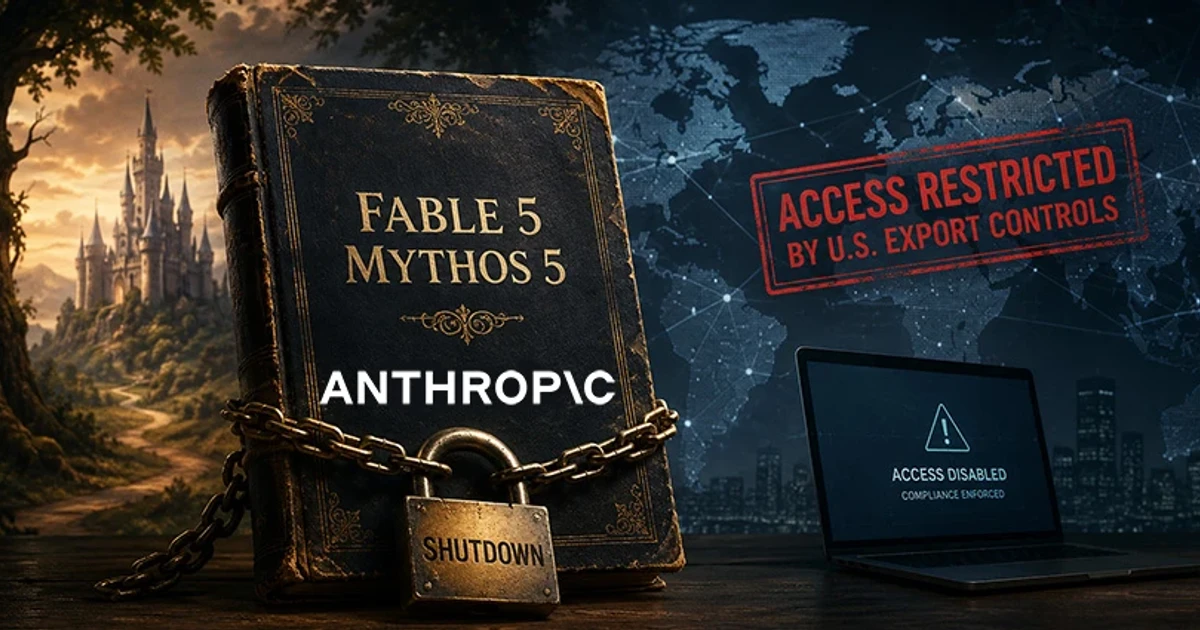
Anthropic disabled Fable 5 and Mythos 5 for all customers after the U.S. government issued an export-control directive on June 12 requiring foreign nationals, inside or outside the United States, to lose access to the models. The company said the directive was tied to a suspected jailbreak method, but it also said the vulnerabilities it found were narrow and that no tester had identified a universal jailbreak. Anthropic said it had spent thousands of hours red-teaming the safeguards with the U.S. government, the UK AISI, third parties and its own internal teams before launch.
The shutdown gave Asian AI developers a narrow opening to market alternatives built for local buyers who do not want their access shaped by Washington. Tokyo-based Sakana AI launched Fugu in June, a model it says is designed for agents and can orchestrate access to other models through their APIs. Sakana said the launch timing was coincidental, but it has also framed Fugu as a response to tightening controls, with Japanese businesses and government agencies in mind. The startup, co-founded in 2023 by former Google researchers Ren Ito, Llion Jones and David Ha, said Fugu had been in development since last year and that the underlying research was presented at ICLR in the spring.
Sakana is making a wider geopolitical argument as it markets the model. Ren Ito said at the G7 summit in Evian that AI access and export controls were central topics, and in an op-ed he argued that the U.S. should preserve access for its closest allies and develop AI together rather than hoard it. That message lands at a moment when the restriction has been in place for about two weeks, long enough for regional vendors to pitch sovereign or export-control-resistant systems as practical substitutes rather than temporary workarounds.

The stakes are highest in South Korea, where Anthropic opened a Seoul office on June 17. Chris Ciauri said the company expected the curbs to be lifted within days, but he also underscored how important the market had become, saying Korea ranked 12th globally in per-capita Claude usage among 116 countries and that Anthropic’s March economic index showed Korean use at 3.5 times what population alone would predict. The company has said Project Glasswing was created to give selected institutions access because Mythos could be misused for hacking, but the program also became a flashpoint after reports that one of 111 priority recipients was a Korean telecom company suspected by U.S. officials of ties to China.
The pressure is no longer coming from just one frontier model. TechCrunch reported that Chinese cybersecurity firm 360 unveiled Tulongfeng on Wednesday as another Asia-based rival to Anthropic’s Mythos. Together, the launches suggest that if U.S. restrictions remain unstable, Asian buyers may not wait for access to return and could build around American models instead.
Sources
- [1]techcrunch.com
- [2]anthropic.com
- [3]biz.chosun.com