Technology
Astrobotic Tests Rocket Engine With 4,000 Pounds of Thrust
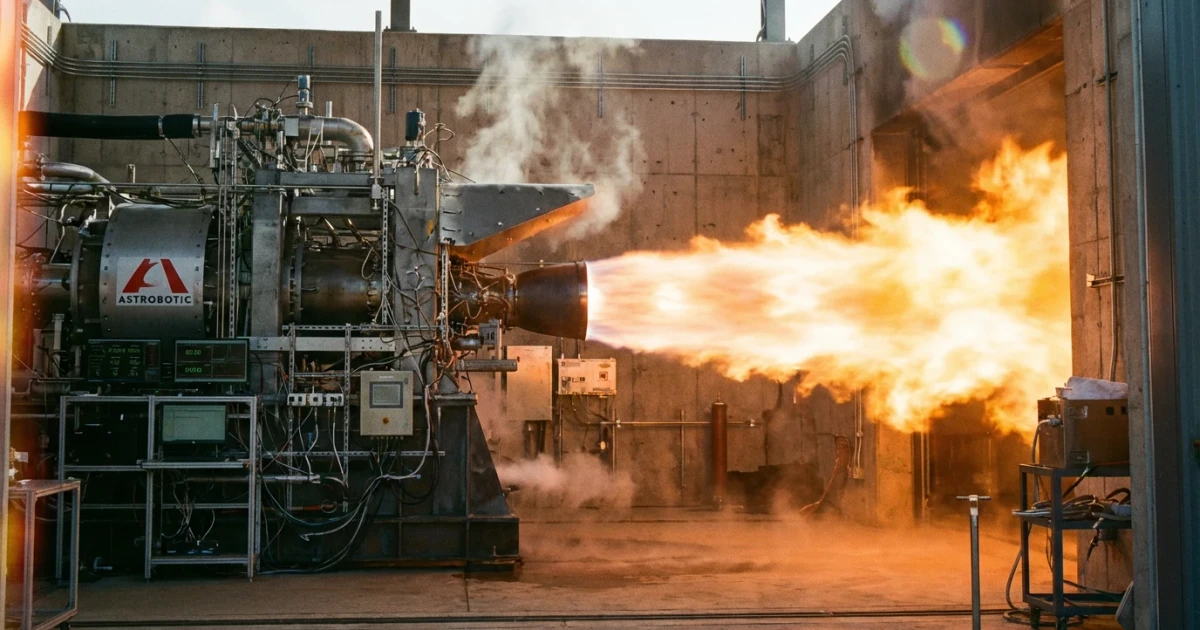
Astrobotic has taken a significant step in rocket propulsion technology, recently conducting a successful test of its rotating detonation rocket engine (RDRE) that achieved an impressive 4,000 pounds of thrust. The test, which has drawn attention across the aerospace community, highlights the company’s commitment to advancing next-generation engines with potential applications for both commercial and government spaceflight.
Breakthrough in Rotating Detonation Rocket Engines
The rotating detonation rocket engine (RDRE) is a relatively new propulsion technology that departs from traditional rocket engine designs. Unlike conventional engines, which rely on constant combustion, RDREs use rapidly spinning detonation waves to combust fuel and oxidizer, resulting in increased thrust and improved efficiency. According to a NASA technical report, this process enables more thrust per unit of fuel and could reduce engine mass and complexity.
Astrobotic’s 4,000-Pound Thrust Test
As reported by Gizmodo, Astrobotic’s recent test marks one of the highest thrust levels achieved with a rotating detonation engine in the private sector to date. The company’s engine, named after a scientific pioneer (details not disclosed in the available coverage), was fired in a controlled environment, producing 4,000 pounds of thrust—a figure that underscores the viability of RDRE technology for future launch vehicles and in-space propulsion systems. While previous experimental tests have demonstrated the operational principles of RDREs, Astrobotic’s demonstration moves the technology closer to real-world application.
- 4,000 pounds of thrust achieved in test firing
- Engine uses spinning detonation waves for combustion
- Potential for increased efficiency and reduced engine mass
Industry and Research Context
The development and testing of RDREs have been a growing focus for both private companies and government agencies. NASA’s fact sheet details ongoing experimental efforts that seek to refine RDRE performance characteristics, including thrust, pressure, and combustion stability. Peer-reviewed research, such as the comprehensive review in ScienceDirect, points to the unique advantages of detonation-based engines, including potential for higher thermodynamic efficiency compared to traditional constant-pressure combustion engines.
Astrobotic’s test aligns with this ongoing trend of seeking lighter, more efficient, and potentially cost-effective propulsion solutions for future missions. However, challenges remain: RDREs must demonstrate consistent reliability, controllable operation, and integration with existing spacecraft systems before they can be widely adopted for crewed or uncrewed missions.
Looking Ahead
The successful 4,000-pound thrust test positions Astrobotic as a notable player in the evolving landscape of rocket engine technology. As the company and others continue to refine RDRE designs, the aerospace sector could see increased adoption of detonation-based engines in the coming years, potentially reshaping how payloads are delivered to orbit and beyond. Further tests, peer-reviewed validation, and eventual flight demonstrations will be critical benchmarks as the industry evaluates the practicality and safety of this advanced propulsion approach.
For readers interested in the technical details of RDRE operation, thrust data, and supporting research, resources such as the NASA technical report and experimental investigation summaries offer in-depth analysis and experimental findings.