Science
Astronomers Edge Closer to Solving Hubble Trouble
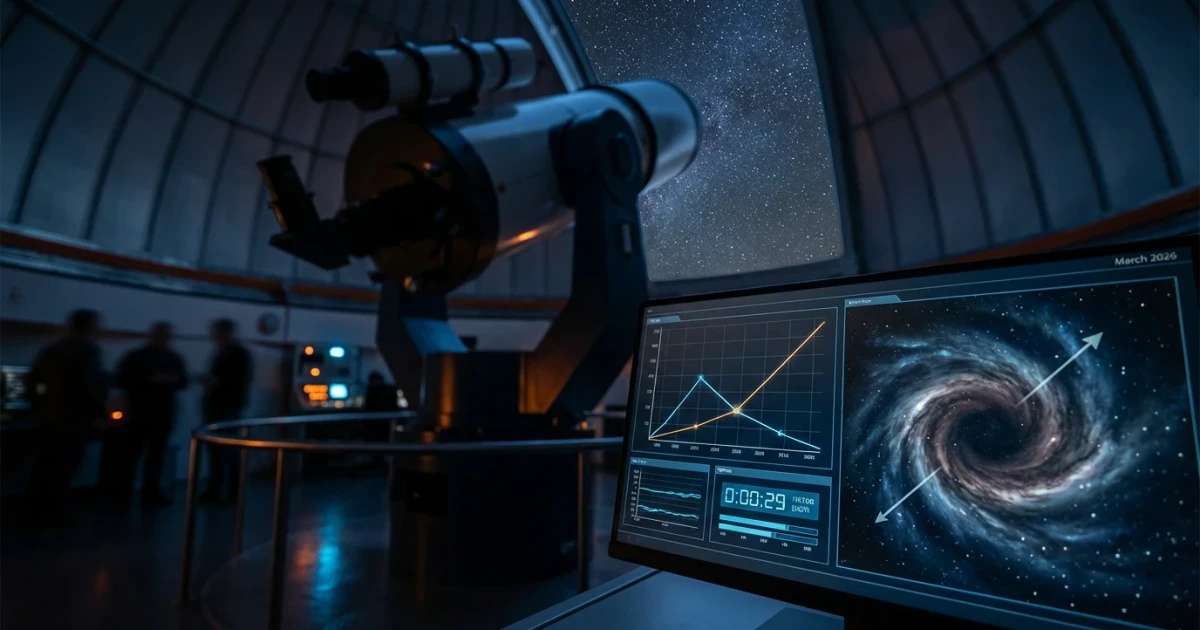
Efforts to determine the precise rate at which the universe is expanding have taken a promising step forward, as astronomers introduce a new measurement method aiming to resolve the long-standing 'Hubble trouble.' The debate, often referred to as the Hubble tension, centers on discrepancies between different techniques for calculating the Hubble constant (H0), the value that quantifies how quickly galaxies are moving away from each other.
Understanding the Hubble Tension
The Hubble constant is a cornerstone of modern cosmology, underpinning estimates of the universe’s age, size, and fate. However, two leading methods for determining H0 have consistently yielded conflicting results. Measurements based on cosmic microwave background (CMB) data from missions like Planck suggest a value of around 67 km/s/Mpc, while direct, local measurements using Cepheid variable stars and supernovae find higher values near 73 km/s/Mpc. This persistent gap is known as the Hubble tension.
- CMB measurements probe the early universe, extrapolating today’s expansion rate from conditions shortly after the Big Bang.
- Local measurements use astronomical objects in the nearby universe as cosmic mileposts.
These divergent results have led scientists to question whether unknown physics or measurement errors are at play.
A New Approach Emerges
According to reporting from Space, researchers have now developed a new method that could bridge the gap between these techniques. While details of the method are still emerging, it leverages observations from different types of astronomical phenomena to provide an independent estimate of the expansion rate. This approach aims to reduce systematic uncertainties that may have affected previous techniques.
Recent efforts include the use of Baryon Acoustic Oscillations (BAO) and gravitational wave events as alternative cosmic yardsticks. These methods offer a way to cross-check traditional measurements and may help pinpoint the source of the discrepancy.
What’s at Stake for Cosmology
Resolving the Hubble tension is critical for understanding the universe's past and future. The value of H0 influences not only the estimated age of the cosmos but also models of dark energy and the ultimate fate of the universe. As summarized in NASA’s official Hubble measurements, even small shifts in the expansion rate can have far-reaching consequences for cosmological theory.
Key implications include:
- Potential need for new physics beyond the standard model of cosmology if the tension persists
- Improved understanding of dark energy, which drives the universe's accelerated expansion
- More accurate estimates of the universe’s age and structure
Looking Forward
As astronomers refine their methods and new data becomes available from observatories and missions, the hope is that consensus will emerge. For those interested in the technical details and ongoing research, a thorough review of the Hubble tension summarizes the evolving landscape of measurements and analyses.
While the solution to the Hubble trouble is not yet definitive, the introduction of innovative measurement techniques represents real progress. The astronomical community continues to watch closely as researchers inch closer to a unified answer for one of cosmology’s most fundamental questions.