Science
Astronomers Find Hidden Filaments Near Milky Way’s Black Hole
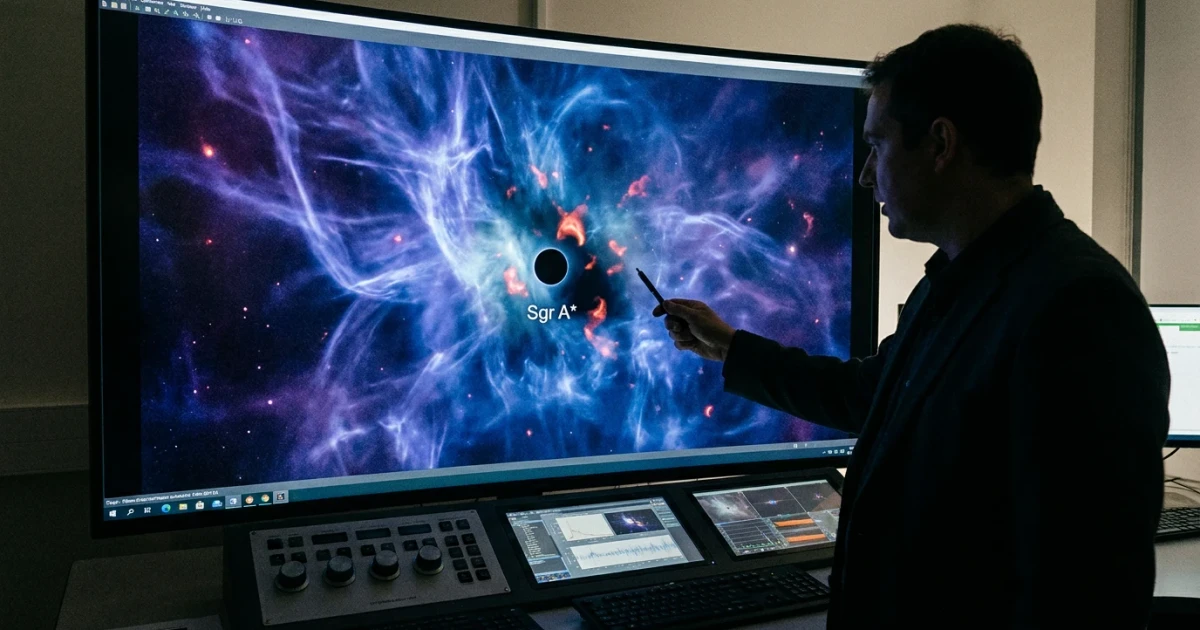
Astronomers have uncovered massive, previously hidden structures stretching toward the supermassive black hole at the center of the Milky Way, according to new X-ray data and analysis shared by The Daily Galaxy. These findings open new avenues for understanding the dynamic environment surrounding our galaxy's core, where extreme forces shape cosmic evolution.
Revealing the Galaxy’s Hidden Architecture
Using the advanced imaging capabilities of NASA’s Chandra X-ray Observatory, astronomers have mapped out massive filamentary structures that point directly toward the Milky Way’s central black hole, Sagittarius A*. These features, invisible in optical wavelengths, were detected thanks to Chandra’s sensitivity to high-energy X-ray emissions. The discovery was highlighted by The Daily Galaxy, which emphasized the significance of these filaments in tracing energy flows and magnetic fields in the galactic center.
- The filaments appear to span dozens of light-years, forming intricate networks that connect the surrounding environment to the central black hole.
- They are composed of hot gas and are believed to be shaped by powerful magnetic forces and energetic outflows from the black hole region.
- These structures were previously hidden due to dust and gas obscuration, only becoming visible with X-ray observations that penetrate the dense galactic center.
Implications for Galactic Dynamics
The orientation of these filaments, all pointing toward Sagittarius A*, suggests they are influenced by the gravitational and energetic activity of the black hole. According to expert analysis published in The Daily Galaxy, their presence may signal ongoing accretion processes, outflows, and the shaping of the galactic environment by the black hole’s immense power.
- These structures could be channels for transporting energy and material between the galaxy’s core and surrounding regions, affecting star formation and the evolution of the central bulge.
- They may also represent previously unknown aspects of magnetic field geometry in the galactic center, helping astronomers model the behavior of plasma and cosmic rays.
Research into the properties of these filaments is ongoing, with scientists cataloging their length, orientation, and emission characteristics. This data is expected to refine our understanding of how supermassive black holes interact with their host galaxies.
Next Steps and Broader Significance
The discovery, as reported by The Daily Galaxy, is already prompting follow-up observations and theoretical studies. Astronomers plan to use multi-wavelength approaches, including radio and infrared telescopes, to further probe the composition and origin of the filaments. The European Southern Observatory’s science archive and the Chandra Source Catalog are expected to play key roles in providing additional data for this research.
The findings highlight how modern X-ray astronomy can reveal previously unseen aspects of our galaxy, deepening our knowledge of the cosmic forces at play. As astronomers continue to map these structures, new insights are likely to emerge about the relationship between supermassive black holes and their galactic environments.
For those interested in exploring these discoveries further, NASA’s official release provides technical details and images of the newly found filaments, while peer-reviewed research in The Astrophysical Journal offers in-depth analysis and data tables.
Looking Ahead
This discovery is a reminder of how much remains hidden in the universe, waiting to be uncovered by new technology and careful analysis. As astronomers expand their search for similar structures in other galaxies, the role of supermassive black holes in shaping their surroundings will become clearer, offering critical clues to galactic evolution.