Science
Astronomers Identify Three Types of Merging Black Holes
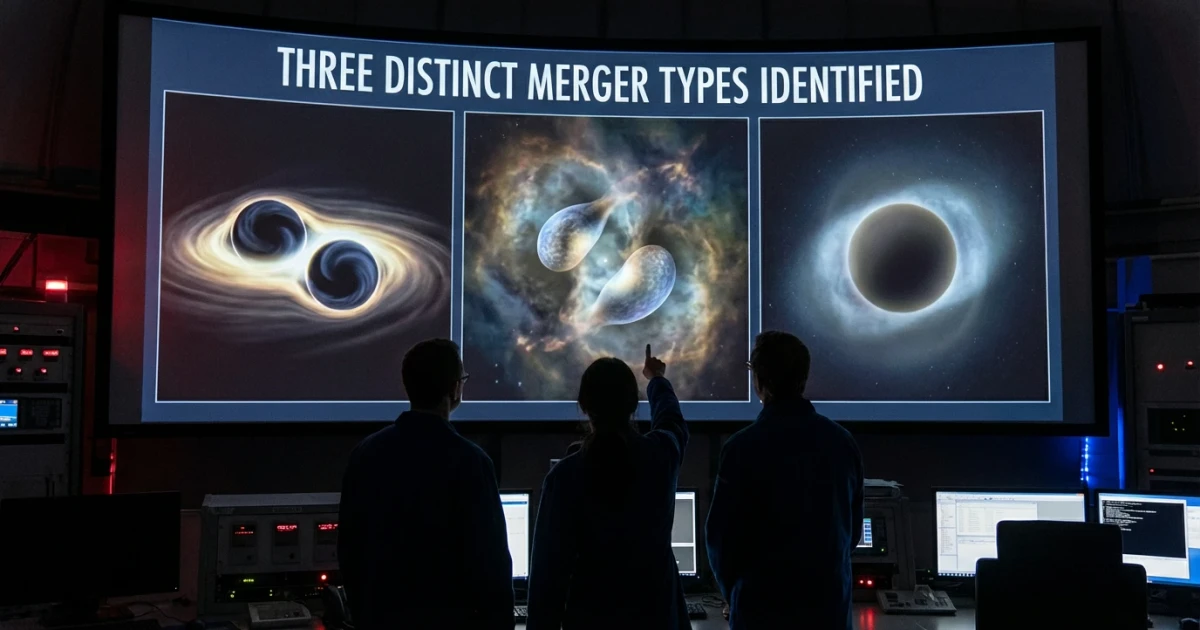
Astronomers have discovered compelling evidence that merging black holes can be classified into three distinct subpopulations, marking a significant advance in our understanding of how these cosmic giants form and interact. The findings, reported by Phys.org, draw on the latest data from recent gravitational-wave observations and sophisticated population analyses.
Breakthrough From Advanced Gravitational-Wave Detection
The ability to detect gravitational waves—ripples in spacetime caused by massive cosmic collisions—has transformed astrophysics. Since the first detection in 2015, observatories like LIGO and Virgo have compiled a growing catalog of black hole mergers. The most recent data set, known as GWTC-3, includes dozens of new detections, offering astronomers a wealth of information about the masses, spins, and origins of merging black holes.
Three Subpopulations: What the Data Reveals
By analyzing the properties of black holes in the third gravitational-wave transient catalog, astronomers have identified clear evidence for three separate subpopulations among these mergers. This classification is based on parameters such as black hole mass, spin, and the environments in which they likely formed.
- Low-mass black holes: Typically between 5 and 15 times the mass of the Sun, these are thought to originate from the collapse of massive stars.
- Intermediate-mass black holes: Ranging from 15 to 35 solar masses, these may form in dense star clusters where black holes can pair up dynamically.
- High-mass black holes: Exceeding 35 solar masses, this group hints at more exotic formation channels, possibly involving repeated mergers or unique stellar environments.
The diversity of black hole masses and spins observed in recent events supports the idea that a range of formation mechanisms are at work in the universe. These findings are bolstered by population studies, such as the one described in the Population Properties of Compact Objects from GWTC-3 research summary.
Implications for Astrophysics
The identification of three distinct subpopulations provides new clues about the life cycles of stars and the environments in which black holes merge. It suggests that the universe is more varied in its black hole population than previously thought. This discovery also helps refine models of stellar evolution and the dynamics of dense star clusters.
As gravitational-wave observatories continue to operate and new data is added to the public event database, astronomers expect to further clarify how these subpopulations form and evolve. The expanded catalog will enable more detailed studies, possibly revealing even more subgroups or rare types of mergers.
Looking Ahead
Ongoing observations and advances in gravitational-wave detection technology promise to deepen our understanding of the black hole merger landscape. As more events are cataloged and analyzed, the classification system for merging black holes will likely become even more nuanced, offering a clearer picture of these enigmatic cosmic phenomena.