Science
Atlas V Launches 29 Amazon Satellites from Cape Canaveral
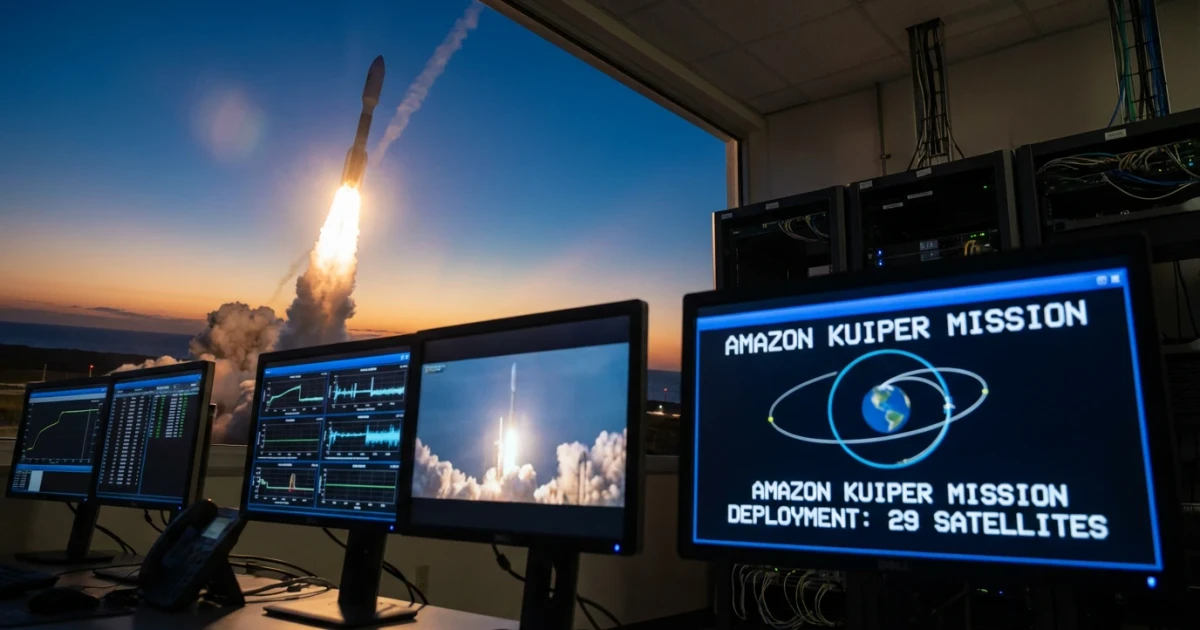
United Launch Alliance (ULA) successfully launched 29 Amazon Kuiper satellites aboard its Atlas V rocket from Cape Canaveral on Monday, advancing Amazon’s ambitious plans for a global broadband network. The event, tracked by Spaceflight Now, represents a significant step in deploying Amazon’s low Earth orbit (LEO) satellite constellation, designed to offer internet connectivity worldwide.
Atlas V Rocket: Mission Details and Launch Timeline
The Atlas V Kuiper Protoflight Mission began its countdown at Cape Canaveral, lifting off with a payload of 29 satellites. This launch utilized the Atlas V N22 configuration, a variant tailored for heavy satellite deployments. The choice of vehicle aligns with historical records of Atlas V’s reliability and versatility, as detailed in the NASA Atlas V Rocket Fact Sheet.
- The Atlas V has completed over 90 successful missions since its introduction.
- The N22 configuration features two solid rocket boosters and a dual-engine Centaur upper stage.
- This specific launch carried 29 Amazon Kuiper LEO satellites.
Spaceflight Now provided real-time coverage of the launch, highlighting both the rocket’s ascent and the deployment sequence for the satellites.
Amazon Kuiper Satellite Constellation: Expansion and Objectives
The satellites released during this launch are part of Amazon’s Project Kuiper, which aims to build a massive FCC-authorized constellation to deliver broadband internet to underserved regions. The project’s goals include:
- Providing high-speed internet access to remote and rural communities.
- Competing with other LEO constellations such as SpaceX’s Starlink.
- Meeting regulatory requirements for a minimum number of satellites deployed by a certain deadline.
Amazon’s technology overview, available on the official Kuiper page, describes the satellites as featuring advanced phased array antennas and inter-satellite links to maximize coverage and performance.
Launch Logistics and Weather Considerations
Monday’s launch window was selected based on favorable weather forecasts, as reported by Spaceflight Now’s meteorological updates. The timing ensured optimal conditions for both the rocket and satellite deployment, minimizing risks associated with wind shear or cloud cover.
Implications for Global Broadband Competition
Amazon’s continued deployment of Kuiper satellites increases competition in the LEO broadband market, which already features major players like SpaceX and OneWeb. With 29 new satellites joining the constellation, Amazon edges closer to operational status, allowing initial network testing and connectivity demonstrations later this year.
- Amazon plans to launch thousands more satellites in coming years.
- The Atlas V N22 Kuiper #2 launch marks a pivotal milestone toward commercial service.
- LEO networks are seen as vital for bridging digital divides globally.
Looking Ahead: Future Launches and Constellation Growth
ULA and Amazon are expected to conduct several more launches as Project Kuiper scales toward its full constellation. The Atlas V’s proven track record, as detailed by the European Space Agency, makes it a key asset for these early deployment missions. As satellite numbers grow, Amazon will refine its technology and begin pilot service, with a long-term goal of global coverage.
For those tracking launch history and upcoming missions, Jonathan’s Space Report provides extensive data on orbital launches, including the latest Kuiper deployments.
Conclusion
The successful launch of 29 Kuiper satellites aboard Atlas V from Cape Canaveral signals ongoing progress in Amazon’s quest for global broadband access. As the constellation expands, both the technical and competitive landscape for satellite internet will continue to evolve, promising new opportunities for connectivity around the world.