Science
Atlas V Rocket Launches 29 Amazon Kuiper Satellites from Florida
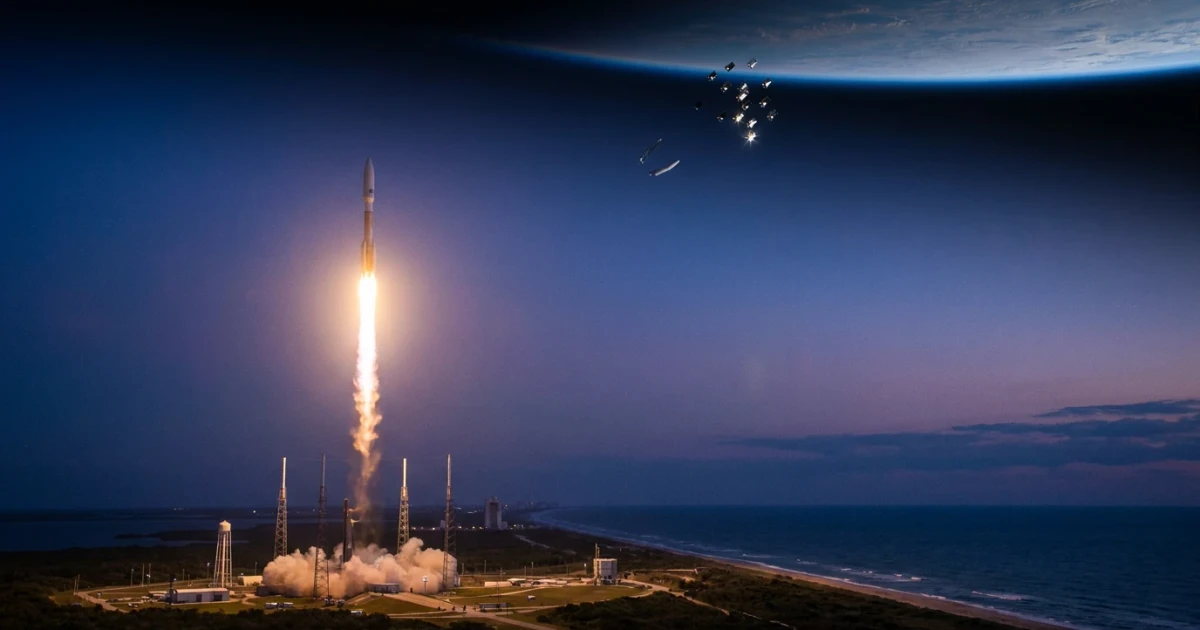
United Launch Alliance (ULA) successfully launched an Atlas V rocket carrying 29 Amazon Kuiper satellites from Cape Canaveral on Thursday, advancing Amazon’s ambitions to provide global broadband from space. The mission, conducted from Florida’s Space Coast, is a crucial milestone for Amazon’s Project Kuiper as it moves toward deploying a large-scale satellite internet constellation in low Earth orbit (LEO).
Atlas V Mission Details
The Atlas V rocket, operated by ULA, lifted off from Cape Canaveral carrying a payload of 29 Kuiper LEO satellites. These satellites are part of Amazon’s broader plan to deploy thousands of small spacecraft to create a global broadband network, aiming to compete with existing services such as SpaceX’s Starlink. According to the official ULA mission overview, the vehicle configuration and launch profile were tailored to maximize deployment efficiency for the batch of Kuiper satellites.
- Launch vehicle: Atlas V rocket
- Launch site: Cape Canaveral, Florida
- Payload: 29 Project Kuiper LEO satellites
- Mission objective: Expand Amazon’s internet satellite constellation
Project Kuiper’s Growing Satellite Constellation
Amazon’s Project Kuiper aims to deploy over 3,000 LEO satellites to deliver high-speed internet to underserved regions worldwide. Regulatory filings with the Federal Communications Commission (FCC) and International Telecommunication Union (ITU) detail the technical parameters and coordination efforts for the satellite system, including frequency assignments and orbital slots. The successful deployment of 29 satellites on this Atlas V launch adds to the growing number of Kuiper satellites in orbit, as tracked by the Union of Concerned Scientists satellite database.
Technical and Operational Significance
The Atlas V rocket has a strong record of reliability, with NASA Kennedy Space Center data showing dozens of successful launches since its introduction. For Amazon, leveraging ULA’s proven launch vehicle is a strategic choice to ensure dependable delivery of its Kuiper satellites. Each satellite in this batch will join others in forming a mesh network, supporting Amazon’s plan to offer fast, low-latency internet connections around the globe. Academic research highlights the importance of such large constellations, noting that deploying hundreds to thousands of satellites requires precise launch profiles, collision avoidance, and advanced communication links.
Competition in the Satellite Internet Market
Project Kuiper is part of a competitive push among tech giants to dominate the satellite internet sector. SpaceX’s Starlink already has thousands of operational satellites, and other players like OneWeb are also vying for market share. The launch of 29 new Kuiper satellites signals Amazon’s intent to accelerate its rollout and begin service in targeted areas within the next few years. Industry observers will be watching how Amazon navigates technical, regulatory, and business challenges as it seeks to close the gap with established rivals.
Looking Ahead
With Thursday’s successful launch, Amazon’s Project Kuiper takes a significant step toward operational capability. As more satellites are launched and the network matures, consumers in remote and underserved regions could see new options for reliable, high-speed internet. The mission also underscores the vital role ULA and its Atlas V rocket continue to play in supporting commercial space initiatives. Further launches are expected as Amazon races to meet its FCC deployment milestones and realize its vision of a truly global broadband network.