World
Australia’s decommissioned substations become sought-after homes amid housing crunch
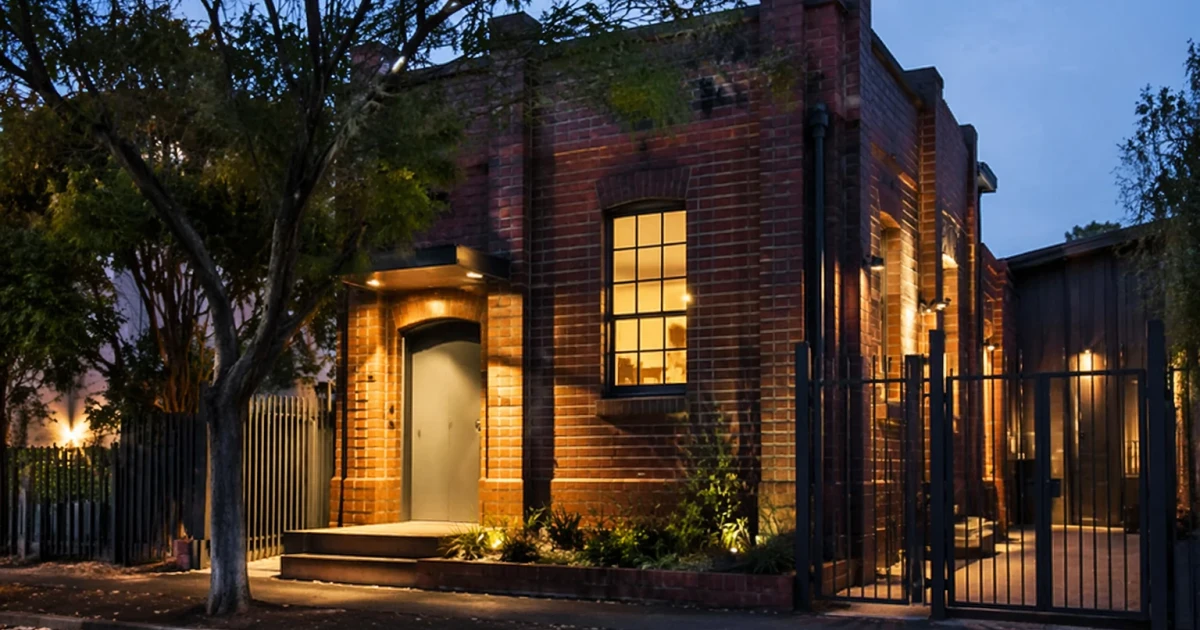
A derelict power asset is turning into a status home, and that says as much about Australia’s housing squeeze as it does about design. Former substations are being recast as compact houses, cafes and luxury conversions, but the market for them remains small, expensive and highly selective. The result is a striking response to scarcity, not a mass answer to it.
A housing shortage that has shifted, not disappeared
Australia’s rental market has cooled from the fever of the past few years, but that does not mean affordability has recovered. The Australian Bureau of Statistics says rental growth has slowed since mid-2024 as vacancy rates have risen, yet price pressure is still lingering in the system. For tenants, that means a little less heat in the market, not relief.
The bigger structural problem is still social housing. The Australian Institute of Health and Welfare says the number of social housing households rose from 379,000 in 2008 to 423,000 in 2023, while waiting-list pressure has increased since 2014. That gap helps explain why any unconventional supply idea, from office-to-home conversions to substation makeovers, gets attention well beyond architecture circles.
Why substations keep drawing buyers and planners
Substations are attractive because they sit on small, difficult urban sites that are expensive to develop from scratch. Their thick walls, industrial bones and often central locations make them good candidates for adaptive reuse, especially where preserving heritage fabric matters as much as creating new housing. In tightly constrained markets, that can turn a liability into an asset.
The catch is scale. These projects are usually bespoke, technically demanding and heavy on approvals, which means they are more likely to produce one-off prestige homes than broad affordability gains. A restored substation can add a dwelling, sometimes two, but it does not unlock the kind of volume needed to move a national housing market.
Sydney’s heritage fight is the sharpest test
Nowhere is the tension more visible than in Sydney’s inner west. Burwood Council voted in November 2023 to heritage-list seven electricity substations described as decrepit, prompting criticism from two local politicians. That episode captures the central policy dilemma: heritage protections can save distinctive structures, but they can also constrain redevelopment on land where every square metre is under pressure.
The New South Wales Government Architect has tried to frame the opposite case. Its material on Substation No. 175 presents the former Sydney substation, originally completed in 1925 and decommissioned in 1996, as an example of what careful adaptation can achieve. The project now includes a street-level cafe and two residences, showing how reuse can stitch a dormant industrial shell back into daily urban life.
Then there is Darlinghurst, where Tribe Studio turned a defunct 1930s-era electrical substation into an award-winning multi-level home on a footprint of less than 50 square metres. The scale is telling: this is not suburban replacement housing, but precision architecture squeezed into an almost impossibly small site. It is the sort of project that demonstrates ingenuity, while also underlining how rare such opportunities are.
Rozelle offers a similar lesson. The substation at 10 Hancock Street was built in 1907, powered trams across Sydney’s inner west, and was decommissioned in 1958. Domain described it as the last intact structure of its kind in New South Wales, and its conversion into a four-bedroom family home shows how heritage value and domestic use can coexist when the building is rare enough to justify the effort.
The trend is national, but still niche
The idea is not confined to Sydney. In West Launceston, Mark and Karen Bartkevicius won council approval to convert an abandoned Hydro substation into a two-storey luxury home. Built in 1922 to carry electricity from the Waddamana scheme to Launceston’s biggest power users, the building had not been used since the 1960s, yet it still offered enough structure and character to become a high-end residence.
Brisbane has its own example: a 1948 substation has been transformed into a luxury dual-income home. That detail matters because it shows the market reading these buildings not as cheap shelter, but as premium properties with a story. The appeal is architectural, but it is also financial, aimed at buyers willing to pay for uniqueness, heritage and centrality.
What limits the model from becoming a housing solution
The first barrier is planning. Every project in this category depends on site-specific approval, heritage scrutiny and a workable compromise between conservation and liveability. Burwood’s listing decision, the Bartkevicius approval in West Launceston and the Government Architect’s promotion of Substation No. 175 all point to the same reality: these buildings do not move through a standard housing pipeline.
The second barrier is cost. Small sites and older industrial shells tend to require expensive structural work, services upgrades and careful design to make them habitable, especially when the usable footprint is tiny, as in Darlinghurst. That makes many projects economically rational only in affluent neighborhoods or for buyers chasing a one-of-a-kind asset, not for builders trying to deliver volume housing at lower price points.
The third barrier is public purpose. Australia’s housing shortage is broad, while substation conversions are narrow. They can preserve history, enliven dead land and add homes in dense urban districts, but they do not solve the underlying shortage of social housing, nor do they provide enough units to materially change vacancy or rent pressure on their own.
The policy lesson is clear: adaptive reuse deserves a place in housing strategy, but it cannot be treated as a substitute for new supply at scale. Substations can be part of the answer, especially where heritage and urban form make demolition a loss, yet they remain an eye-catching niche unless governments pair them with broader planning reform, faster approvals and a serious push on affordable and social housing.
Sources
- [1]nytimes.com
- [2]abc.net.au
- [3]planning.nsw.gov.au
- [4]thespaces.com
- [5]domain.com.au
- [6]realestate.com.au
- [7]abs.gov.au
- [8]aihw.gov.au
- [9]au.news.yahoo.com