Science
Bacterial Consortia Found to Break Down Phthalate Plasticizers
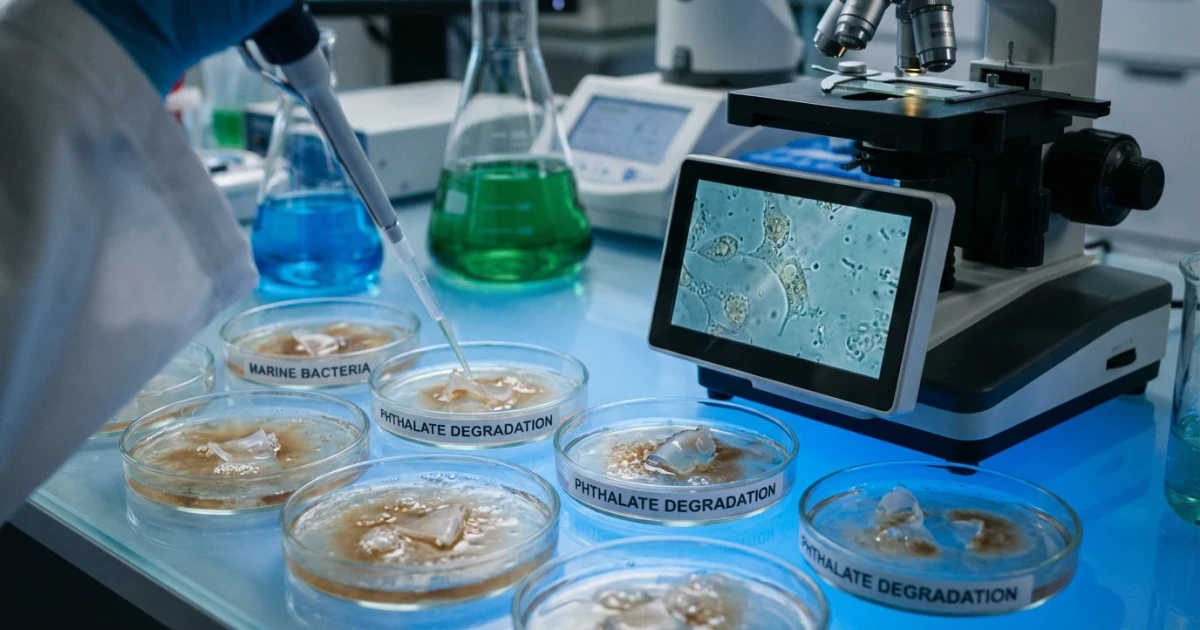
Scientists have uncovered that groups of bacteria, known as consortia, can effectively degrade phthalate plasticizers—chemicals commonly used to soften plastics—where single bacterial species have failed. This discovery highlights a promising biological solution for tackling plastic pollution, particularly in marine environments.
Understanding Phthalate Plasticizers and Their Environmental Impact
Phthalate plasticizers are a class of chemicals widely used to make plastics flexible and durable. They are found in products ranging from food packaging to medical tubing. However, their widespread use has led to significant environmental concerns. Phthalates are known to leach into water systems, where they can persist and potentially disrupt aquatic life.
Efforts to assess and manage the risks associated with these chemicals are ongoing, as outlined in the U.S. EPA's Phthalates Action Plan. Traditional chemical and physical methods of removing phthalates from the environment often prove inadequate due to their stability and abundance.
Breakthrough in Biodegradation: The Power of Cooperation
According to reporting by Phys.org, recent research has identified that while individual bacterial strains struggle to metabolize phthalate plasticizers, a consortium—a cooperative group of different bacterial species—can successfully break them down. This finding suggests that the metabolic pathways required to degrade phthalates are distributed among multiple organisms, each contributing specific enzymes or steps in the process.
- Single bacterial species alone cannot fully metabolize complex phthalate plasticizers.
- Bacterial consortia work together, sharing the metabolic workload to achieve complete breakdown.
- This cooperative process accelerates the degradation of phthalates in natural environments, such as oceans.
While the Phys.org article focuses on ocean bacteria, the principle likely extends to other environments where phthalate pollution is a concern.
Implications for Marine and Environmental Health
The discovery has important implications for the future of plastic waste management. Marine environments, in particular, are plagued by microplastics and their associated plasticizers. According to a 2021 research article in Frontiers in Microbiology, microbial communities play a critical role in the natural attenuation of phthalates, but the full potential of these communities is only now being appreciated.
Bacterial consortia could be harnessed to develop new biotechnologies for cleaning up plasticizer contamination. For example, bioaugmentation—introducing or enhancing bacterial consortia in polluted areas—could accelerate the breakdown of phthalates, making environments safer for wildlife and humans.
Challenges and Future Directions
While the prospects are promising, challenges remain. Understanding the specific interactions and metabolic exchanges among bacterial species is complex. Further research is needed to determine which combinations of bacteria are most effective and how environmental factors—such as temperature, salinity, and nutrient availability—affect their activity. Regulatory agencies, such as the European Chemicals Agency (ECHA), are monitoring advances in biodegradation closely to inform future policies and remediation strategies.
Recent reviews in the field, including the Science of The Total Environment, highlight ongoing efforts to map the environmental fate of phthalate esters and to optimize microbial degradation pathways for real-world applications.
Conclusion: A Step Forward in Combating Plastic Pollution
The cooperative action of bacterial consortia in breaking down phthalate plasticizers offers a significant step forward in the fight against plastic pollution. Harnessing these natural processes may lead to more effective remediation strategies, reducing the environmental and health risks posed by persistent plastic additives.
As research continues, the hope is that these findings will pave the way for targeted biotechnological solutions to a longstanding global problem.