Business
Bank of England expected to hold rates as inflation risks rise
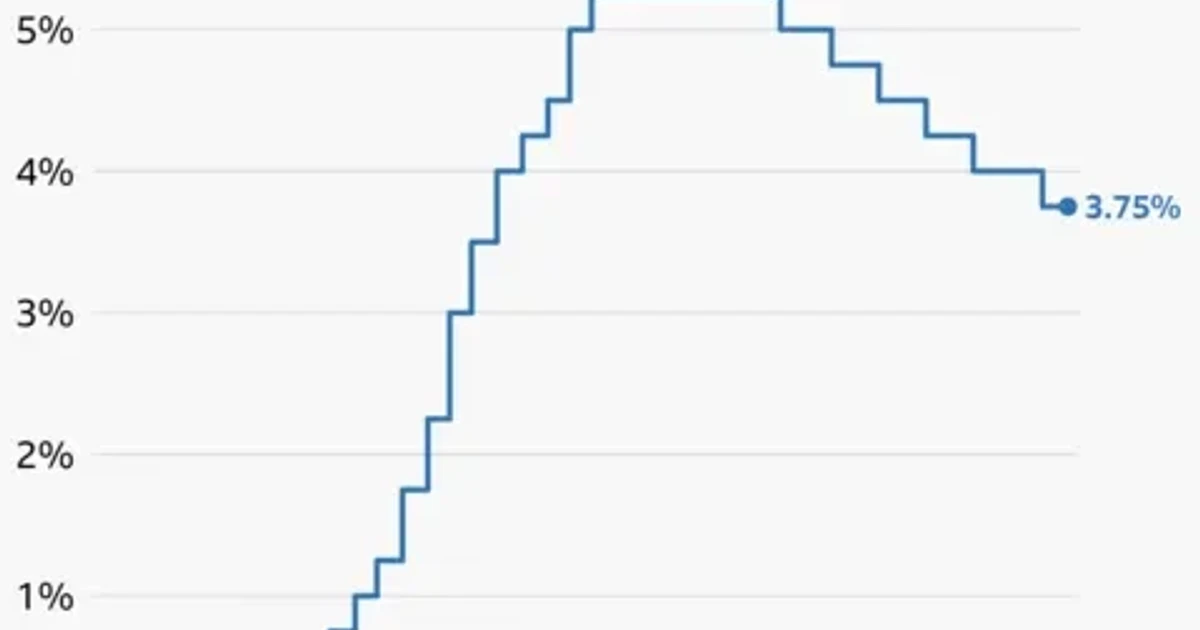
The Bank of England is expected to leave interest rates unchanged at 3.75% on June 18, even as conflict-driven energy shocks threaten to send inflation higher again. Policymakers are weighing whether higher oil and gas costs will pass through to transport, food and utility bills before they risk another move.
The central question is how quickly the war-related spike in energy prices filters through to Britain’s economy. In April, the Bank’s Monetary Policy Committee voted 8-1 to hold Bank Rate at 3.75%, with one member backing an increase to 4.0%, after saying the Middle East conflict had already pushed up energy prices and could lift inflation further later in 2026. The Bank said consumer prices had risen to 3.3% and warned of second-round effects in wage and price-setting.
That caution comes against a weak growth backdrop. The Office for National Statistics said UK monthly GDP fell 0.1% in April 2026, even though output over the three months to April was still 0.7% higher than in the three months to January. For Andrew Bailey and his colleagues, that leaves little room to tighten policy aggressively if growth is already softening.
The inflation risk is not abstract. The Bank said the conflict restricted transport through the Strait of Hormuz and limited alternative export capacity, keeping global energy markets highly uncertain. Its April Monetary Policy Report projected real income would fall by 0.5% in the year to 2026 Q2 as higher energy prices fed through to consumer inflation. That is the chain reaction policymakers are trying to contain: war, then oil and gas, then higher household bills, then a broader squeeze on spending power.
So far, the policy debate has tilted toward patience. In February, four members of the committee voted to cut Bank Rate to 3.5%, while five voted to keep it at 3.75%. By March, the committee had moved to a unanimous hold at 3.75%, underscoring how quickly the mood shifted as energy prices rose again.
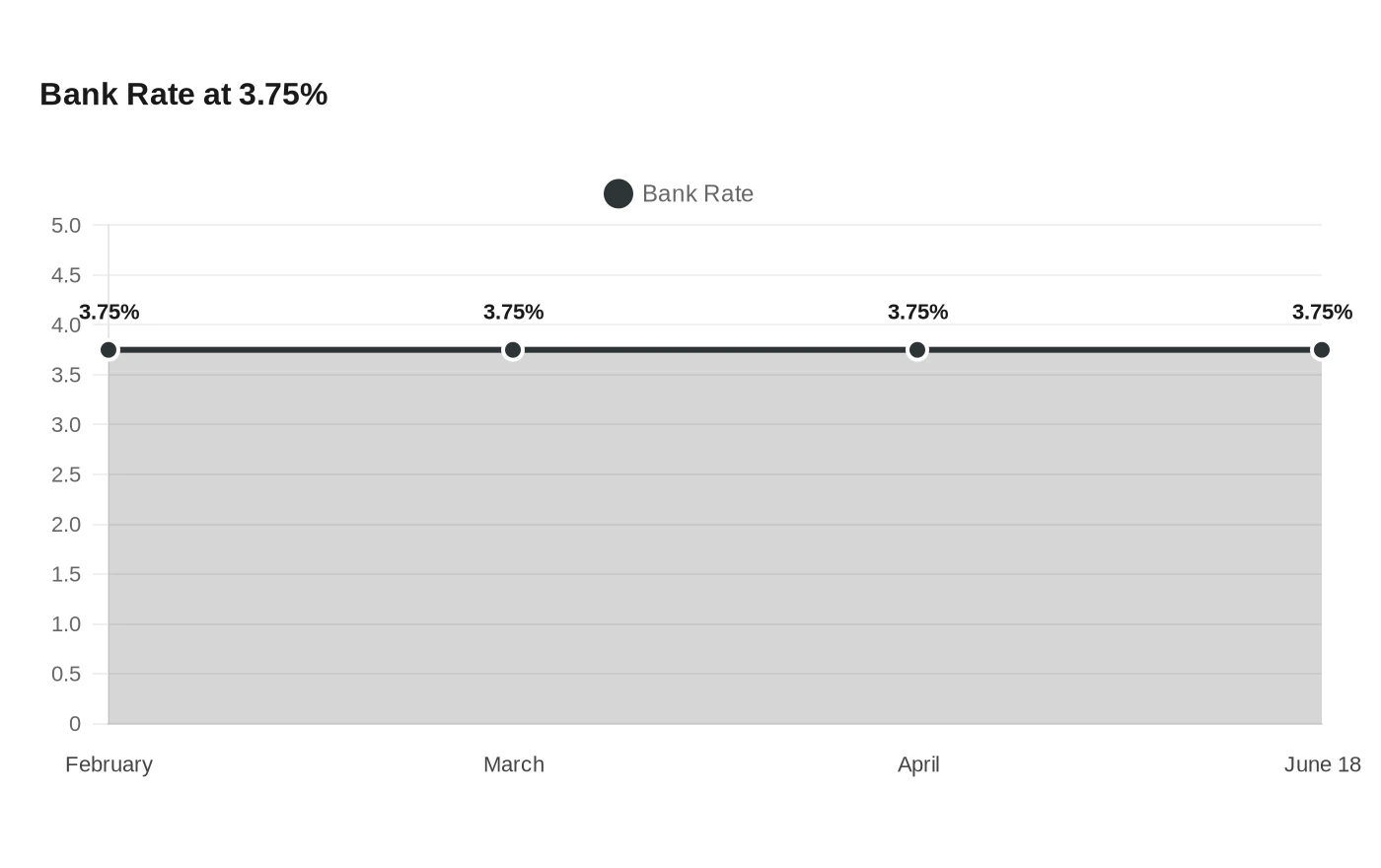
Market expectations are firm. All 65 economists in a recent poll expected the Bank to keep rates at 3.75% on June 18, though nearly 40% still anticipated at least one rate hike later in 2026. That split captures the dilemma facing the Bank: hold steady for now, or risk easing too soon if geopolitical pressure turns a temporary energy shock into a more persistent inflation problem.