Business
Bank of England warns AI poses growing threat to financial stability

The Bank of England is treating artificial intelligence as a bigger threat to financial stability, warning that faulty models could amplify shocks through crowded trades, heavier leverage and cyber vulnerabilities. Its Financial Stability Report, published on 7 July 2026, found leverage in equity markets had risen substantially since its December 2025 review, even as the UK financial system remained resilient and continued to support the real economy.
Earlier vulnerabilities had not gone away. Risks in stretched share valuations, sovereign debt markets and risky credit, including private credit, remained in place, while pressure was building from investors borrowing to buy shares and from AI-related firms taking on debt to fund investment. A sharp reassessment of the value of AI-linked companies could trigger a steep fall in share prices, and any correction could be intensified by crowded positions and high leverage. Debt taken on by AI firms depends heavily on future earnings assumptions.
At the European Central Bank’s Sintra forum on 30 June 2026, Sarah Breeden, the Bank’s deputy governor, said current frameworks were not built to contemplate autonomous agents and that relying on a human in the loop for every action was unlikely to be realistic. She said AI agents could chain together sequences of actions, with financial systems potentially evolving quickly toward one in which they transact for consumers and merchants, execute trading strategies and identify cyber vulnerabilities.
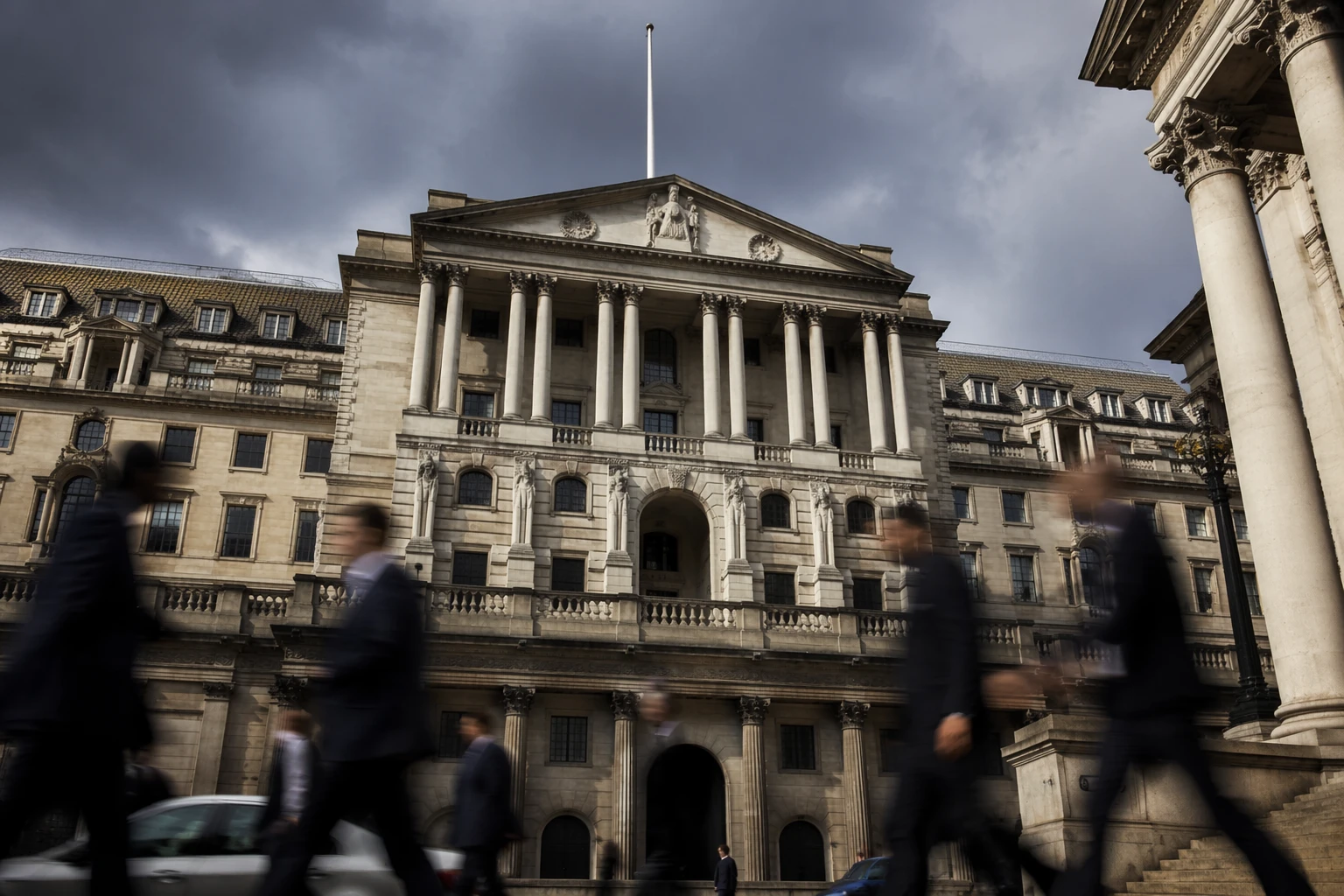
Breeden also said the Bank was considering enhanced recovery arrangements for core banking systems, including the ability for one bank to take over another bank’s basic functions during a disruption. On the markets side, circuit breakers or kill switches were among the safeguards under consideration if faulty AI models triggered a broader selloff or trading meltdown.
The Financial Stability Board published consultation work on 10 June 2026 on sound practices for responsible AI adoption by financial institutions, after its plenary in London on 1 June discussed AI adoption and related vulnerabilities. The Bank’s July report, based on data available up to 25 June 2026 and finalized on 26 June, addresses the possibility that the same technology could transmit stress across markets faster than existing safeguards can contain it.
Sources
- [1]aol.com
- [2]bankofengland.co.uk
- [3]money.usnews.com
- [4]fsb.org