Business
Bank of Spain sees steady growth, keeps 2026 forecast
Spain’s economy kept moving forward in the spring, but the latest numbers from the Bank of Spain showed how much of that strength still rests on tourism, consumer spending and immigration, and how quickly inflation pressure can change the picture. The central bank said quarterly growth in the second quarter likely came in between 0.5% and 0.6% from the previous three months, close to the 0.6% pace recorded in the first quarter.
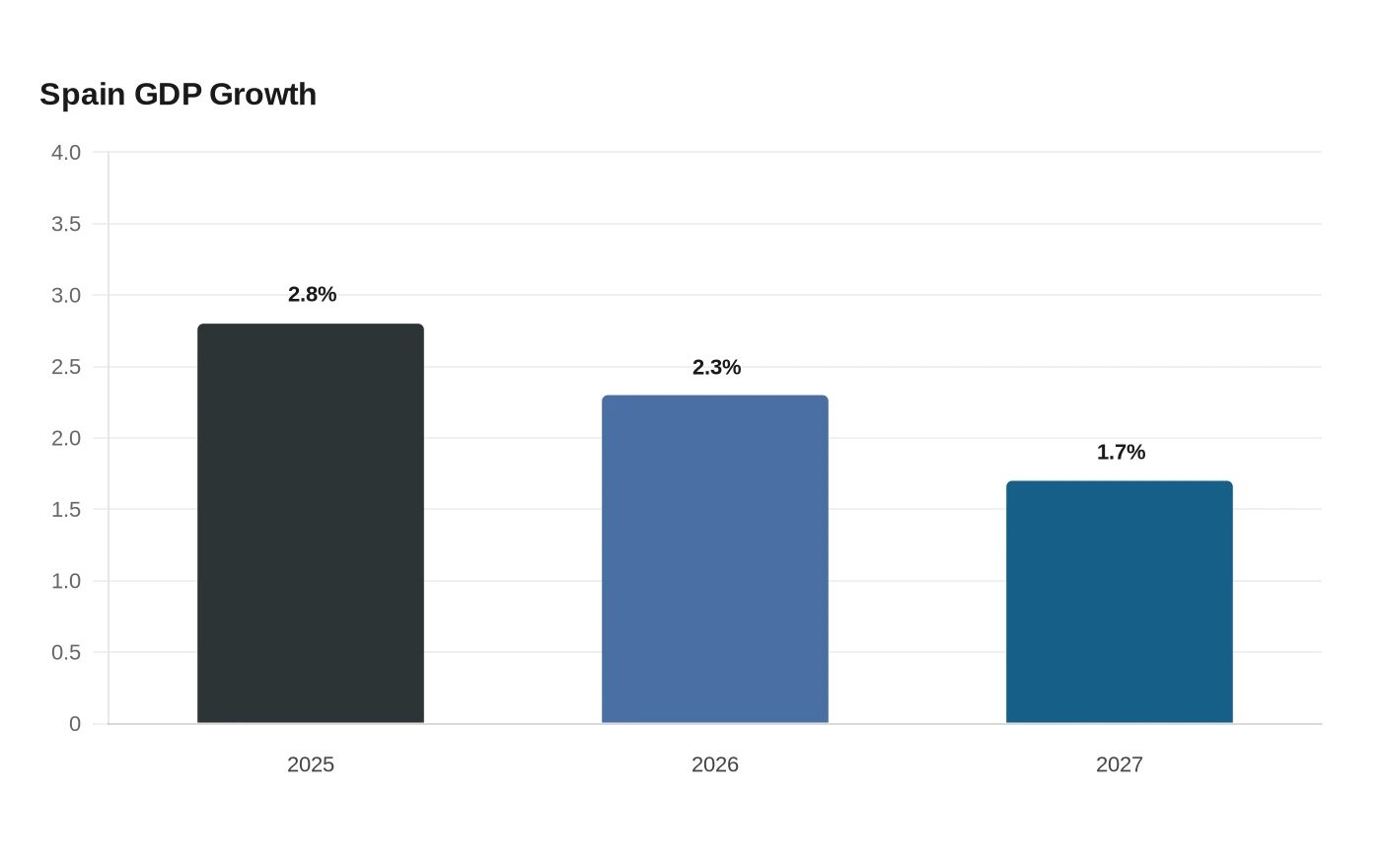
At the same time, the Bank of Spain held its full-year 2026 growth forecast at 2.3%, unchanged from March, while keeping its 2027 outlook at 1.7%. That still points to a slowdown from the 2.8% expansion Spain posted last year, but it leaves the country growing faster than many larger euro-zone peers at a time when the region’s recovery has become more uneven.

The central bank’s new projections also carried clear warning signs. It raised its inflation forecast for 2026 to 3.6% from 3% and lifted its 2027 estimate to 2.6% from 2.5%, citing higher energy prices after the conflict in the Middle East. The bank’s outlook was based on data available through May 27, before a preliminary U.S.-Iran peace deal later helped ease part of the energy shock.

Domestic demand is still doing much of the work, but the Bank of Spain said that momentum has weakened, and it noted that the external sector’s positive contribution partly reflected imports falling more sharply than exports. That makes the current expansion look sturdy, but not especially broad-based. In plain terms, Spain is still growing, yet some of that support comes from softer import demand rather than a stronger export engine.
The broader policy backdrop reinforces that mixed picture. The European Commission expects Spain’s real GDP to grow 2.4% in 2026 and 1.9% in 2027, driven mainly by domestic demand, a strong labor market and investment. The International Monetary Fund said Spain’s economy grew 2.8% in 2025, helped by strong immigration that supported labor-force gains, and said the 2025 deficit narrowed to 2.4% of GDP while systemic financial risks remained low.

Fiscal projections remain manageable, but not trouble-free. The Bank of Spain nudged its 2026 budget-deficit forecast up to 2.4% from 2.3%, though it still expects the shortfall to edge down from 2.5% last year. It also sees debt declining gradually, ending 2026 at 98.9% of GDP and easing to 97.9% by the end of 2027.
The message from Madrid is clear: Spain is still outperforming much of Europe, but the central question is whether that resilience can last if inflation stays sticky and energy costs turn volatile again.
Sources
- [1]money.usnews.com
- [2]bde.es
- [3]economy-finance.ec.europa.eu
- [4]imf.org
- [5]finance.yahoo.com