Technology
Banks Face Scrutiny Over Anthropic’s Advanced AI Model
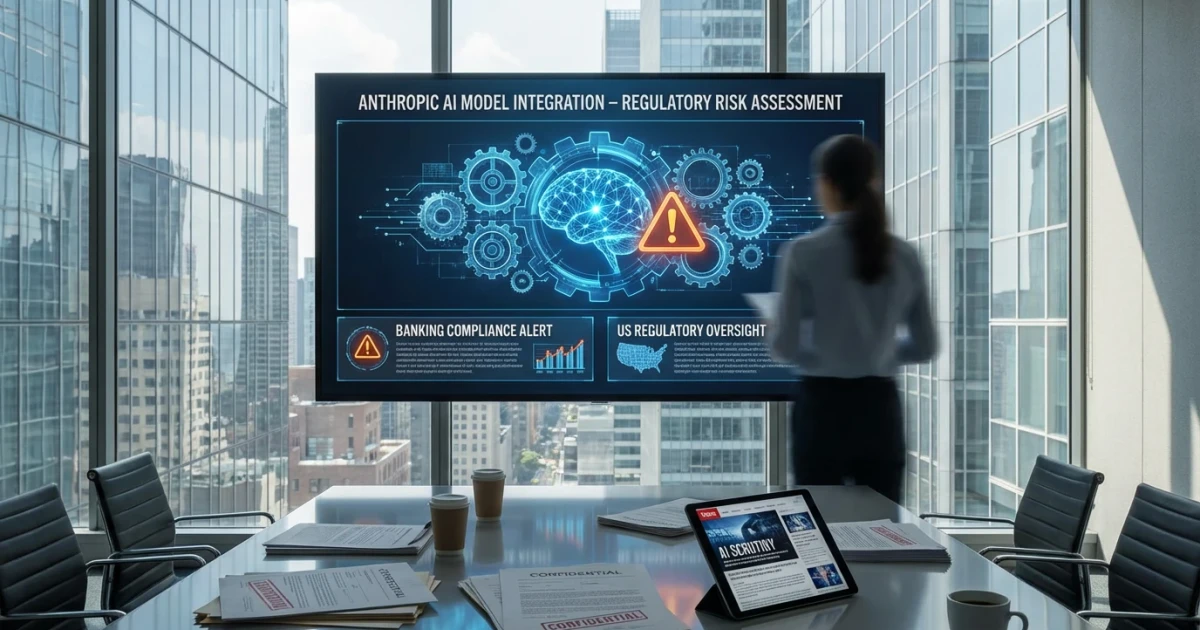
Banks and financial institutions are under fresh scrutiny as U.S. regulators warn of the risks posed by Anthropic’s latest AI model, a system many experts consider among the world’s most powerful language models to date. Recent coverage by The New York Times and PBS underscores mounting concerns about the adoption of advanced artificial intelligence in the financial sector, spotlighting new regulatory guidance and industry unease.
Regulators Sound Alarm on Model Risk
The New York Times reported that federal supervisors have issued warnings to banks about integrating Anthropic’s AI technology into core operations. The guidance centers on potential vulnerabilities, including data privacy, operational disruptions, and the risk of biased or erroneous decisions when using large language models for tasks like credit scoring, anti-money laundering, and customer service.
Regulators are urging banks to adhere to established protocols for model validation and risk management, such as those outlined in the Basel Committee’s Sound Practices for Model Risk Management and the FDIC’s Supervisory Guidance. These frameworks emphasize transparency, documentation, and independent review for any advanced model deployed in sensitive financial processes.
- Supervisory reports highlight potential exposure to fraud if AI systems are not properly monitored
- Model errors could lead to regulatory violations or consumer harm if left unchecked
- New models must comply with the NIST AI Risk Management Framework, which sets standards for responsible AI use
Anthropic’s Claude 3 Raises the Stakes
PBS coverage notes that Anthropic’s new model, Claude 3, is at the forefront of a wave of generative AI technology transforming industries. According to Anthropic’s official model card, Claude 3 demonstrates significant improvements in natural language understanding, reasoning, and safety features. Its performance is benchmarked highly on the Chatbot Arena Leaderboard, where it competes with other leading models from OpenAI and Google.
Despite improvements, PBS points out that “even advanced models can make subtle errors or reflect unintended biases,” a concern echoed by many in the banking sector. The adoption of such technology could yield faster decision-making and efficiency gains, but also introduces new risks related to transparency and accountability.
Industry Response and Compliance Challenges
Banks are moving cautiously. The New York Times notes that executives at major financial institutions are weighing the benefits of AI against the potential for costly compliance failures. Some banks have already begun limiting the use of generative AI to back-office functions or pilot projects, pending further regulatory clarity.
- Internal risk teams are conducting reviews of AI model documentation and validation procedures
- Firms are investing in “human-in-the-loop” systems to monitor AI outputs for errors or bias
- Institutions are preparing for stricter audits and reporting obligations as regulators increase scrutiny
Balancing Innovation and Safety
Both sources highlight the tension between innovation and oversight. While Anthropic’s technology offers the potential for improved customer experience and operational efficiency, experts cited by PBS and The New York Times stress the importance of robust safeguards as advanced AI takes on greater roles in finance.
Financial regulators, drawing from frameworks like the NIST AI Risk Management Framework, are likely to maintain a cautious stance, prioritizing consumer protection and systemic stability as the sector experiments with powerful new tools like Claude 3.
Looking Ahead
With the pace of AI development accelerating and competition among technology providers heating up, the pressure is on for banks to adapt while maintaining compliance with evolving regulatory expectations. As Anthropic’s models continue to set new benchmarks for capability and scale, the financial industry’s approach to AI adoption will serve as a bellwether for responsible innovation in other critical sectors.