Politics
Barrett draws conservative backlash after rulings against Trump agenda

Amy Coney Barrett has become the Supreme Court’s most consequential vote in two June decisions that undercut Donald Trump, and the backlash from the right has been unusually sharp. In back-to-back rulings on June 29 and June 30, Barrett joined Chief Justice John Roberts and the court’s three liberal justices in outcomes that angered Trump allies and intensified the view that she now sits at the center of the Roberts Court.
The first blow came in Watson v. Republican National Committee, where the court voted 5-4 to let Mississippi count mail-in ballots that are postmarked by Election Day and arrive within five days after it. The ruling upheld a grace period that Republicans had challenged, and it landed as a setback for Trump and his allies in the voting wars. One day later, the court issued a 6-3 decision rejecting Trump’s bid to end birthright citizenship for children born in the United States to parents who are unlawfully present or temporarily present. Chief Justice Roberts wrote that majority opinion, with Barrett again in the majority.
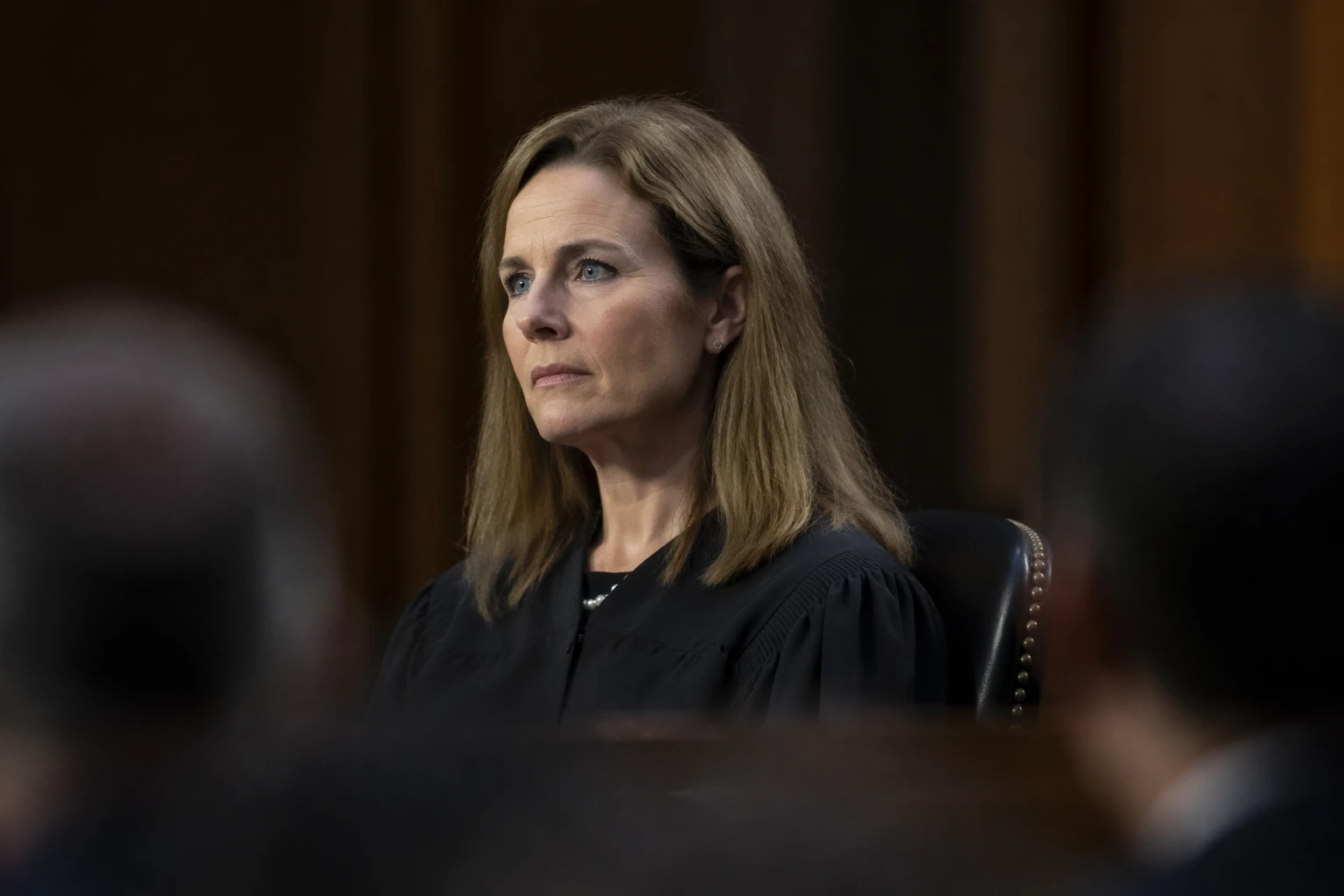
That pattern has fueled the perception that Barrett is the justice most likely to break with Trump and with the court’s hardest-line conservatives when the stakes are highest. ABC News described her in 2025 as the Roberts Court’s “center figure” and “swing justice,” a label Barrett has resisted by saying she does not think of herself that way. But the latest rulings have made that description harder to dismiss, especially because they came in cases with direct political consequences for Trump’s agenda on elections and immigration.
Conservative commentators and activists responded with criticism that went well beyond ordinary judicial disagreement, including online attacks. The Hill reported that Barrett also faced sexist attacks after the birthright-citizenship ruling. The reaction sharpened an old tension around Barrett, who was appointed by Trump in 2020 and took her seat on October 27, 2020 after a rapid confirmation process. She is the court’s youngest justice and the fifth woman ever to serve on the Supreme Court, a résumé that once made her a celebrated Trump-era recruit on the right.

Barrett’s rise has also come with real personal risk. Fairfax County Police confirmed a swatting incident at her Virginia home on May 28, 2026, a reminder that the Court’s most politically exposed justices are now navigating not only doctrinal battles but threats at home. For Barrett, the latest term has made her less a reliable conservative vote than the justice who can determine whether the court moves as a bloc or fractures at the moments that matter most.
Sources
- [1]nytimes.com
- [2]abcnews.com
- [3]scotusblog.com
- [4]ap.org
- [5]thehill.com
- [6]fjc.gov