Sports
Batistuta recalls Argentina's World Cup rivalry with England before semifinal

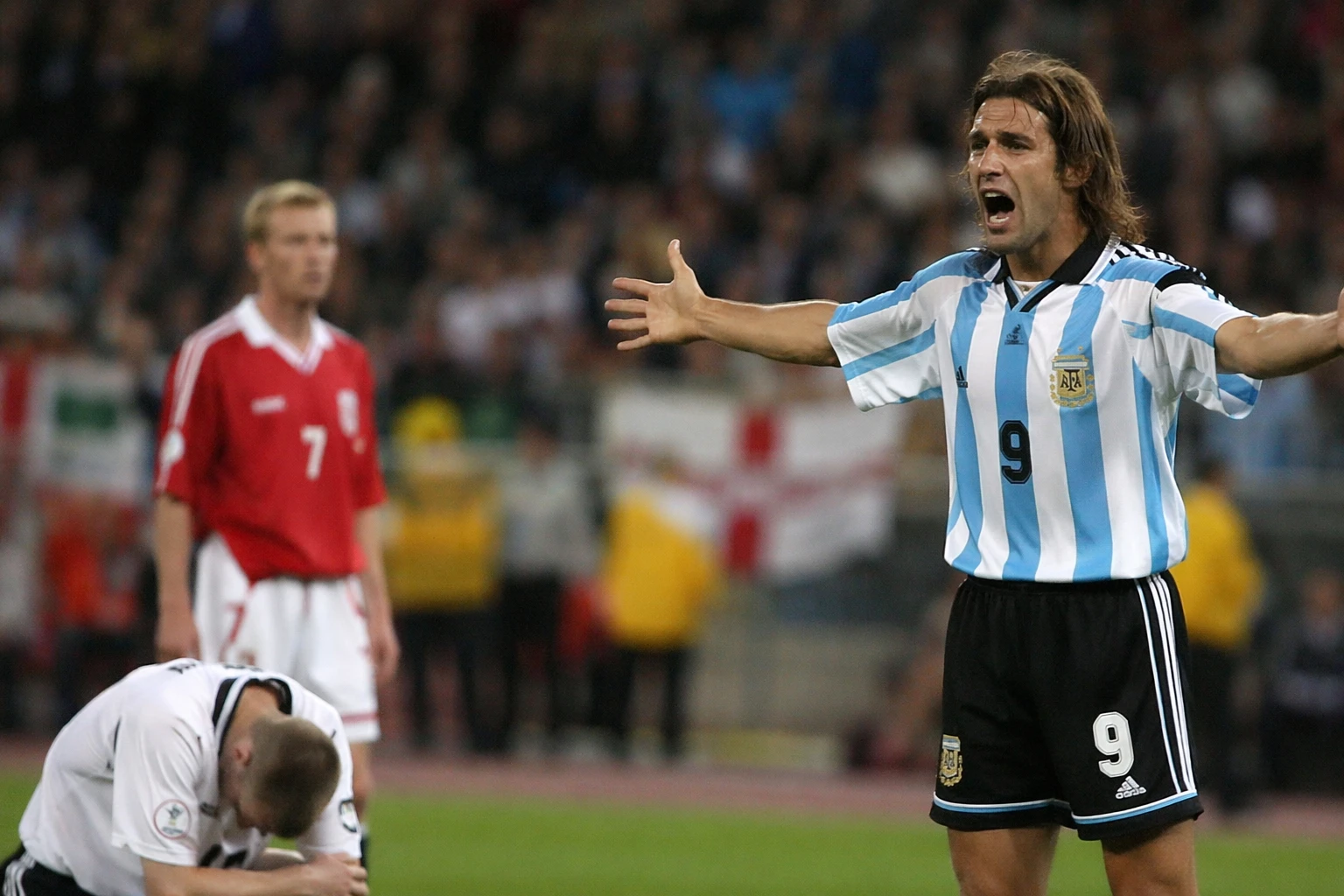
Gabriel Batistuta’s memories of Argentina’s clash with England have returned to the center of a familiar World Cup pressure point, with the old rivalry now folded into the logic of a semifinal run rather than left as nostalgia. The stakes are familiar enough to carry emotional weight and specific enough to be useful: a 2-2 draw in Saint-Étienne in 1998, a penalty shootout, Michael Owen’s celebrated solo goal and David Beckham’s expulsion.
That match remains one of the clearest examples of how Argentina and England have turned a World Cup meeting into a charged event that modern teams still draw on. Batistuta lived that era from the front line. Between 1991 and 2002, he played 78 matches for Argentina and scored 56 goals, a record that still leaves him second on the national scoring list behind Lionel Messi.
His perspective matters now because Lionel Scaloni also knows the World Cup from both sides of the line. FIFA’s account of his career notes that he played seven matches for Argentina’s senior team and was part of the squad in Germany in 2006 before returning to the tournament as a champion coach in Qatar in 2022. That arc gives Scaloni a rare authority over the symbolism of a semifinal, especially one shaped by a rivalry as loaded as Argentina-England.
England enters this cycle with its own burden of history. It will play its 17th World Cup and its eighth in a row in 2026, still chasing only a second title after winning at home in 1966. Its other deep runs, semifinal finishes in 1990 and 2018, have become part of the same narrative that makes Argentina meetings feel larger than the bracket itself. Thomas Tuchel, confirmed as England’s manager in October 2024 and in charge from January 2025, now inherits that expectation.

For Argentina, the recent memory that most clearly changed the team’s emotional posture came at the Maracaná in 2021, when the Copa América title broke a long psychological weight. Scaloni later described that victory as a turning point, and the team’s greater looseness since then has helped convert pressure into purpose. In that sense, Batistuta’s recollection is not just a look back at 1998. It is a reminder that historic rivalries are still being managed, sharpened and reused by teams that know how much a familiar opponent can mean in a knockout tournament.
Sources
- [1]telemundo.com
- [2]fifa.com
- [3]wikipedia.org