Politics
BBC analysis shows honours system still skewed toward the privileged
The honours system is showing more movement at the edges than at the top. A BBC analysis of Cabinet Office data found that in the latest New Year Honours, only 6% of higher awards went to people in the north of England and only 4% went to people from working-class backgrounds, while more than 60% went to people from professional or managerial backgrounds.
Where the system is opening up
The clearest sign of change is that more people from backgrounds long underrepresented in public recognition are now reaching the honours lists at all. The Cabinet Office says its diversity work now tracks socioeconomic background, geography, gender, ethnicity, disability and sexual orientation, a broader set of measures than the old image of an honours system dominated by the same social circles.
That widening lens matters because the honours system is not just about celebration. It is one of the state’s most visible mechanisms for deciding whose service counts, and the BBC analysis suggests that the pool is becoming more varied in some respects even as the top end remains concentrated among the already privileged. The recent shift is real, but it is uneven.
Ethnicity data now forms part of that picture too. The Government’s ethnicity facts and figures page on honours recipients was published on 9 July 2025, and it tracks the ethnicity of people receiving New Year and Birthday honours. That kind of monitoring gives ministers and officials a clearer view of who is being recognised, and where the gaps remain.
Why the top awards still look old-fashioned
The problem is most visible in the higher awards, where social advantage still appears to matter. More than 60% of beneficiaries of higher awards came from professional or managerial backgrounds, a distribution that helps explain why critics still describe the honours hierarchy as too “posh”. The numbers do not suggest that merit is absent; they show that access to the highest rung still clusters in the parts of society with the most institutional reach.
Geography tells a similar story. If only 6% of higher awards in the latest New Year Honours went to people in the north of England, then the centre of gravity remains tilted toward the south. The imbalance is especially striking because the honours system is supposed to recognise service across the whole of the United Kingdom, not just in the places where professional networks and national institutions are most densely concentrated.
There is some counterweight in the broader list. Alex Stafford MP said 95 people from Yorkshire and Humberside received honours in the 2025 New Year Honours list, which shows that regional spread can be substantial when the full list is considered. But the BBC analysis makes clear that the highest awards, where status is most visible, are still the least evenly distributed.
A long-running criticism of elitism
The present debate is rooted in years of concern over how the system works. Parliament’s Public Administration Committee has previously said honours were still being awarded to “usual suspects” through an opaque system. It said reforms should reduce the influence of politicians and civil servants and increase accountability, a criticism that goes to the heart of who gets noticed, who gets nominated and who gets over the line.
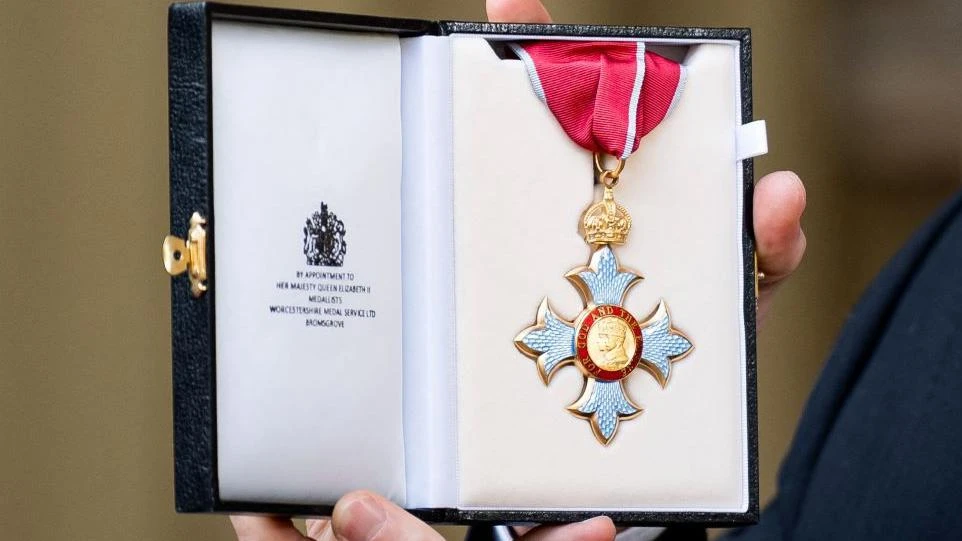
That critique has endured because honours are not handed out in a neutral vacuum. They depend on nominations, endorsements and institutional visibility, all of which can advantage people who move in established networks. When the same professions and social strata dominate the top awards, the honours system can end up reflecting the country’s power structure rather than its full social range.
The government has periodically revisited the issue through formal reviews and operation papers. One of the documents on record is the Cabinet Office’s Fifth Report on the Operation of the Honours System, which sits alongside public guidance explaining how people can nominate someone for an honour. That guidance matters because it defines the front door to the system, even if the later stages still reward familiarity with the right circles.
What the latest honours lists reveal
Recent honours lists show that the system can still produce recognitions that reach beyond the usual establishment profile. In the 2025 Birthday Honours, Professor Dame Susan Jocelyn Bell Burnell DBE FRS FRSE was made a Companion of Honour for her scientific achievements. In the 2024 Birthday Honours, Gordon Brown appeared in the high awards list as a Companion of Honour. Both names sit at the highest visible end of the honours structure, and both show that the system is still capable of recognising substantial public and intellectual contribution.
Those examples matter because they sit alongside the data rather than replacing it. One of the strongest scientific figures in British academia and a former prime minister can both be honoured at the top level, while the broader pattern still leans toward professional, managerial and southern backgrounds. The contrast is exactly what makes the debate persistent: symbolic breadth is easier to achieve than structural balance.
The Cabinet Office says its diversity work is intended to make the honours system more representative of UK society. That ambition is now backed by more detailed monitoring than before, including ethnicity tracking for New Year and Birthday honours recipients and broader oversight of background and geography. The question is no longer whether the system can produce a more varied honours list. It can. The harder test is whether the highest awards will keep moving away from the networks that have long shaped who is seen as worthy in the first place.
What to watch in the years ahead
The numbers suggest two things at once. First, the honours system is not frozen in place, because more people from different backgrounds are being recognised and the government is measuring that change more carefully. Second, the most prestigious awards still concentrate among people from professional and managerial backgrounds, and the regional split still favours the south over the north of England.
That leaves reform with a practical test, not just a symbolic one. If the honours system is meant to mirror merit, service and achievement across the United Kingdom, the next stage is not simply more nominations, but a system that gives people from outside elite networks a fairer path into the highest tiers of recognition.