Sports
BBC Sport examines whether pushy tennis parents are to blame

Pushy tennis parents are not operating in a vacuum. The more revealing question is how a sport built around early talent identification, ranking pressure and constant competition turns family support into a possible source of harm, then asks parents to manage risks that the system itself helps create.
Where responsibility sits
The Lawn Tennis Association says safeguarding is a shared responsibility across British tennis, not something left to coaches or tournament referees alone. Its parent guidance says parents and carers play a vital role in keeping tennis, and padel, safe and enjoyable for children, which places families inside the safeguarding framework rather than outside it.
That matters because the LTA’s rules do not stop at the baseline expectation that children behave well on court. Its Code of Conduct applies to players, coaches, officials and anyone attending a tennis competition, including parents, guardians, other family members and spectators. In practice, that means sideline conduct can fall under disciplinary expectations, making the crowd part of the regulated environment rather than an unpoliced backdrop.
The sport has already built a parental support system
The existence of the Tennis Parent Community is itself a signal that the pressures around junior tennis are common enough to require dedicated support. The LTA describes it as a volunteer-run, independent peer-to-peer community for parents of junior tennis players, designed to give families a place to talk through the demands that come with competition.
That kind of support is not a luxury in a sport where small differences in coaching, travel, ranking points and tournament access can shape a child’s pathway early. The community model reflects a basic reality of junior tennis: parents are often making scheduling, emotional and financial decisions long before a player is old enough to manage those pressures alone. When those decisions spill into match-day behaviour, the issue is not just individual temper. It is a system asking adults to absorb intense expectations without always giving them a clear framework for restraint.
Britain’s safeguarding model reaches beyond the baseline
The LTA says it wants tennis in Britain to be at the forefront of safeguarding in sport, and it has paired that ambition with practical tools. Its Safe to Play resources and parent guidance are meant to prevent problems before they escalate, rather than waiting for a complaint after a match has already soured.
That approach also connects to the LTA’s broader safeguarding policy, which says it strives to ensure that all children, young people and adults at risk are safeguarded from abuse and have an enjoyable tennis and padel experience. The language is important because it frames safeguarding not only as the absence of misconduct, but as a condition for participation itself. In other words, if the environment is hostile enough to undermine enjoyment or security, the sport has already failed its own standard.
The stands are not outside the rulebook
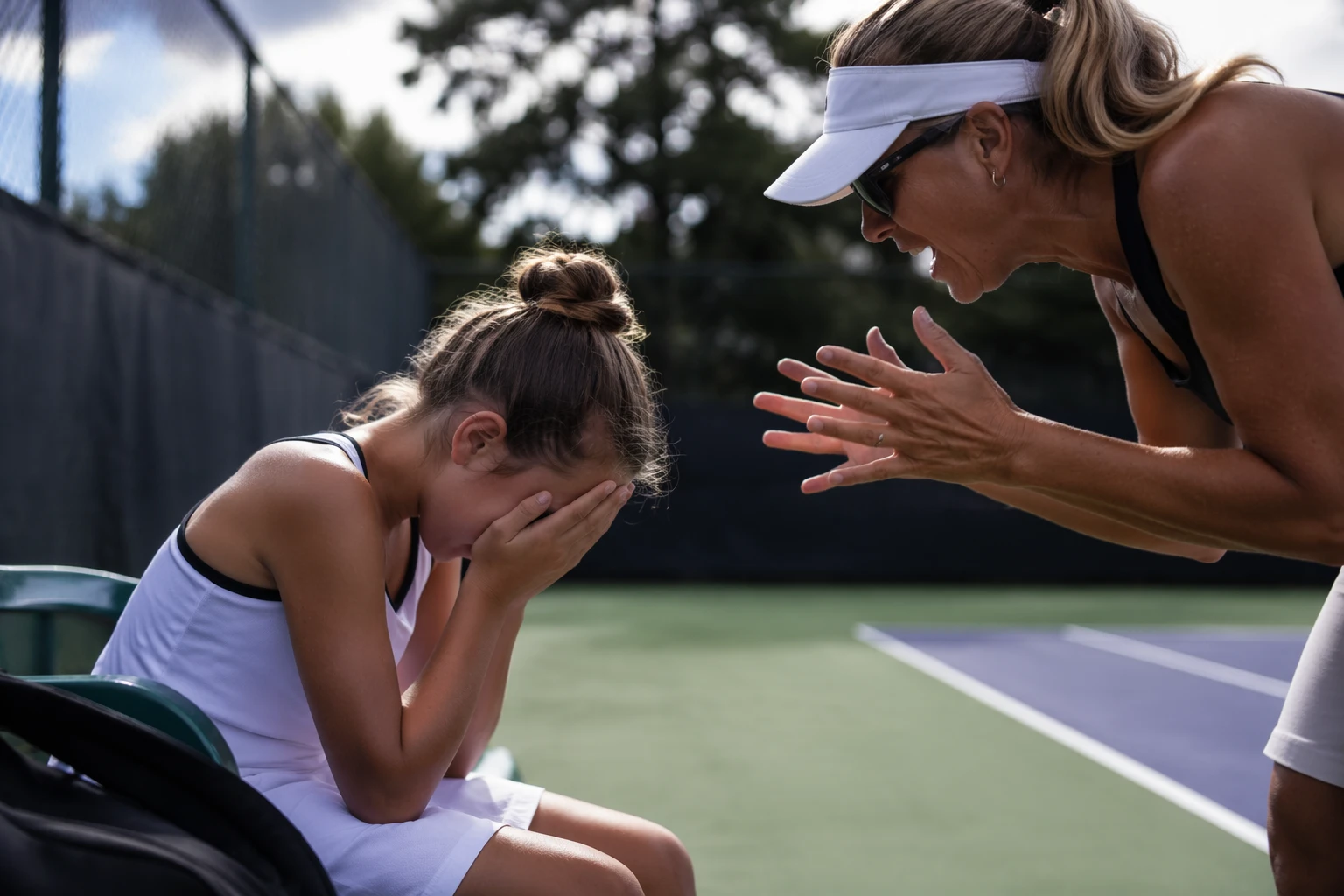
One of the clearest shifts in modern tennis is that the sidelines are now treated as part of the competition’s formal governance. The LTA’s competition safeguarding information makes plain that its Code of Conduct applies to anyone attending a tennis competition, including but not limited to parents, guardians, other family members and spectators.
That is the institutional answer to a familiar problem: adults who believe they are only “supporting” a child while behaving in ways that can cross into intimidation, pressure or abuse. By naming spectators and family members directly, the LTA has made clear that a parent’s role is not exempt from the same standards that govern players and coaches. The sport is acknowledging that a child on court is often reacting not just to an opponent, but to the emotional weather created at the edge of the court.
The international game has moved in the same direction
At the global level, the International Tennis Federation says it is committed to safeguarding all children participating in the tournaments, events, projects and programmes it delivers or sanctions. It also rejects all forms of harassment, abuse, violence and exploitation in children’s tennis, leaving little ambiguity about the standard it expects.
The ITF’s World Tennis Tour Juniors Regulations 2026, published on 5 December 2025, make that standard enforceable. The regulations say that any tournament not complying with the juniors rules can subject the tournament organiser to determination and penalty procedures. That is significant because it shifts safeguarding from a values statement to an operational requirement, with consequences attached to non-compliance.
For junior tennis, that kind of enforcement matters. It places responsibility not only on individuals who misbehave, but on organisers whose events must be run in ways that can detect, document and deter misconduct. The message is that children’s tennis is not meant to depend on the goodwill of adults alone.
Why the problem keeps coming back
Pushy parent behaviour persists because the incentives in elite youth sport often reward escalation before they reward balance. Parents are asked to invest time, money and emotion into a pathway where results come early, rankings matter, and missing a tournament can feel like falling behind. That pressure can blur the line between advocacy and control, especially when adults believe their involvement is necessary to protect a child’s chances.
The governance response in Britain and within the ITF points to a more honest framing: responsibility is shared, and so is blame when systems fail. Families can set the tone, coaches can model standards, clubs can enforce them, and governing bodies can write rules with teeth. The strongest safeguard is not a plea for better manners in the stands, but a structure that makes harmful behaviour harder to excuse, easier to stop and impossible to treat as normal.
Sources
- [1]bbc.co.uk
- [2]lta.org.uk
- [3]itftennis.com