Science
Beakless Kea Parrot Bruce Adapts With Ingenious Self-Care
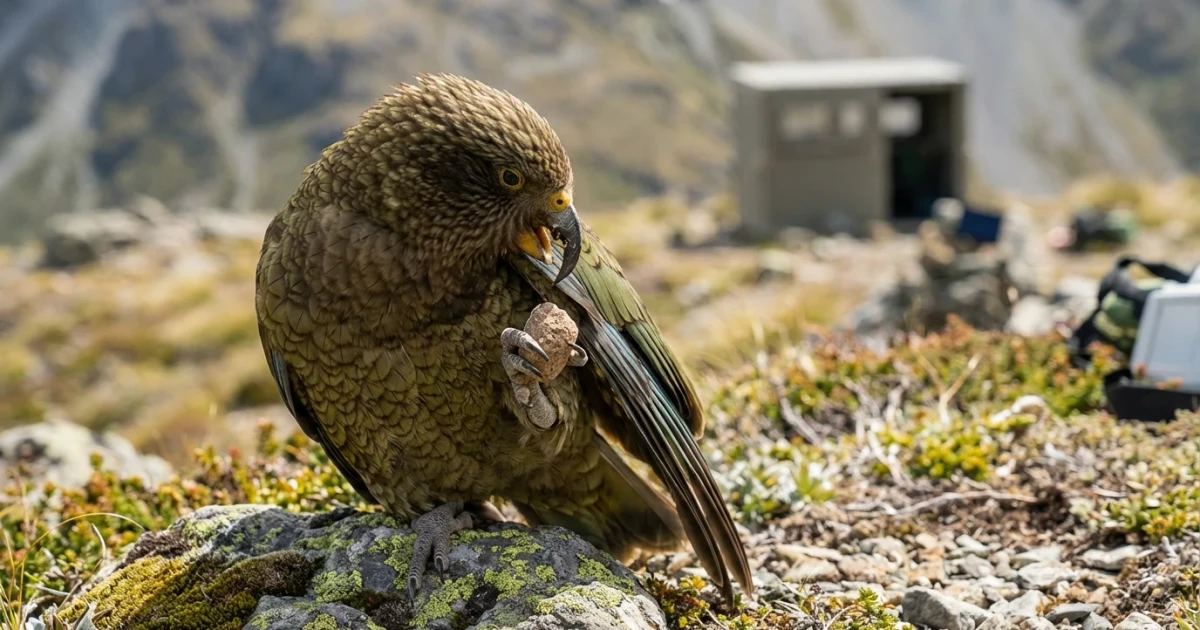
Bruce, a kea parrot from New Zealand, has captured international attention after being identified as the first-known disabled kea to demonstrate remarkable self-care behaviors. Despite losing his upper beak, Bruce has developed unique strategies to survive and thrive, providing scientists with fresh insights into animal adaptability.
Living Without a Beak: Bruce’s Challenge
Native to the mountainous regions of New Zealand’s South Island, kea parrots (Nestor notabilis) are known for their intelligence and playful problem-solving. According to IUCN Red List data, the species is classified as Endangered, with an estimated population of fewer than 7,000 mature individuals due to habitat loss and predation. Bruce was discovered as a chick missing his entire upper beak, a crucial tool for feeding, preening, and social interaction among parrots.
Innovative Adaptations Observed
Scientific observations, as detailed in peer-reviewed research, have documented how Bruce compensates for his disability. He uses his tongue and lower mandible to pick up and manipulate food, and has even devised a way to preen his feathers using small pebbles. Such behavior is not common among kea, who typically use their beaks for these tasks. The study’s authors noted that Bruce’s use of tools and modified behavior demonstrates a level of cognitive flexibility rarely documented in wild birds.
- Bruce selects and adjusts pebbles to clean and preen his feathers
- He holds objects between his tongue and lower mandible for feeding
- Despite his disability, Bruce maintains social status within his flock
These findings were corroborated by independent behavioral analysis available through open-access scientific articles, which highlighted Bruce’s tool use as an example of individual innovation in response to physical impairment.
Implications for Animal Intelligence and Welfare
Bruce’s story is significant beyond his individual survival. The ability to adapt in such a creative way challenges long-held assumptions about the limitations of disabled animals in the wild. Experts cited in detailed species profiles suggest that kea are among the most intelligent birds, capable of advanced problem-solving and social learning.
The case of Bruce also raises important considerations for wildlife care and rehabilitation. Observers note that his continued inclusion and apparent success in his social group indicate a capacity for flock acceptance of disabled members, which may influence future conservation practices.
Conservation Context and Future Research
The discovery of Bruce’s unique adaptation comes amid growing concern for the kea’s survival. As noted in official conservation assessments, threats from habitat encroachment and introduced predators continue to pressure the species. Understanding how individual birds overcome physical challenges could inform broader strategies for species management and welfare.
Researchers plan to continue monitoring Bruce and his flock to assess how such innovations might spread socially among kea, and whether other disabled individuals in the wild exhibit similar behaviors.
Conclusion
Bruce’s story is an inspiring example of animal resilience and ingenuity. His ability to thrive without a beak not only enriches scientific understanding of kea behavior but also highlights the importance of considering individual adaptation in conservation efforts. For those interested in the detailed data and behavioral analysis, the original research and supplementary materials are available for deeper exploration.