World
Belfast stabbing sparks anti-immigrant violence, cars and bus set alight
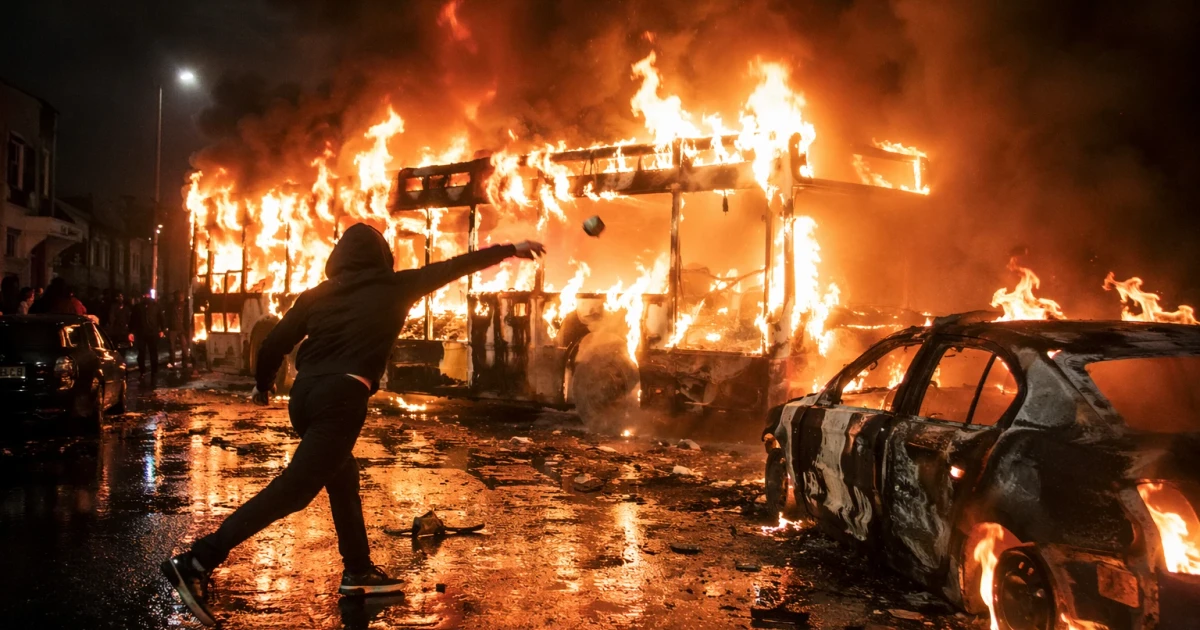
A knife attack in north Belfast rapidly spilled into a night of anti-immigrant violence, with masked protesters setting fire to cars, a bus and a police car and forcing families from their homes. Police said the stabbing left a man in his 40s with significant injuries to his face, neck and back, and later reporting said he lost his left eye. The unrest exposed how quickly one violent incident can widen into a threat to neighbourhood safety and civic order.
A 30-year-old man was charged with attempted murder, possession of a knife in a public place and making threats to kill after the assault on Monday, 8 June 2026. He appeared in Belfast Magistrates’ Court and was remanded in custody for four weeks. The charges and the scale of the disorder around them sharpened concern that the violence was no longer confined to one attack scene, but had become a flashpoint for wider tensions in the city.
The Police Service of Northern Ireland declared a critical incident and repeatedly urged the public not to circulate graphic footage of the attack. Officers warned that sharing images online could traumatise the victim and interfere with the investigation. Jon Boutcher, the PSNI chief, said the attack would leave people enraged and called on the public to let police do their job while officers tried to prevent retaliation and further unrest.
That appeal came as masked protesters gathered at several locations across Belfast and targeted homes and vehicles in multiple areas. A bus and several cars were set alight, including a police car, while families were driven from their houses as violence spread through the streets. The disorder was widely described as anti-immigrant in nature, with online calls for protest and the involvement of far-right figures helping to stoke tensions.
Northern Ireland’s main political leaders, including First Minister Michelle O’Neill, issued a joint condemnation of the stabbing and urged the public to allow the police to investigate. Their response reflected how seriously officials viewed the risk of communal escalation in a place where sectarian unrest has long left deep scars. The speed of the violence, and the targeting of people and property beyond the original attack, underscored how fragile the civic landscape remains when fear, misinformation and prejudice are allowed to spread unchecked.
Sources
- [1]nytimes.com
- [2]rte.ie
- [3]independent.co.uk
- [4]cbc.ca
- [5]aljazeera.com
- [6]irishtimes.com
- [7]justice-ni.gov.uk