Business
Binance vows to stay in Europe despite EU licence setback
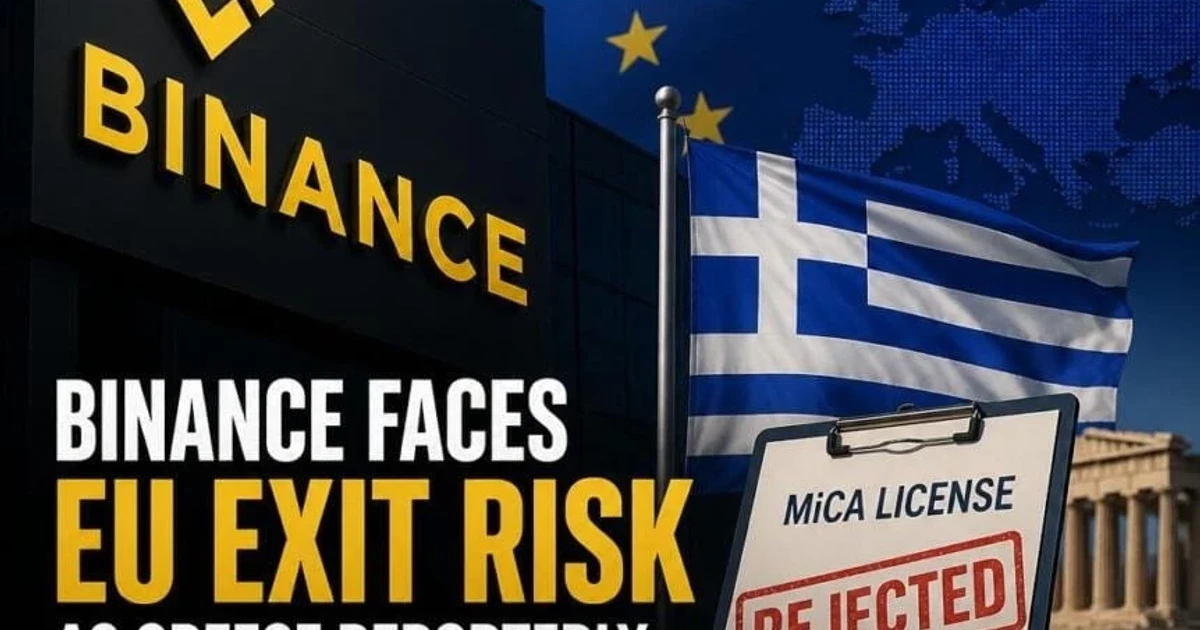
Binance said it was not leaving Europe and would seek another route to authorization if its Greek application failed, as the world’s largest crypto exchange faced a fast-closing window to keep serving customers under the European Union’s new rulebook. The company’s European push now turns on whether it can clear a MiCA licence hurdle before the bloc’s transitional period expires on 1 July 2026.
The setback is especially significant because Binance had been positioning Greece as its regulatory base in Europe. Co-CEO Richard Teng said in February that the country’s labour force and security profile made it attractive, and the company has said Greece’s Hellenic Capital Market Commission completed its review of Binance’s application and found it compliant. But the broader picture is less encouraging: Binance had also been in talks with regulators in Ireland and Latvia, and met resistance in all three countries.
Those regulators were not only examining the paperwork. Officials were said to be concerned about Binance’s earlier money-laundering penalties, its sprawling international structure and what they viewed as a risk-taking culture. Binance says it has spent about 18 months working toward a MiCA licence and believes it has met the requirements. Gillian Lynch, Binance’s Europe and UK head, said the company is not leaving Europe and would pursue another pathway if Greece does not work out.

Binance has also tried to show it has built a more serious compliance operation. Lynch said the company now has around 1,500 compliance staff, up from earlier material that described more than 750 compliance professionals. That expansion reflects the scale of the regulatory challenge: MiCA is designed to create uniform EU rules for crypto-assets covering transparency, disclosure, authorization and supervision, and the European Securities and Markets Authority has stressed orderly transition and client protection as enforcement comes into force.
The stakes go beyond one company. If Binance cannot secure a clean regulatory path in Europe, the outcome could shape how other major crypto platforms approach the bloc’s new regime, and how European supervisors balance market access with tighter oversight. A forced exit would disrupt trading access and regional competition; even the threat of one shows that Europe is using licensing power to decide which crypto firms can stay inside the system and on what terms.
Sources
- [1]thestar.com.my
- [2]money.usnews.com
- [3]esma.europa.eu
- [4]hcmc.gr
- [5]binance.com