Technology
Binghamton researchers say entropy can solve Wordle with 99% accuracy
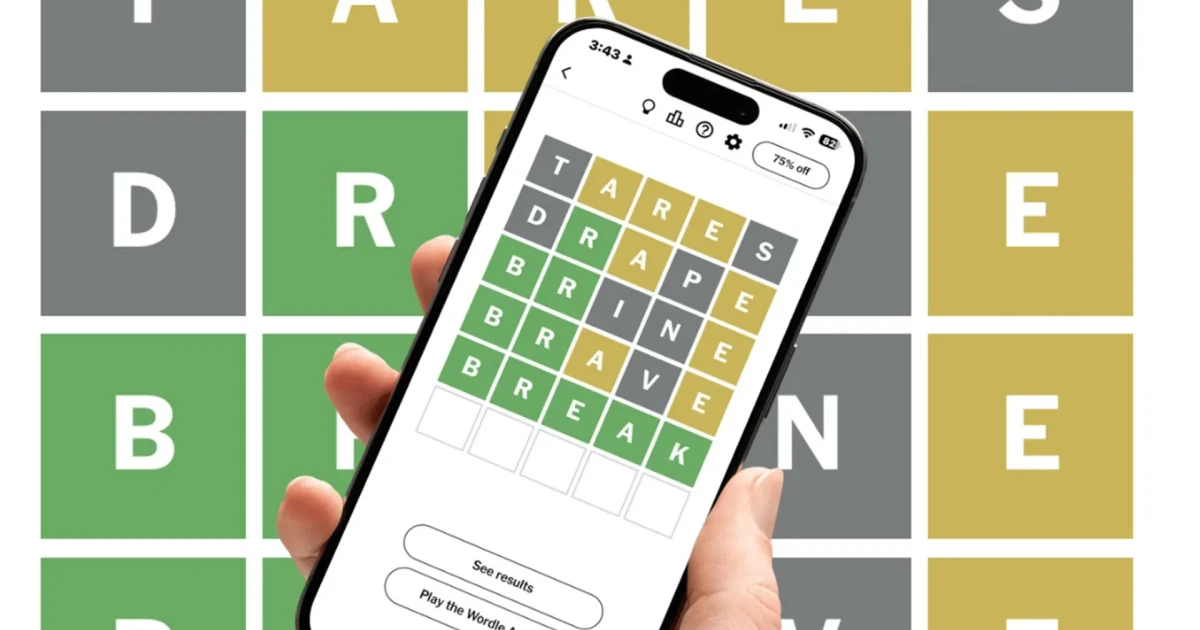
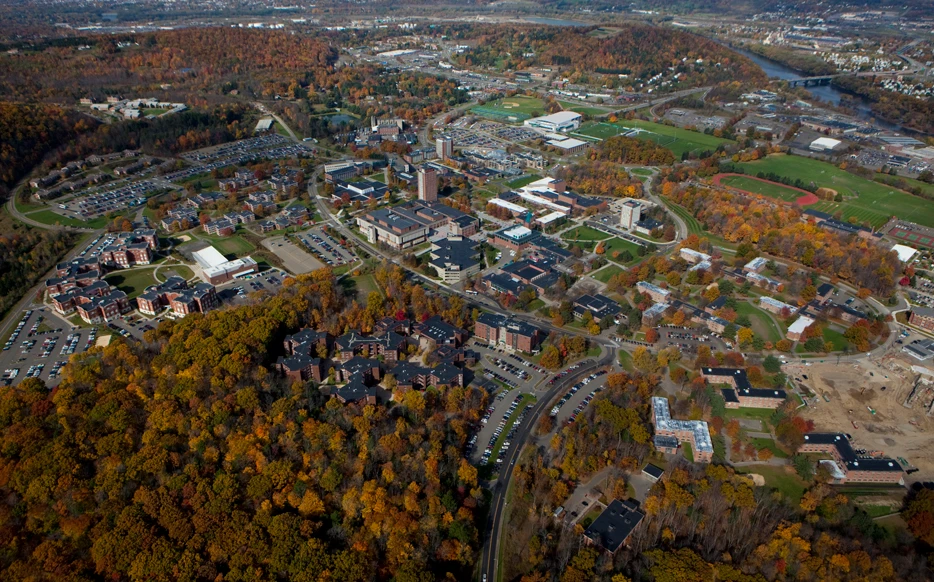
A Binghamton University team says it has found a mathematical way to solve Wordle with about a 99% success rate, and the trick is to stop thinking like a gambler. Led by Assistant Professor Congyu “Peter” Wu of the Thomas J. Watson College of Engineering and Applied Science’s School of Systems Science and Industrial Engineering, the group built a strategy around Shannon entropy, choosing guesses that strip away the most uncertainty instead of simply chasing the word that seems most plausible.
That distinction matters because Wordle gives players just six tries to identify a five-letter word, with each guess producing colored feedback that narrows the field. Gray means a letter is absent, yellow means it is present but misplaced, and green means the letter is in the correct spot. Wu’s team, which also includes Donald Stephens, Talal Aladaileh and Mallak Alqaisi, described the method in “Solving Wordle Using Information Theory,” published in the Northeast Journal of Complex Systems, Volume 8, Number 1, in 2026. Its abstract says entropy-based word selection improved performance over a heuristic based on letter distribution.
The logic is simple to state and hard to beat in practice: every guess should maximize expected information gain. Stephens put it bluntly, saying a guess does not have to be the most likely answer; it just has to be informative. In Binghamton’s account, that means the player is not guessing for the sake of guessing, but making a decision designed to collapse the remaining possibilities as quickly as possible.

The university also noted a practical limit. To use the method in real time, a player would need a script or program that takes the color feedback and returns the next best guess. That makes the approach more useful as a computer-assisted solver than as a mental shortcut for someone playing casually over morning coffee.

The timing helps explain the interest. The New York Times said on June 3, 2026 that Wordle had become a daily ritual for fans around the world, and the company marked the game’s fifth birthday as it continued to build on a title it acquired in January 2022. Wordle has long invited algorithmic attacks, including earlier work by Spanish data scientist Esteban Moro, whose 99% strategy drew attention in 2022. Binghamton’s version adds a sharper rule: in Wordle, as in search, coding and other decisions made under uncertainty, the best move is often the one that teaches you the most.
Sources
- [1]sciencedaily.com
- [2]binghamton.edu
- [3]orb.binghamton.edu
- [4]nytco.com
- [5]investors.nytco.com
- [6]english.elpais.com
- [7]britannica.com