US News
Bingo’s big-business roots power billions in charity fundraising
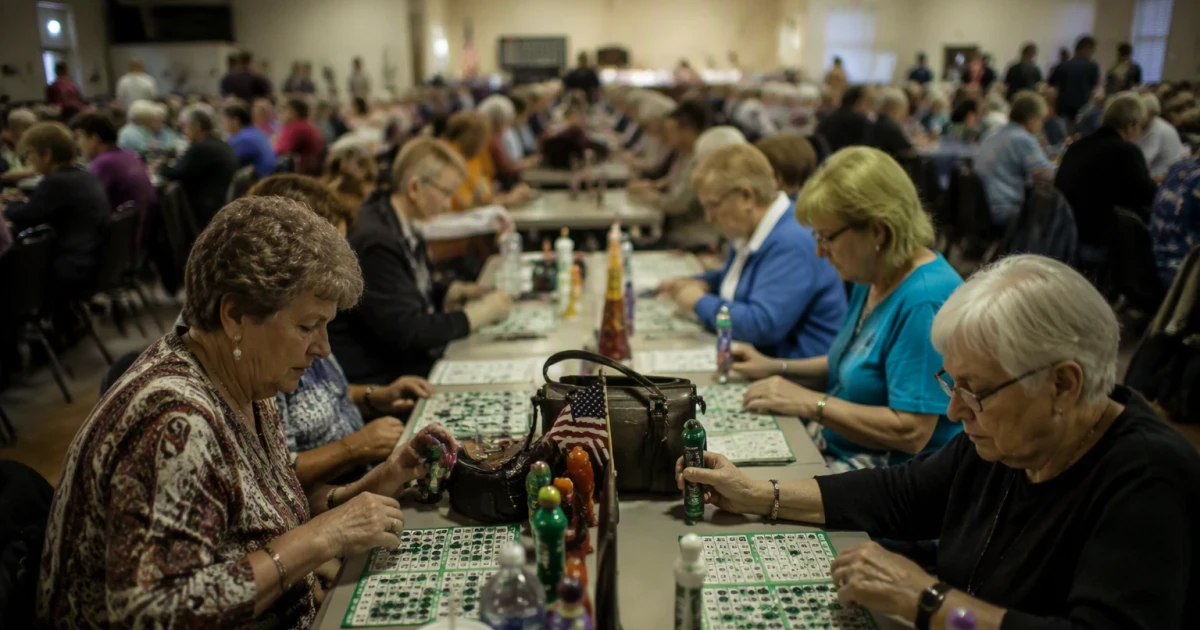
Bingo survives because it does something few fundraisers can do at scale: it gets a large room to focus on the same next number at the same time. In church basements and American Legion halls, that shared rhythm still turns a low-tech game into dependable charity money, even as online gaming and attention fatigue make other fundraisers harder to pull off.
How a simple card became a durable social ritual
Bingo first arrived in the United States in the 1930s, and its basic design was made for group play. Early cards used 24 numbered squares arranged in five rows and five columns, a format that kept the game simple enough for casual players and flexible enough for crowded rooms.
That structure explains why the game has lasted. One caller, a stack of cards, and a hall full of players are enough to create a social event that feels familiar, communal, and easy to join. Luke Burbank’s look at the game’s history and its newer variations tracks that enduring appeal from its earliest American years to its current role as a fundraising engine.
Why nonprofits still depend on it
Charitable gaming has long been a serious business in the United States and globally. A 2005 academic study described it as “big business,” and bingo sits near the center of that market because it works for organizations that need a steady crowd without a complicated production.
Its strengths are practical. The game lets large groups play at once, it does not require much training, and it gives local institutions a ready-made reason to bring people into the same room. That matters for nonprofits, churches, veterans’ halls, and civic groups that need fundraising nights to do more than collect money, they also need them to draw people back into shared public life.
The scale can be large enough to rival other forms of local entertainment. In Mississippi, fewer than 70 bingo halls grossed more than $95 million in 2015, and peak-year receipts approached $140 million. Those numbers show why bingo has never been just a niche pastime, even when it looks humble from the outside.
Texas shows how regulation turned bingo into a major market
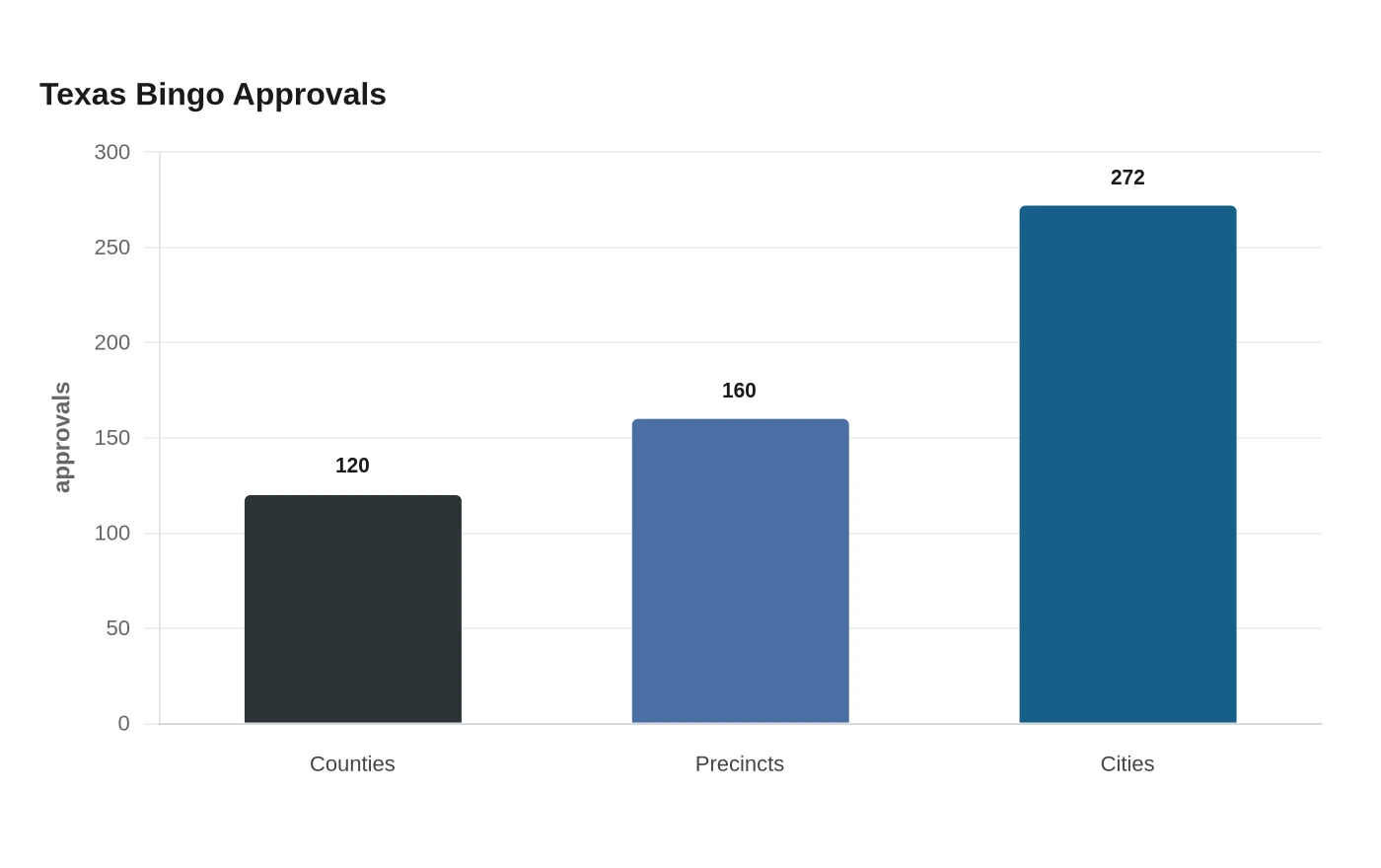
Texas gives the clearest picture of how charitable bingo became a structured fundraising system. The Texas Legislature authorized charitable bingo in 1981, subject to local approval, and the game has since been approved by voter referendum in 120 counties, 160 justice precincts, and 272 cities. Texas is one of 46 states that allow some degree of regulated charitable bingo, which places the game inside a broad state-by-state policy framework rather than outside it.
Regulation has also helped define the size of the market. The Texas Lottery Commission’s Charitable Bingo Division has overseen charitable bingo since 1994, and its records put gross receipts at more than $738.9 million in calendar year 2014. That figure captures why bingo remains attractive to nonprofits and local institutions: a game built around paper cards and a caller can still generate serious revenue when it is embedded in a legal, local, and recurring fundraising structure.
Texas also shows how much bingo depends on public approval. The state’s mix of county, precinct, and city referendums means the game is not simply permitted in the abstract. It has been adopted neighborhood by neighborhood, which helps explain why it remains tied to civic spaces rather than to the anonymous logic of online gambling.
Prize limits, jackpots, and the economics of keeping people interested
The rules matter because bingo’s appeal is shaped by what the game can pay out. In Indiana, lawmakers were weighing higher prize limits in 2014 so players in church basements and American Legion halls could see much bigger jackpots. That debate made the economics of charitable bingo plain: when prize caps rise, the game can become more competitive and more alluring, especially for players who want more than a modest social night out.
Those limits also affect the fundraising side. Bigger jackpots can help halls draw larger crowds, but they can also shift the balance between entertainment and charity proceeds, which is why state rules remain central to the game’s business model. Bingo’s future has always depended on that balance, not just on nostalgia.
Why the game keeps getting reinvented
Bingo’s revival is less a return than a reinvention. As fundraising fatigue sets in and digital entertainment competes for every spare minute, bingo keeps its place by offering something screens cannot: an in-person ritual with built-in suspense and immediate collective reaction.
That is why the game still works in American Legion halls, church basements, and other community spaces where people want a reason to show up together. The numbers from Texas, Mississippi, and Indiana show the same thing from different angles: bingo remains a low-tech format with a high-capacity fundraising engine, and its endurance says as much about community life as it does about gambling.
Sources
- [1]cbsnews.com
- [2]suncommercial.com
- [3]spia.uga.edu
- [4]clarionledger.com
- [5]capitol.texas.gov
- [6]texaslottery.com
- [7]x.com
- [8]facebook.com