US News
Bird strike likely caused deadly Hudson River helicopter crash
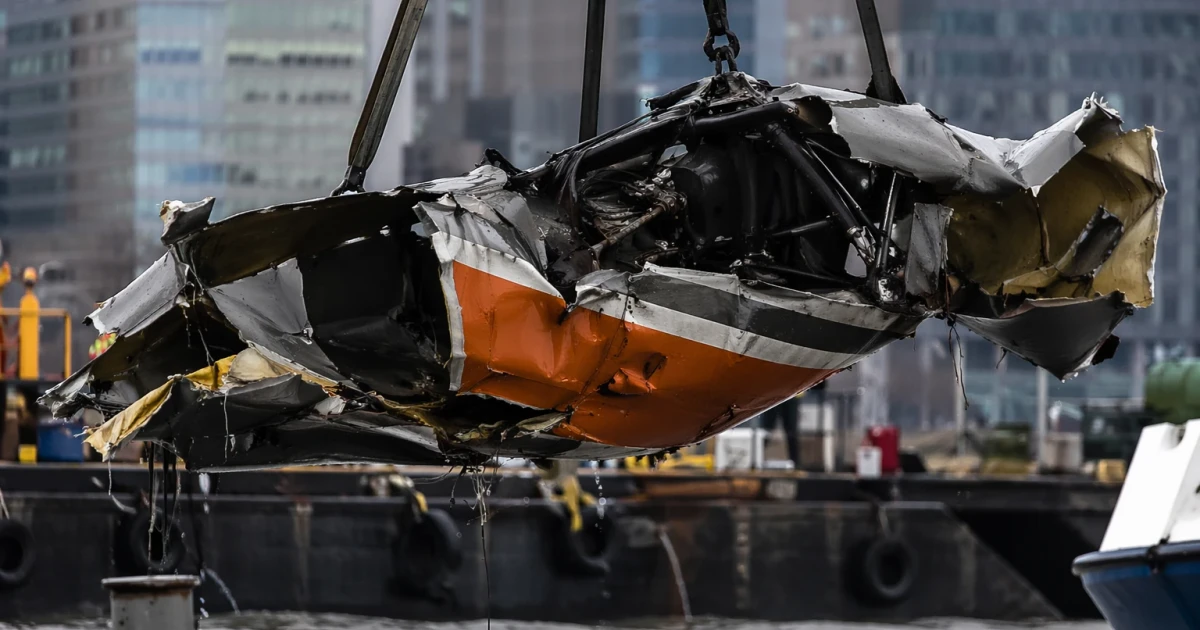
Bird remains found on the wreckage made a bird strike the likely cause of the Hudson River helicopter crash that killed six people, including a family of five from Spain. The finding has sharpened questions about whether sightseeing flights over Lower Manhattan and the Hudson corridor are being managed with enough attention to route planning, pilot training and urban bird hazards.
The Bell 206L-4, registration N216MH, went down near Jersey City, New Jersey, at about 3:15 p.m. on April 10, 2025, after operating as an aerial observation flight under Part 91. Everyone aboard died: the pilot and five passengers. The National Transportation Safety Board said key wreckage components were recovered in the days after the crash, and later added that bird remains were found on the helicopter, making a bird strike the likely cause of the disaster.
The five passengers were a Spanish family traveling together in the sightseeing helicopter. BBC News identified them as Agustín Escobar and Mercè Camprubí Montal, both Siemens employees, along with their children, who were reported to be ages four, five and 11. The pilot was identified in reporting as a former Navy SEAL pilot and Navy veteran. The crash sent shock through both sides of the Atlantic, and a funeral for the family in Barcelona drew hundreds of mourners.
The wreck also turned fresh attention to New York City helicopter tourism, a business that has long operated in close proximity to dense neighborhoods, the Hudson River and bird-heavy waterfront airspace. AP News reported that the helicopter company involved, New York Helicopter Charter, Inc., had faced debt lawsuits. The Federal Aviation Administration ordered the company to cease operations immediately and later issued an emergency order grounding it, adding regulatory pressure after the fatal flight.
For aviation regulators, the crash raises a wider question that reaches beyond one company: how much risk is built into non-scheduled tourist flying over crowded cities, where aircraft are routed through busy airspace and close to wildlife corridors. The NTSB’s finding points to a specific hazard, but it also puts the focus on whether oversight of Part 91 sightseeing flights matches the public exposure they create in cities like New York.
Sources
- [1]cbsnews.com
- [2]data.ntsb.gov
- [3]ntsb.gov
- [4]apnews.com
- [5]bbc.com