Politics
BJP Highlights ‘Double-Engine’ Governance to Underscore Achievements
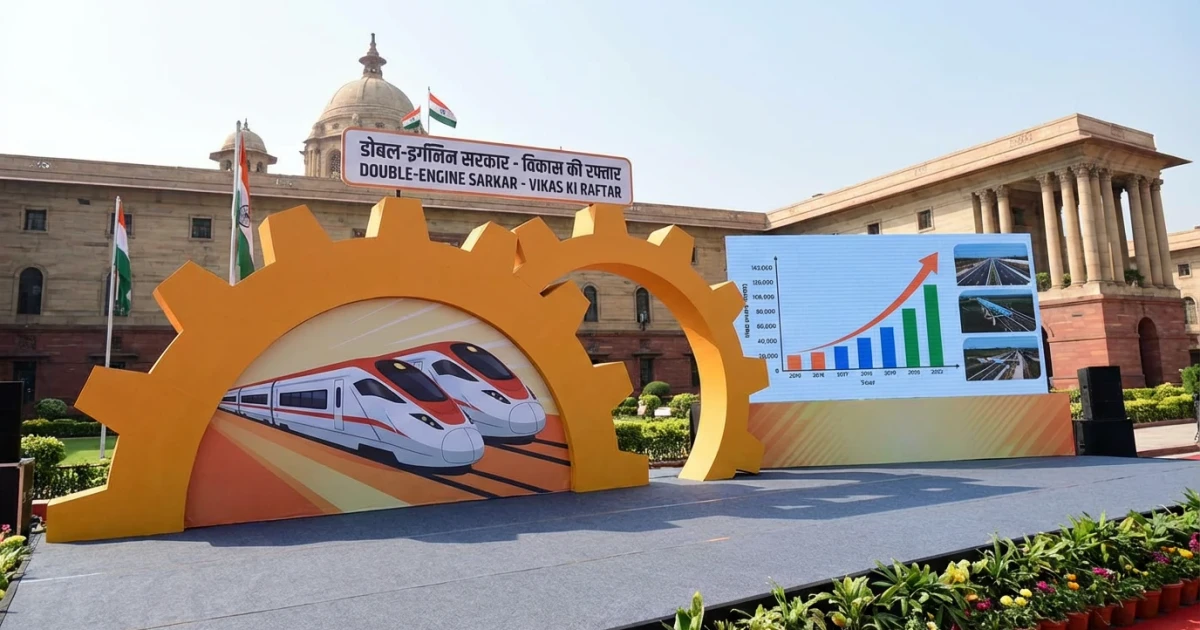
The Bharatiya Janata Party (BJP) has intensified its media campaign to spotlight the achievements of its so-called ‘double-engine’ government, seeking to bolster its narrative of rapid development and effective governance as political competition with the Congress heats up.
What Is ‘Double-Engine’ Governance?
The ‘double-engine’ government refers to the BJP’s strategy of having the party in power at both the central and state levels, which, according to party leaders, enables faster policy implementation and greater resource allocation. The BJP has argued that this model streamlines decision-making and reduces bureaucratic delays, helping it deliver on key promises such as infrastructure modernization, rural electrification, and welfare scheme rollouts. Readers can explore official details of government initiatives and achievements through the Government in Action portal.
BJP’s Media Push: Showcasing Achievements
According to Devdiscourse, the BJP has recently rallied its media and communications teams to highlight flagship projects and the tangible impact of its governance. The party has focused on several high-profile initiatives:
- Accelerated rural electrification, with data showing significant increases in village and household electrification across BJP-governed states.
- Expanding affordable rural housing under the Pradhan Mantri Awas Yojana-Gramin (PMAY-G), which tracks state-wise houses sanctioned and completed.
- Implementation of the Goods and Services Tax (GST), which the party claims has streamlined tax collection and increased revenue for development projects.
- Improvements in health, education, and agriculture in ‘aspirational districts’, as documented on the Aspirational Districts Programme dashboard.
Countering Congress Criticism
The BJP’s emphasis on its dual-level governance model comes as the Congress has stepped up its criticism, alleging uneven development, gaps in job creation, and disparities in welfare distribution. BJP leaders have countered these claims by pointing to official statistics and outcome dashboards, arguing that their approach delivers measurable results that benefit citizens more effectively than single-party state governments not aligned with the Centre.
Media Strategy and Public Messaging
Devdiscourse reports that the BJP’s outreach includes organized press briefings, social media campaigns, and the dissemination of data-driven infographics. The party aims to contrast its achievements with the Congress’s record, particularly in states where the two parties are in direct contest. BJP spokespeople have emphasized that the synergy between central and state leadership leads to more consistent policy execution, citing the rapid rollout of central schemes in BJP-ruled states as evidence.
Analysis: Effectiveness and Scrutiny
While the BJP’s campaign highlights substantial progress in several sectors, some analysts note that the party’s claims depend heavily on the reliability of official data and the visibility of outcomes at the grassroots level. Independent assessments point out that while infrastructure and electrification targets have advanced, challenges remain in areas like job creation and social inclusion, issues that the Congress continues to spotlight. For readers interested in verifying claims, the Economic Survey of India provides comprehensive statistics and sector-wise analysis.
Conclusion: Shaping the Pre-Election Narrative
As the political contest intensifies, the BJP’s focus on ‘double-engine’ governance is likely to remain central to its campaign messaging. By rallying the media to showcase its development record and counter opposition criticism, the BJP seeks to frame the upcoming elections around its claimed track record of delivering results through coordinated central and state action. The effectiveness of this strategy will depend on both the party’s ability to communicate tangible benefits to voters and the public’s perception of comparative governance outcomes.