Science
Blood Moon Eclipse Captivates Skywatchers Worldwide
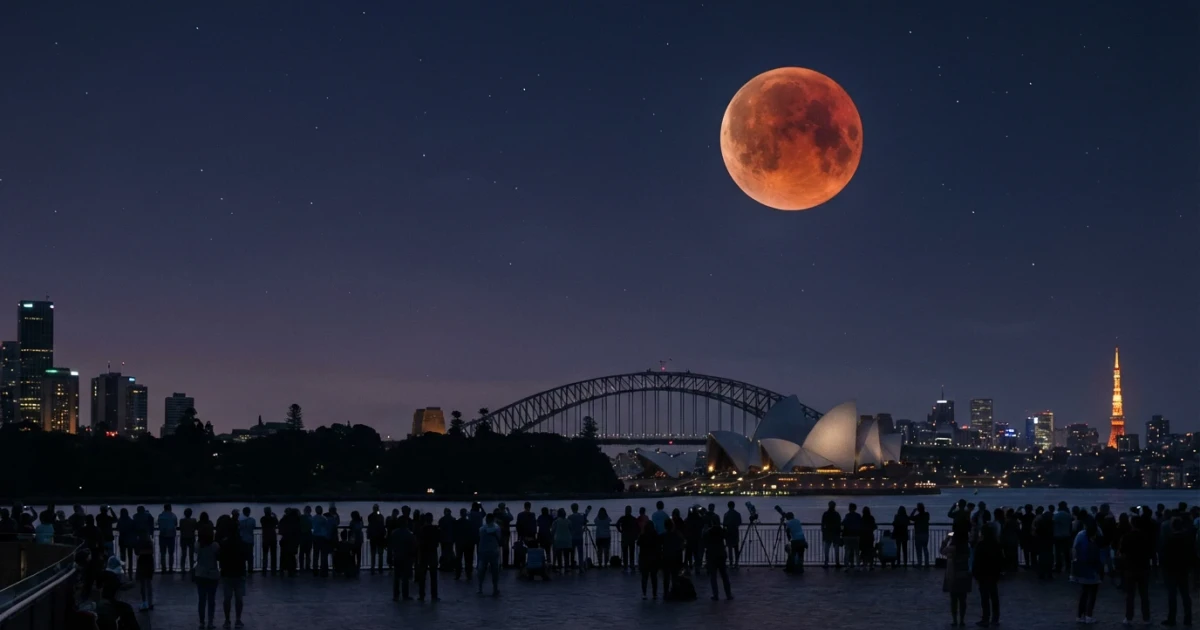
The recent total lunar eclipse—popularly dubbed the "blood Moon"—delivered a captivating celestial display, enchanting skywatchers across North America, Asia, and Australia. The event, marked by the Moon turning a deep red hue, was widely observed and documented, as reported by BBC Sky at Night Magazine.
What Made This Lunar Eclipse Special?
Lunar eclipses occur when the Earth passes directly between the Sun and the Moon, casting its shadow and causing the Moon to darken. During a total lunar eclipse, the entire Moon enters Earth's umbra, or darkest shadow, resulting in the phenomenon often called the 'blood Moon.' This dramatic red color is caused by sunlight filtering through Earth's atmosphere, scattering blue wavelengths and allowing red hues to reach the lunar surface.
Global Visibility and Timing
The eclipse was visible from vast regions including North America, large parts of Asia, and Australia. According to interactive maps and visibility tables from Time and Date, millions had the opportunity to witness the spectacle as the Moon rose or set in their local skies.
- Observers in the western United States and Canada saw the eclipse in the pre-dawn hours.
- In Asia and Australia, the eclipse was visible during the evening, offering clear views as the Moon rose above the horizon.
- Detailed statistics and global visibility can be explored through the official NASA eclipse data table.
Stunning 'Blood Moon' Imagery
BBC Sky at Night Magazine highlighted spectacular images captured by amateur and professional astronomers alike. The Moon's deep coppery-red color was especially vivid due to clear skies across many regions. Social media was flooded with photos, as enthusiasts shared their views of the event from city rooftops, rural outposts, and observatories.
Why Does the Moon Turn Red?
The striking red appearance is a hallmark of total lunar eclipses. As explained by the International Astronomical Union, this happens because Earth's atmosphere bends and filters sunlight, removing shorter blue wavelengths and casting a red glow onto the Moon.
When Is the Next Lunar Eclipse?
Lunar eclipses are regular, though not always visible from the same locations. Statistics from the Time and Date lunar eclipse calendar show that at least one total lunar eclipse is visible somewhere on Earth nearly every year. The International Meteor Organization maintains comprehensive resources on upcoming eclipses, including dates, times, and best viewing regions for the next opportunities to observe a blood Moon.
Scientific and Cultural Significance
Lunar eclipses have long fascinated both astronomers and the general public. This event provided not only a chance for stunning photography, but also educational outreach, as organizations worldwide offered live streams and explanations of the science behind the phenomenon.
As the official NASA eclipse resources emphasize, observing a lunar eclipse is a safe and accessible way to experience the dynamics of our solar system firsthand. For many, the blood Moon serves as a reminder of the beauty and interconnectedness of Earth and its celestial neighbors.
Looking Ahead
The widespread visibility and public enthusiasm for this blood Moon eclipse underscore the ongoing appeal of astronomical events. With more eclipses on the horizon, skywatchers are already preparing for future opportunities. For the most up-to-date information on upcoming eclipses and viewing tips, readers can consult resources from major astronomical organizations and data providers linked throughout this article.