Science
Blue Origin Chosen for NASA’s Next Uncrewed Moon Missions
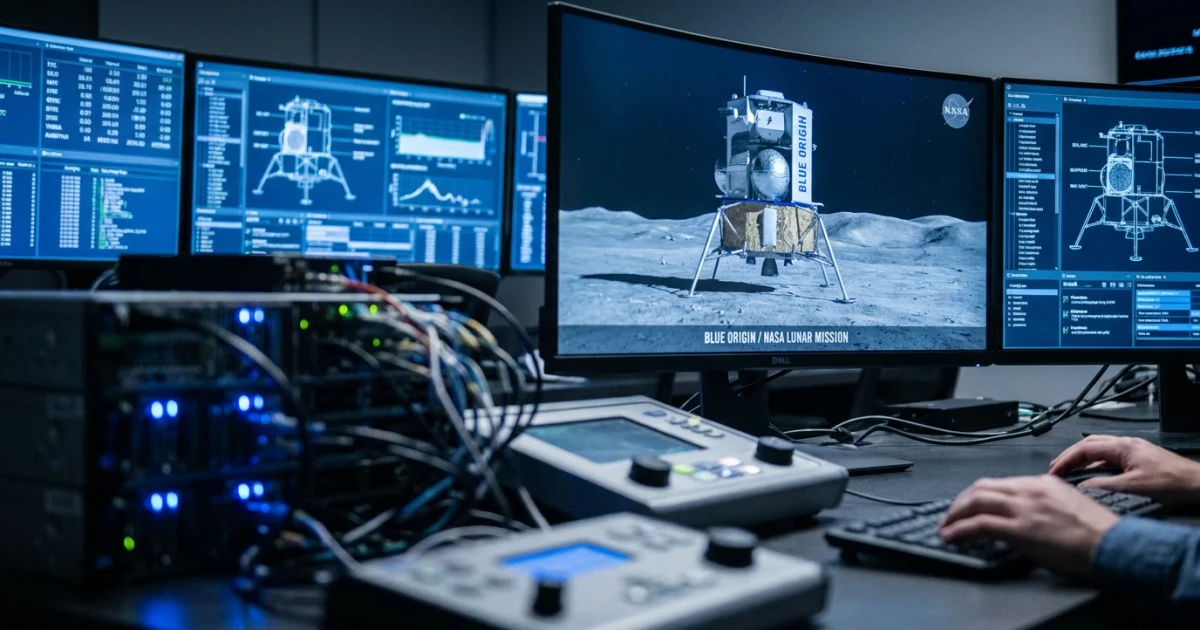
NASA has selected Blue Origin, the space company founded by Jeff Bezos, to lead the first in a series of three uncrewed lunar missions, a move seen as a significant milestone in the United States’ renewed efforts to establish a lasting human presence on the Moon. The decision, reported by The Guardian, comes as NASA unveils new steps toward its goal of constructing a permanent lunar base.
Blue Origin’s Role in Artemis and Uncrewed Missions
The announcement marks Blue Origin's growing involvement in NASA's Artemis program, which aims to return astronauts to the lunar surface and lay the groundwork for sustained exploration. According to The Guardian, the contract will see Blue Origin execute the first of three planned uncrewed lunar missions. These flights are designed to test systems and gather critical data needed for future crewed landings and the establishment of infrastructure on the Moon.
- The first flight will be an uncrewed landing mission, targeting key lunar sites for future development.
- Data and experience from these missions are expected to inform both the design and operation of NASA’s upcoming lunar base plans.
- The missions represent a critical phase before human crews are sent to establish a more permanent presence.
Building Toward a Permanent Lunar Base
NASA’s decision is closely linked with its broader vision to construct an enduring base on the Moon. The agency is advancing plans for the so-called Artemis Base Camp, which aims to serve as a hub for scientific research, resource utilization, and future missions deeper into the solar system. BBC coverage cited by The Guardian notes that these initial robotic and uncrewed missions are crucial for testing technologies, mapping resources, and understanding the lunar environment before humans arrive.
NASA’s Artemis program, as detailed in its official factsheet, has multiple phases, with these uncrewed missions representing a bridge between earlier test flights and the sustained operations envisioned for later in the decade. The lunar base will require robust cargo delivery, power, communications, and life support systems—all of which will be trialed in these precursor flights.
Industry and International Partnerships
Blue Origin’s selection underscores NASA’s strategy of leveraging commercial and international partnerships to accelerate lunar exploration. The Artemis program has seen participation from several private companies, with Blue Origin building on its earlier role as a lunar lander provider for the Artemis V mission. These collaborations are intended to foster innovation, reduce costs, and share the risks of complex space operations.
- NASA views commercial missions as essential to building a self-sustaining lunar economy.
- International partners are expected to contribute technology and expertise to the lunar base effort.
What’s Next for Artemis and Blue Origin?
As the Artemis program progresses, the upcoming uncrewed missions will set the stage for more ambitious human expeditions. NASA’s timeline anticipates crewed landings later in the decade, with the first permanent base modules arriving soon after. Blue Origin’s success with these initial flights will be closely watched as a measure of the viability of commercial lunar transportation.
According to NASA’s Artemis plan, each mission is designed to build cumulative knowledge—testing navigation, landing precision, and surface operations, while searching for water ice and other resources critical to long-term habitation. The selection of Blue Origin not only highlights the company’s technical capabilities, but also signals NASA’s commitment to public-private collaboration as it pushes the boundaries of human space exploration.
Looking Ahead
With the first uncrewed lunar mission set to launch in the coming years, NASA and its partners are poised to make significant advances in our understanding of the Moon and how humans might one day live and work there. These missions represent both a technical challenge and an opportunity to forge new models for exploration that could eventually extend to Mars and beyond.