Entertainment
Blue Prince turns family gaming into shared puzzle-solving

Blue Prince works because it does not ask everyone in the room to be good at the same thing. It asks them to think together. In the shifting halls of Mount Holly, the goal is simple on paper, find the rumored Room 46, but the path runs through a mix of puzzle-solving, strategy, mystery, and roguelike structure that keeps every choice open to discussion.
That design helps explain why the game has become more than a solitary obsession. When one person is behind the controller, another can still spot patterns, remember clues, or connect a new room to something seen 20 minutes earlier. In a family setting, Blue Prince becomes less like handing off a toy and more like gathering around a problem.
A puzzle game that invites a crowd
Blue Prince was developed by Dogubomb, the indie studio founded by Tonda Ros in Hollywood, California, and published by Raw Fury. It launched on April 10, 2025 for PlayStation 5, Windows, Xbox Series X/S, and Game Pass after eight years in development. That long runway shows in the game’s density: it is built as a genre-blending puzzle adventure that rewards note-taking, comparison, and repeated testing.
The core loop is unusually social for a game that can be played alone. Each door leads to a draft of a room, and each room can shift the meaning of the next decision. That structure naturally creates pauses, and those pauses are where family play often happens, with one person reading a clue, another remembering a prior layout, and a third pushing the conversation toward a theory.
Why the game works as shared family play
Blue Prince fits family gaming because it turns progress into discussion rather than reflex. The shifting manor of Mount Holly makes the player weigh what to build, what to keep, and what to sacrifice, which means the game is constantly asking for judgment calls instead of simple execution. That is a useful shape for mixed-age play, because different players can contribute different strengths without needing identical skill levels.
For a parent and child, the game also creates a useful rhythm. One person can steer the run while another watches for patterns, and the back-and-forth builds a kind of informal tutoring: memory, spatial reasoning, and hypothesis testing all become part of the session. The result is a game that feels collaborative even when only one controller is in hand.
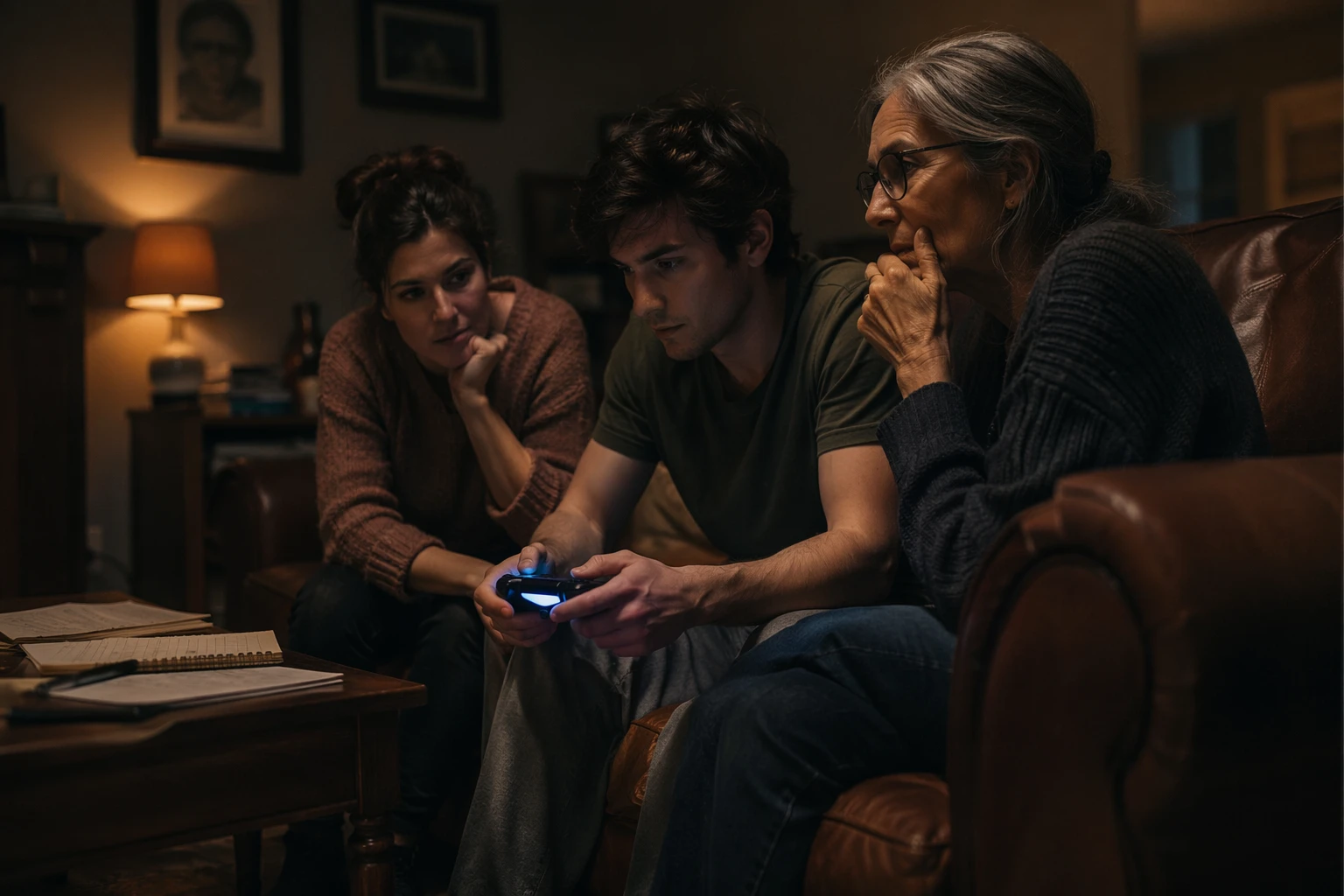
The hunt for Room 46 gives the experience a clear family-size objective. It is concrete enough for younger players to understand, but open-ended enough to keep adults engaged. That balance matters in games shared across generations, where the best outcome is often not speed but mutual discovery.
A design shaped by older puzzle traditions
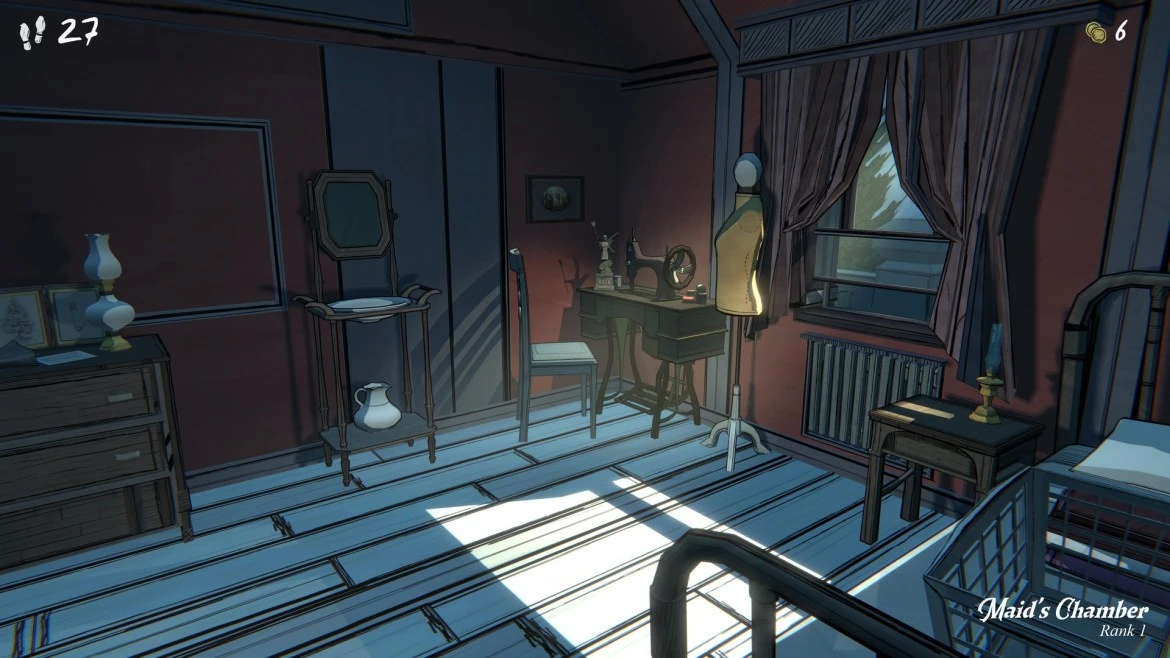
Ros has pointed to Myst and Riven as inspirations, along with tabletop and card-game design. That lineage is easy to feel in the way Blue Prince asks players to look at systems, not just scenes. The game does not hand out answers cleanly; it encourages the same sort of slow deduction that made classic adventure puzzles memorable, then wraps that logic in a run-based structure that changes the board every time.
The tabletop influence is especially important for family play. Card and board games often create conversation because players can see the system in front of them, and Blue Prince borrows that visibility through its room-drafting mechanic. Instead of hiding the puzzle in action, it puts the puzzle on the table, where it can be discussed, argued over, and revisited.
Critical attention and the eight-year build
The game’s reception has been unusually strong for an indie release, with critics describing it as intricate, layered, and engrossing. Steam also highlighted its eight-year development cycle, underscoring how much time Dogubomb spent shaping the experience before launch. That long development arc helps explain the game’s density and the sense that many of its systems were built to intersect rather than simply coexist.
Steam gave Blue Prince extra visibility through its 2025 debut festival and later through an accolades trailer. Those moments mattered because the game is the kind that spreads by recommendation: once players start talking about one clue chain or one room combination, the conversation tends to pull in anyone who likes puzzles, discovery, or a good shared challenge.
Why the no-AI stance resonated
Raw Fury said the game was made without AI, and that detail fits the broader appeal of Blue Prince’s handcrafted feel. In a market increasingly crowded with procedural shorthand and fast production, the game’s appeal rests on a very human kind of design labor: carefully layered clues, deliberate pacing, and a world that feels built to be read by people sitting together.
That matters in family play because the game’s atmosphere encourages trust in the process. When a puzzle feels authored rather than automated, the room can lean into its own theories and make the act of solving part of the memory. The pleasure is not just getting to Room 46, but getting there by talking through the maze with someone else.
What Blue Prince reveals about family gaming now
Blue Prince lands at a moment when games are increasingly functioning as shared social space across generations. The strongest family games are no longer only the ones that are easy to pick up; they are the ones that create a reason to stay in the same conversation. Blue Prince does that by making every door a decision, every room a clue, and every failed run another chance to think together.
For families looking for a game that can hold both curiosity and conversation, Blue Prince offers a clear model. It turns puzzle-solving into a domestic ritual, and in doing so it shows how a carefully built indie game can become a place where different ages meet on equal footing.
Sources
- [1]theverge.com
- [2]blueprincegame.com
- [3]store.steampowered.com
- [4]thinkygames.com
- [5]gamespot.com
- [6]inverse.com
- [7]in.ign.com