Business
BMW shares plunge after profit warning on China weakness and Iran war
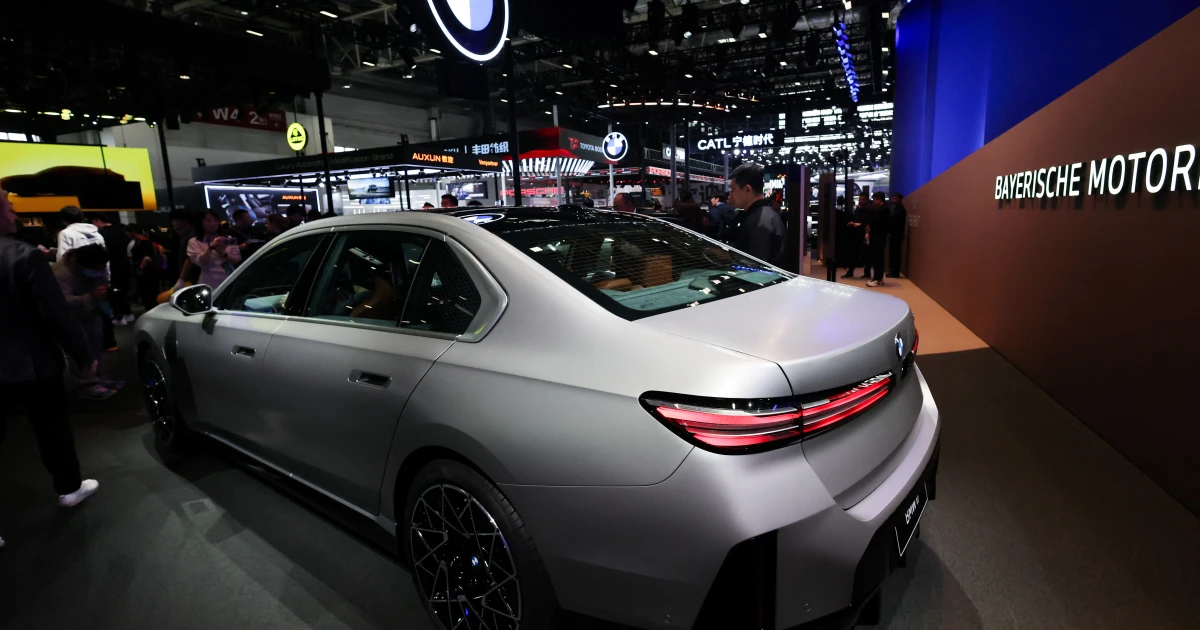
BMW’s profit warning landed as a broader alarm for Europe’s auto industry. Shares in the German premium carmaker fell about 7% to their lowest level since late 2020 after the company cut its 2026 outlook, signaling that weakness in China and turmoil linked to the Iran conflict are no longer distant risks but immediate earnings pressures.
The revised forecast was notably harsher than investors had expected. BMW now sees automotive deliveries in 2026 declining slightly from the previous year, while automotive EBIT margin is forecast at 1% to 3%, down from an earlier range of 4% to 6%. The group also said profit before tax will fall significantly versus last year, a sharper reset than its earlier view that group profit would only decline moderately.
The biggest drag remains China, where BMW said the negative trend in the automotive market accelerated further in the second quarter, especially for non-electric vehicles. That matters because China has long been the profit engine for premium German brands, but competition has become brutal and domestic sales in the country were falling for an eighth straight month in May. BMW said the weak environment, along with the effect of the Iran conflict on pricing and customer sentiment, was forcing it to expand its cost-reduction initiative.
The company also warned that intensified structural and efficiency measures would create a one-time negative impact in the second half of 2026, even as the benefits are expected to show up later. Jefferies cut its price target on BMW to €70 from €92, while other analysts said the reduction in guidance pointed to a larger strategic rethink, including possible capacity cuts in Europe. Volkswagen and Mercedes-Benz also fell, underscoring how quickly the warning spread beyond Munich.

BMW’s pressure comes even after a strong 2025, when profit before tax reached €10.2 billion on revenue of €133.5 billion, and the group employed 154,540 people at the end of the year. At its annual conference in Munich on March 12, BMW said it was pushing ahead with new models including the iX3 and i3 and expanding its battery-electric lineup by the end of 2026.

That contrast is now the central story: BMW is trying to finance a major product transition while its core earnings are being squeezed by weaker China demand and geopolitical disruption in the Middle East. The warning suggests the luxury-car model is more fragile than investors had assumed, with geopolitical risk now hitting automaker profits in real time.