Science
Bonobos Display Human-Like Pretend Play Abilities
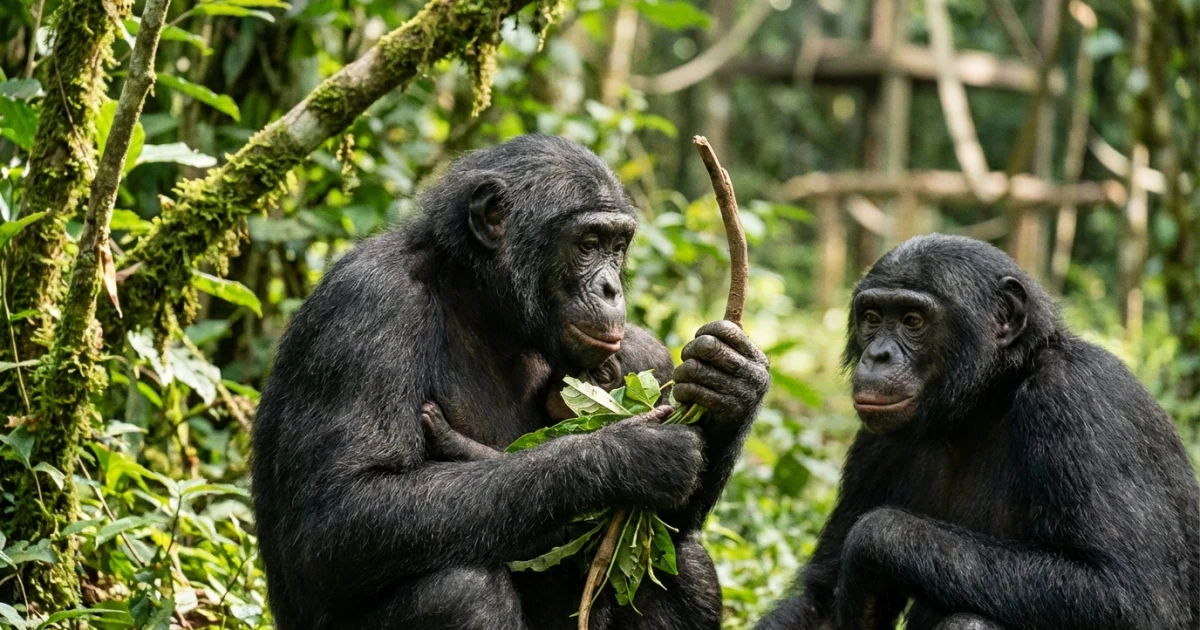
Bonobos, one of humanity’s closest primate relatives, have demonstrated a remarkable ability long thought to be unique to humans: imaginative pretend play. Recent observations and research have revealed that these great apes can engage in playful activities reminiscent of human children’s games, shedding new light on the evolution of imagination and social intelligence among primates.
Imaginative Play Observed in Bonobos
The findings, highlighted by CNN and supported by peer-reviewed research, center around a bonobo participating in a 'tea party' scenario with scientists. During these sessions, the bonobo was seen mimicking the actions of pouring and drinking from imaginary cups—classic behaviors of pretend play commonly observed in young children. This behavior marks the first documented evidence of a non-human species demonstrating imagination in the absence of direct imitation, according to the latest scientific reports.
- Bonobos used imaginary objects rather than simply copying human actions.
- Observed behaviors included ‘pouring’ invisible tea and ‘drinking’ from empty cups.
- The play was initiated spontaneously, indicating a capacity for creativity and symbolic thought.
Scientific Significance and Peer-Reviewed Evidence
According to a recent study published in a leading scientific journal, this is the first time such imaginative play has been clearly recorded in a bonobo. The methodology included structured play sessions and documented dozens of episodes, with results suggesting bonobos are capable of generating and maintaining imaginary scenarios without relying on direct cues from humans or conspecifics.
This research builds on previous findings of tool innovation and problem-solving in bonobos, broadening our understanding of their cognitive abilities. Scientists argue that this demonstration of pretend play is a key marker for imagination, a mental faculty foundational to everything from language to complex social cooperation.
Comparison with Other Primates
While chimpanzees, gorillas, and orangutans have shown advanced tool use and social behaviors, bonobos are now the only non-human species with clear evidence of spontaneous pretend play. This finding underscores the cognitive closeness between bonobos and humans, providing new context for the evolutionary roots of imagination.
- Bonobos share approximately 98.7% of their DNA with humans.
- Pretend play in bonobos was not observed in chimpanzees under similar conditions, according to comparative studies.
- Researchers speculate that the bonobos’ unique social structure, which emphasizes cooperation and empathy, may foster imaginative capacities.
Implications for Conservation and Research
Experts say these findings could have important implications for the way we understand and protect bonobos. The IUCN Red List classifies bonobos as Endangered, with populations threatened by habitat loss and hunting. Recognizing their advanced cognitive abilities may bolster efforts to conserve their habitats and promote ethical treatment in captivity.
Further studies are expected to explore the developmental pathways of imagination in bonobos, and whether similar patterns can be found in wild populations or other primate species.
Looking Ahead
The discovery of pretend play in bonobos not only narrows the cognitive gap between humans and our primate relatives but also opens up new avenues for research into the origins of imagination and social intelligence. As scientists continue to observe and document bonobo behavior, our understanding of animal minds—and our own evolutionary past—will deepen.