Science
Bonobos Show Imagination Through Pretend Play
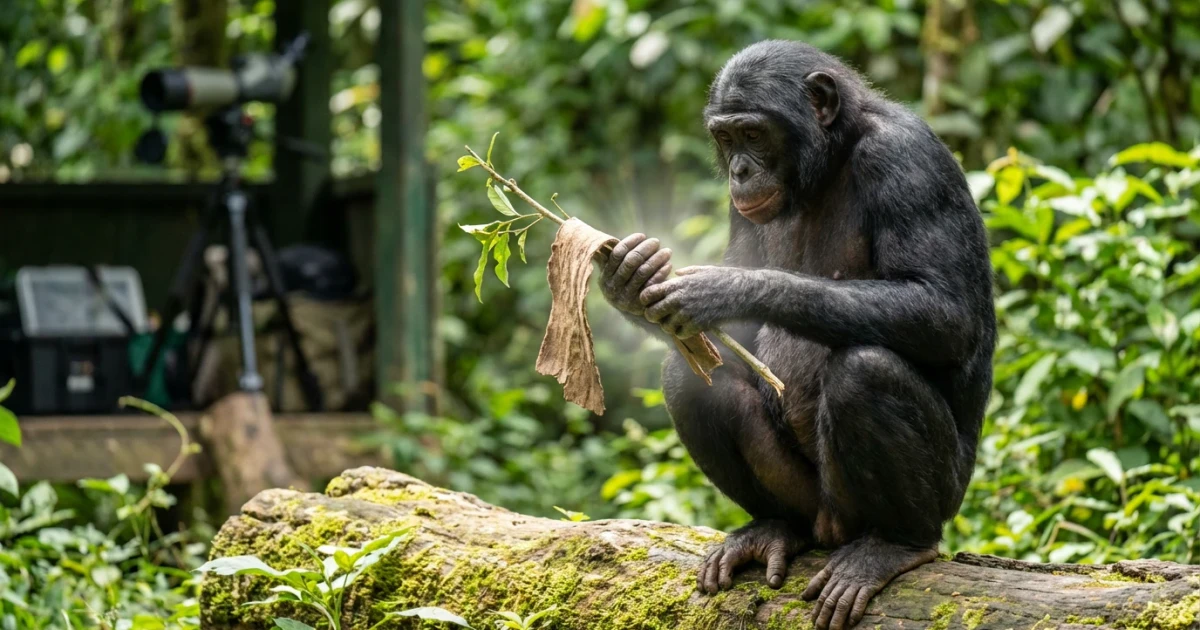
Bonobos, one of humanity’s closest living relatives, are making headlines for their remarkable capacity to engage in pretend play—a behavior long thought to be unique to human children. Recent observations by researchers at a primate sanctuary have revealed that these apes can imagine and act out scenarios, such as hosting tea parties, suggesting a previously underestimated depth to their cognitive abilities.
Bonobos Host a 'Tea Party'
The discovery, first highlighted by NPR, centers on a group of bonobos who were observed participating in a mock tea party with their caretakers and scientists. The bonobos used cups, plates, and other objects to mimic the actions and social rituals of a real tea gathering, pouring imaginary tea and offering it to one another and to their human companions. This complex, symbolic play mirrors the pretend play commonly seen in young children and is considered a strong indicator of advanced imaginative abilities.
Pretend Play in Apes: What It Means
Pretend play is not merely entertainment—it’s closely linked to cognitive development in humans. For decades, scientists believed that only humans, and perhaps a few other great apes, could engage in such imaginative acts. The new findings suggest bonobos are capable of understanding and manipulating symbolic ideas, a skill that underpins not only play, but also language and social learning.
- Researchers observed bonobos using objects to represent other items, such as pretending a block was a cup.
- Bonobos took turns in their roles, sometimes acting as the host, guest, or server, indicating an understanding of social roles and rules.
- The frequency and complexity of these play sessions were documented over several weeks, showing consistent engagement and creativity.
Comparing Bonobo and Human Play
The behaviors seen in bonobos closely parallel those observed in young children. In humans, pretend play emerges around 18 months of age and is regarded as a foundation for later social and cognitive skills. The Encyclopedia on Early Childhood Development notes that such play supports emotional regulation, cooperation, and even early language acquisition. The bonobos’ ability to engage in similar activities suggests that the roots of imagination may extend further back in the evolutionary tree than previously thought.
Expert Perspectives and Implications
While the findings are still under discussion, many primatologists see them as a turning point in our understanding of ape cognition. The observed behaviors align with ongoing research at the Max Planck Institute, where scientists have documented a range of complex social and cognitive behaviors in bonobos, including empathy and cooperative problem-solving. The new evidence for pretend play adds another layer of sophistication to the bonobo’s behavioral repertoire.
According to bonobo behavior data, play is a central part of bonobo social life, but these new observations suggest their play is not only social but also richly imaginative. This raises questions about the evolutionary origins of imagination and whether other non-human animals might share similar capacities.
Looking Ahead: Rethinking Ape Intelligence
The discovery of pretend play in bonobos challenges longstanding assumptions about the boundaries of animal intelligence. It suggests that the ability to imagine and create symbolic worlds may not be unique to humans, but part of a broader cognitive toolkit shared by our primate relatives. As research continues, scientists hope to uncover whether other great apes—and perhaps even more distant species—possess similar imaginative abilities.
For readers interested in the scientific details, the full research article and supporting data are available on PMC and the Bonobo Behavior Research site.