Health
Brain Atlas Maps Human Cortex Changes Across the Lifespan
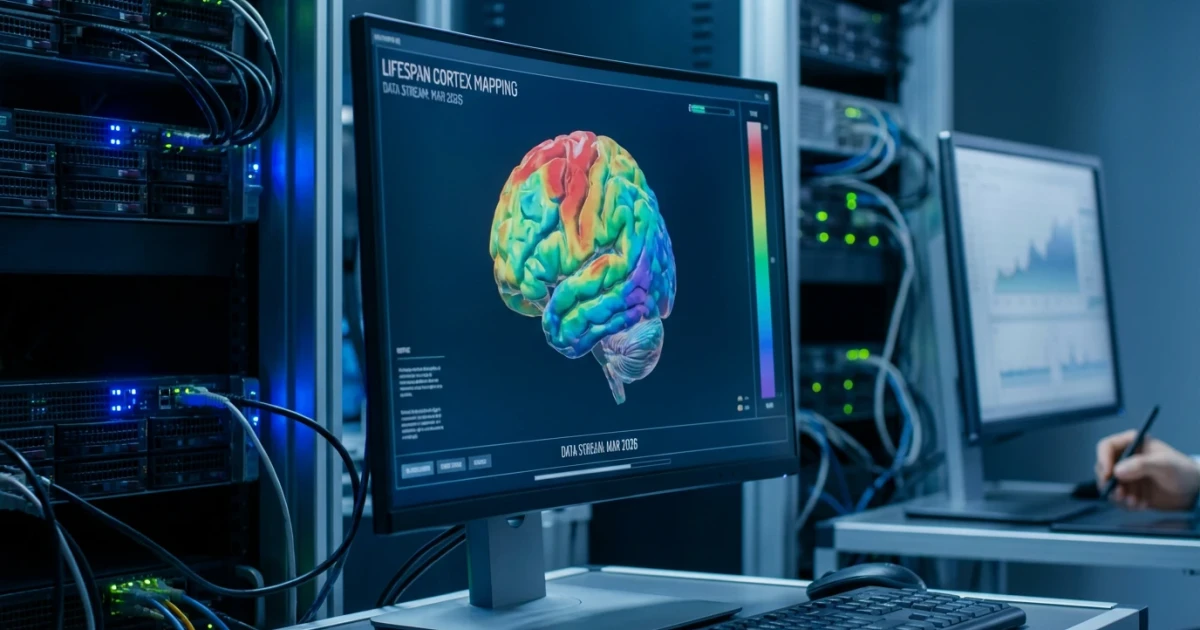
Researchers have released the first comprehensive atlas charting the functional organization of the human neocortex across the entire lifespan, providing new insights into how the brain’s structure and networks evolve from childhood to old age. The findings, published in Nature, promise to inform neuroscience, medicine, and education by illuminating the dynamic changes in the brain’s most complex region.
Mapping the Brain’s Changing Landscape
The newly published atlas offers a detailed look at the functional hierarchy of the human neocortex, based on large-scale neuroimaging data. The neocortex, responsible for higher-order functions such as reasoning, language, and sensory processing, has long been recognized as a key to human cognition. Yet, until now, scientists lacked a unified resource tracing its organization across different stages of life.
To compile the atlas, researchers integrated MRI data from thousands of participants, spanning ages from early childhood to late adulthood. Datasets were drawn from major open science initiatives, including the OpenNeuro Lifespan Brain Organization Atlas, the Human Connectome Project’s Lifespan Aging Study, and the BrainSpan Atlas of the Developing Human Brain. These resources contributed raw and processed imaging data, along with critical demographic and developmental information.
Key Findings: Growth, Reorganization, and Decline
- Early childhood is marked by rapid expansion and reorganization of neocortical regions, as reflected by gene expression and anatomical changes.
- During adolescence, the atlas reveals a refinement of functional networks associated with decision-making, social cognition, and executive function.
- In adulthood, the neocortex achieves relative stability, but subtle reorganizations continue, supporting lifelong learning and adaptation.
- Older age brings region-specific declines in network integration and connectivity, helping explain age-related changes in memory, attention, and cognition, as detailed in a recent review of brain aging.
Data from the Allen Institute Human Brain Atlas further enriched the analysis, linking anatomical maps with gene expression data across the lifespan.
Implications for Science and Society
The atlas is expected to accelerate research in multiple fields. For neuroscientists, it provides a benchmark for studying how developmental disorders or neurodegenerative diseases disrupt typical brain organization. Educators and clinicians may use the resource to better understand childhood developmental milestones and cognitive aging, tailoring interventions to specific life stages.
Moreover, the open-access datasets ensure that the research community can build upon these findings, spurring progress in brain modeling, precision medicine, and cognitive training programs.
Looking Ahead
The publication of the first lifespan atlas of the human neocortex marks a significant advance in brain science. As data collection and analytic methods continue to improve, future atlases may capture even finer details of brain microstructure, connectivity, and function, offering ever more precise tools for understanding the human mind.