Health
Brazilian sisters over 100 help scientists study longevity genes
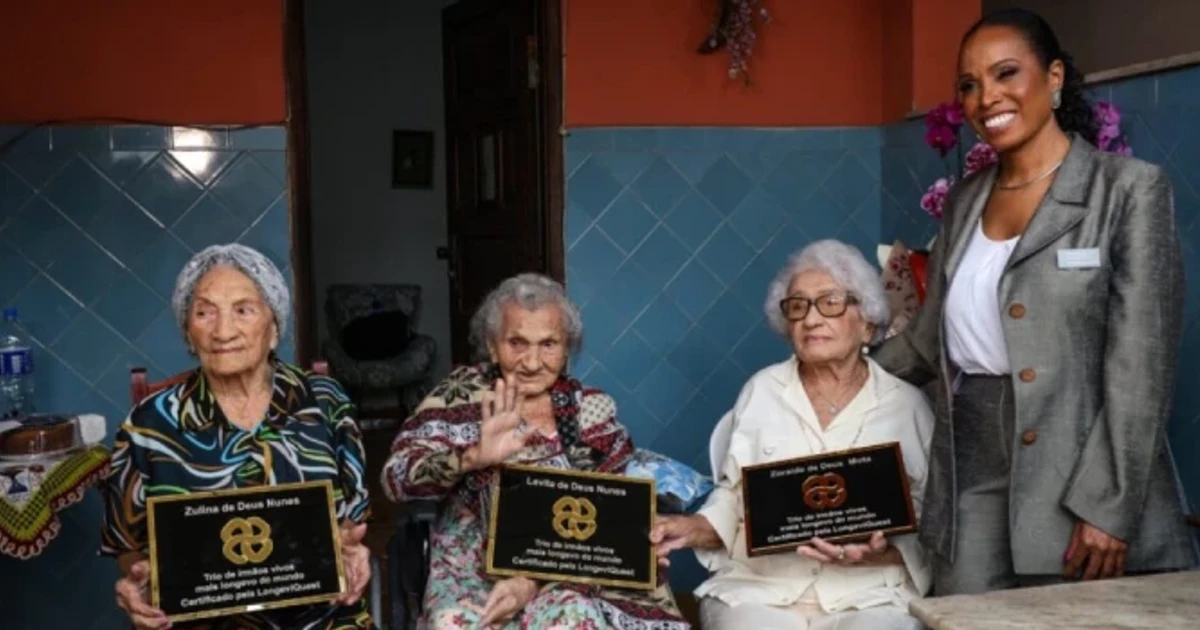
Zulina de Deus Nunes is 103, Zoraide de Deus Mota is 104 and Levita de Deus Nunes is 109. Together, the three Brazilian sisters reached 316 years and 302 days, and Guinness World Records named them the world’s oldest living trio of siblings. Longevity researchers in Rio de Janeiro are studying their case.
Their case is part of the DNA Longevo Project, led by Mayana Zatz at the University of Sao Paulo, where scientists are trying to separate inherited protection from the effects of daily life. The project has already sequenced the genomes of more than 160 centenarians, including 20 validated supercentenarians who reached 110, and it is still recruiting participants as it builds a larger picture of extreme aging across Brazil.
Zatz and her colleagues compare people who have lived into their 90s and beyond with those who developed frailty, cognitive decline or chronic disease to identify biological factors that help preserve heart, muscle and brain function and to see whether protective genes can be spotted in families that keep producing long-lived members.
Levita was born on 7 June 1917 and worked for Rede Globo Television for 12 years. Zoraide was born on 24 November 1921, became a primary school teacher and later a nurse, and raised five children. Zulina was born on 4 March 1923, married José Benvindo dos Santos on 17 July 1945, and raised six children.
They point to a healthy diet, active living, swimming and fishing in rivers during childhood, and growing up before refrigeration made fresh food a constant. Ben Meyers, chief executive of LongeviQuest, sees a family with multiple centenarians as evidence of a strong genetic component, while also pointing to the practical value of living near one another and maintaining a support network.
Brazil’s highly admixed population makes longevity-linked variants easier to detect than in more genetically homogeneous cohorts, and the wider study includes people from multiple regions with different social, cultural and environmental backgrounds. Early findings show that some of the country’s longest-lived participants did not spend their lives on especially healthy diets, exercise routines or high-end medical care.
Sources
- [1]usnews.com
- [2]ebs.publicnow.com
- [3]nature.com
- [4]eurekalert.org
- [5]sciencedaily.com
- [6]longeviquest.com