Health
Brief walking breaks boost mood and reduce fatigue at work

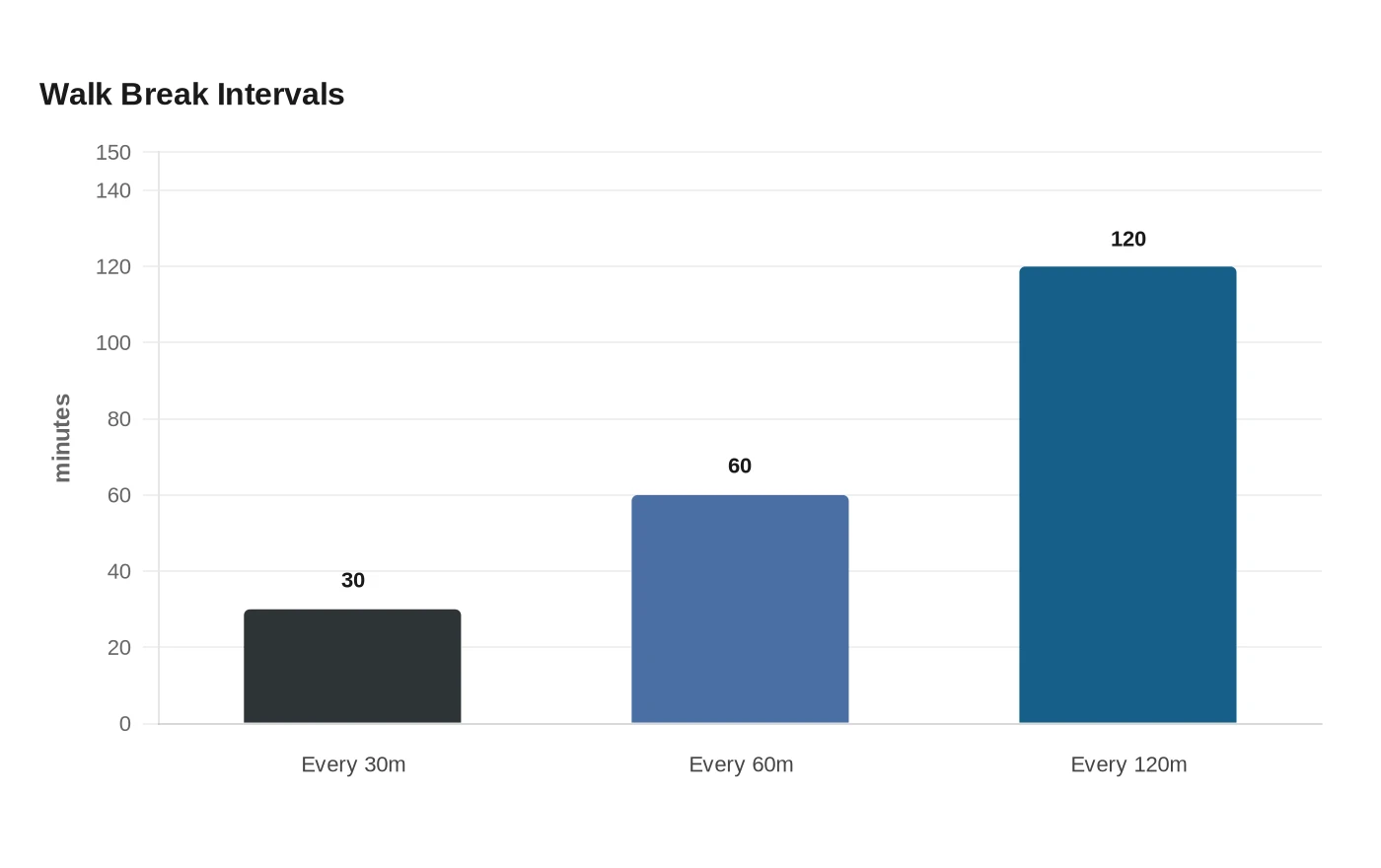
A 19,342-person workplace study found that five-minute walking breaks, taken every 30, 60 or 120 minutes, improved mood, reduced fatigue and did not hurt work performance. The simplest version of the routine, an hour-by-hour walk, offered the clearest balance between practicality and benefit.
The pragmatic intervention is part of a growing line of research treating sitting time as a workplace health problem, not just a personal habit. In the study, 59.4% of participants, 11,484 adults, started the intervention. The results suggest that a short walk between meetings, calls or stretches of keyboard work can deliver a measurable lift without asking workers to leave their desks for long or redesign the entire day.

Earlier lab work pointed in the same direction, especially for blood sugar and blood pressure. In a Columbia University study of 11 adults who sat for eight hours on five separate days, five minutes of walking every 30 minutes produced the strongest effect among the schedules tested. That pattern cut blood sugar spikes by 58% compared with sitting all day, and all of the walking routines lowered blood pressure by 4 to 5 mmHg.
Workplace guidance from other health groups has reached similar conclusions. Mayo Clinic said in 2024 that active workstations can help people move more and think better at work without affecting job performance. The Finnish Institute of Occupational Health said two minutes of easy walking every 30 minutes was enough to raise the heart rate, activate muscles and increase blood circulation without reducing efficiency. Its report also found that one third of Finnish employees sit for six to seven hours a day, a working-age person spends 30% to 50% of working time sitting, and an average workday includes 100 minutes more sitting than a day off.
Taken together, the studies point to a modest intervention with broad appeal in offices where long stretches of sitting are built into the day. The evidence does not turn a five-minute walk into a cure-all, but it does show that brief movement breaks can improve how people feel at work while nudging the body away from the risks of prolonged sitting.
Sources
- [1]bbc.co.uk
- [2]bjsm.bmj.com
- [3]cuimc.columbia.edu
- [4]newsnetwork.mayoclinic.org
- [5]ttl.fi
- [6]medicalxpress.com