Business
Britain and India to implement free trade deal on July 15
Britain will bring its long-delayed trade deal with India into force on July 15, giving exporters on both sides a short runway to prepare for lower tariffs, new customs rules and sharper competition. Valued at about £4.8 billion, the agreement is being sold in London as a post-Brexit test of whether Britain can turn a major Asian partnership into measurable growth.
The clearest gains are in goods. India will cut whisky tariffs from 150% to 40% over time, with the duty falling to 75% on day one, a change that should strengthen British spirits exports in one of the world’s biggest premium drinks markets. Britain, in turn, will lower tariffs on clothes, footwear and some food, giving Indian manufacturers and wholesalers a better route into the UK market. The deal also spans services, telecoms, construction services and food, covering more than 11,500 product lines after 14 rounds of negotiations since 2022.
For business, the implementation date matters as much as the tariff cuts. Companies will have 28 days to register to benefit from the reductions, a short timetable that puts supply chains, pricing and customs planning under pressure before the new regime takes effect. British Business and Trade Secretary Peter Kyle has urged companies to prepare for the shift, underlining that the agreement is meant to be used quickly, not simply celebrated as a diplomatic trophy.
A separate labour provision may prove just as important for some firms. The Double Contributions Convention will prevent temporary workers from paying social security twice, a change Indian officials say could save companies and workers more than 4,000 crore. That makes the pact more than a tariff story: it also eases the cost of moving staff across borders, a practical benefit for services firms, contractors and multinationals already operating in both countries.
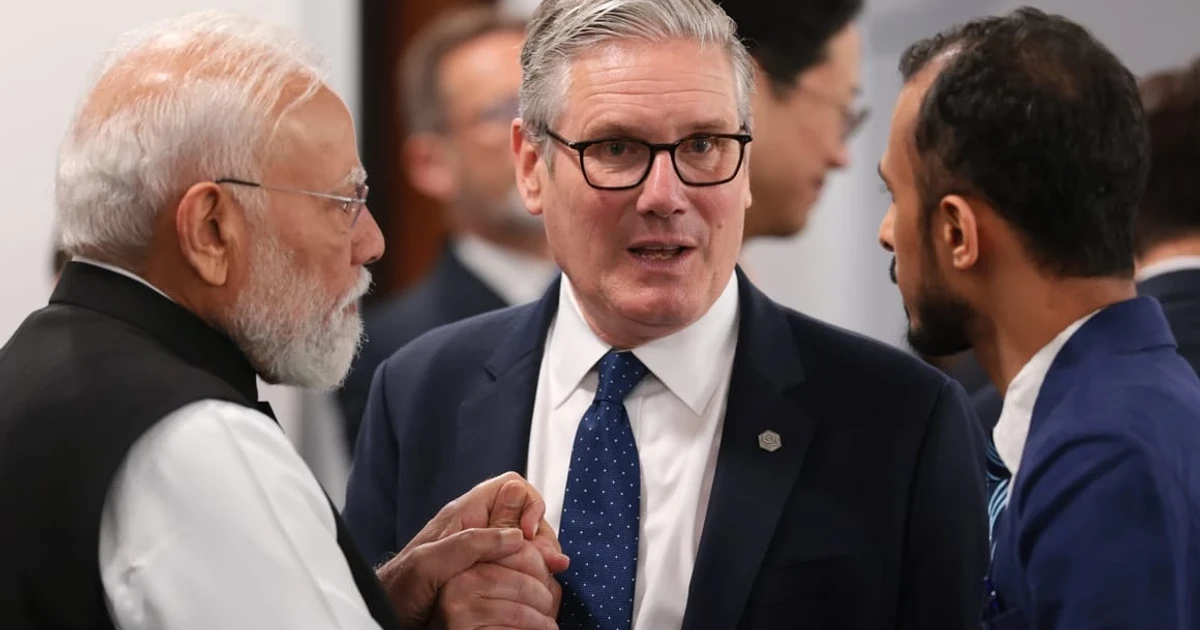
The path to July 15 was not smooth. Indian officials had raised the possibility of reopening or delaying the deal because of Britain’s planned steel tariff regime, due on July 1, which they feared could hurt Indian exports. The dispute was defused after Keir Starmer discussed the issue with Narendra Modi at the G7 summit in Évian-les-Bains, turning a bilateral irritant into a political rescue mission.

The wider stakes are large. The UK government says the pact should lift GDP by £4.8 billion a year in the long run, increase wages by £2.2 billion and raise bilateral trade by £25.5 billion annually. India says the agreement will secure duty-free access for 99% of its exports to the UK, with bilateral trade already at about $56 billion and a goal of reaching $120 billion by 2030. Modi called the pact a “historic milestone,” while Lindy Cameron said the “countdown had begun” and called it a “landmark step” in bilateral economic ties. For Britain and India alike, July 15 will be the real test of whether this deal is a growth engine or a politically useful headline.
Sources
- [1]money.usnews.com
- [2]gov.uk
- [3]pmindia.gov.in
- [4]commerce.gov.in
- [5]pib.gov.in