Technology
Browsers battle Chrome and Safari with privacy, AI, and speed
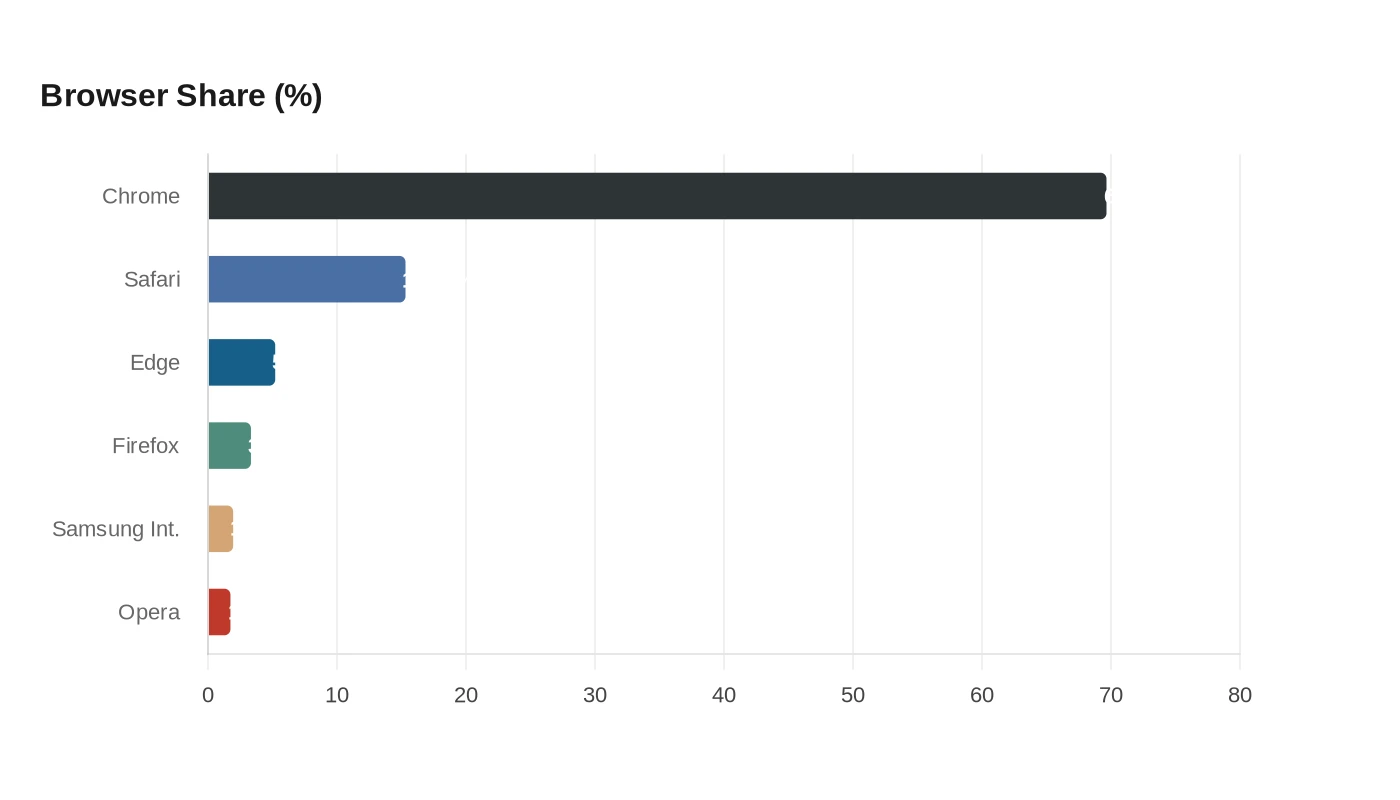
Chrome still sets the pace of the browser market, but the competitive fight has moved well beyond raw market share. In June 2026, Statcounter Global Stats estimated Chrome at 69.65% of worldwide browser share, with Safari at 15.31%, Edge at 5.21%, Firefox at 3.33%, Samsung Internet at 1.95%, and Opera at 1.74%. On desktop, Chrome was even stronger at 72.24%, while Edge reached 10.45%, Firefox 6.31%, and Safari 5.18%.
A market defined by concentration
Those numbers explain why browser makers are no longer trying to win only on search or rendering speed. When one browser controls more than two-thirds of the global market and nearly three-quarters of desktop use, the real battleground becomes what users get by default: privacy protections, AI assistants, password security, and workflow shortcuts. That shift is especially clear in the way Chrome, Safari, Firefox, and Brave now describe themselves.
The browser wars are often divided into two earlier eras: Netscape versus Internet Explorer, then Internet Explorer against Firefox and Chrome. The current phase is different because the browser is no longer just a window onto the web. It is increasingly a service layer for tasks, identity, and automation, which is why vendors are now competing on features that sit beside search rather than underneath it.
Chrome leans into AI and security
Google has pushed Chrome into its biggest feature refresh in years with Gemini-based tools. Those additions include summarization, tab comparison, and integrations with Google apps, all aimed at turning the browser into a task manager as much as a page viewer. Google has also emphasized security improvements in Chrome, including autofill for login credentials, scam blocking, and help handling compromised passwords and spammy notifications.
That combination matters because Chrome’s lead is so large that small improvements can still influence hundreds of millions of users. When a browser already has the default position in many households and workplaces, the next layer of competition is convenience: how quickly it can explain a page, compare multiple tabs, or move information into the rest of a user’s Google workflow. Google is betting that AI assistance will keep Chrome central even as users become more sensitive to privacy and speed.
Firefox answers with privacy tools

Mozilla has taken a different path, using privacy as its clearest differentiator. In March 2026, it introduced a free built-in VPN in Firefox and said the service started with 50 gigabytes of free VPN browsing each month. Mozilla later said more than 1 million users signed up to try the built-in VPN within two months, a sign that privacy features can still create visible demand when they are easy to use and packaged directly into the browser.
Firefox has also added features such as split view and native Containers, tools that help separate tasks and reduce cross-site tracking. The built-in VPN extends that same idea by making privacy less dependent on third-party add-ons or separate paid services. In a market where Chrome’s scale is hard to challenge directly, Firefox is positioning itself as a browser for users who want stronger control over what sites can see and follow.
Safari keeps privacy and speed at the center
Apple continues to market Safari as both fast and privacy-focused, and the browser’s default settings reflect that pitch. Apple says Safari blocks third-party cookies by default and includes privacy features that hide IP addresses from known trackers. That gives Safari a clean message for users already inside the Apple ecosystem: less tracking, fewer background signals, and a browser built to fit the company’s broader hardware and software stack.
Safari’s role in the market is significant even if its desktop share trails Chrome by a wide margin. At 15.31% of worldwide browser share and 5.18% on desktop in June 2026, it remains one of the few browsers with global reach large enough to matter in product design debates. For Apple, the browser is not just a standalone app; it is part of the company’s identity around privacy, battery efficiency, and smooth performance across devices.
Brave and other challengers build around blocking
Brave continues to compete on a simpler promise: fewer ads, less tracking, more privacy by default. The company says its browser includes integrated privacy protections, blocks third-party ads, and aims to reduce tracking. That makes Brave especially relevant for users who want a browser that behaves more aggressively than the mainstream defaults without requiring extensive setup.
Other browsers such as Microsoft Edge, Opera, Samsung Internet, and DuckDuckGo also remain in the mix, but the market’s structure makes their challenge harder. Edge’s 10.45% desktop share shows that a browser can still gain traction when it comes bundled with a major platform and adds its own productivity features. Yet the broader competitive pattern is clear: the browsers that survive the pressure from Chrome and Safari tend to be the ones that offer a distinct reason to switch, not just a cosmetic change.
Arc’s retreat and the rise of Dia
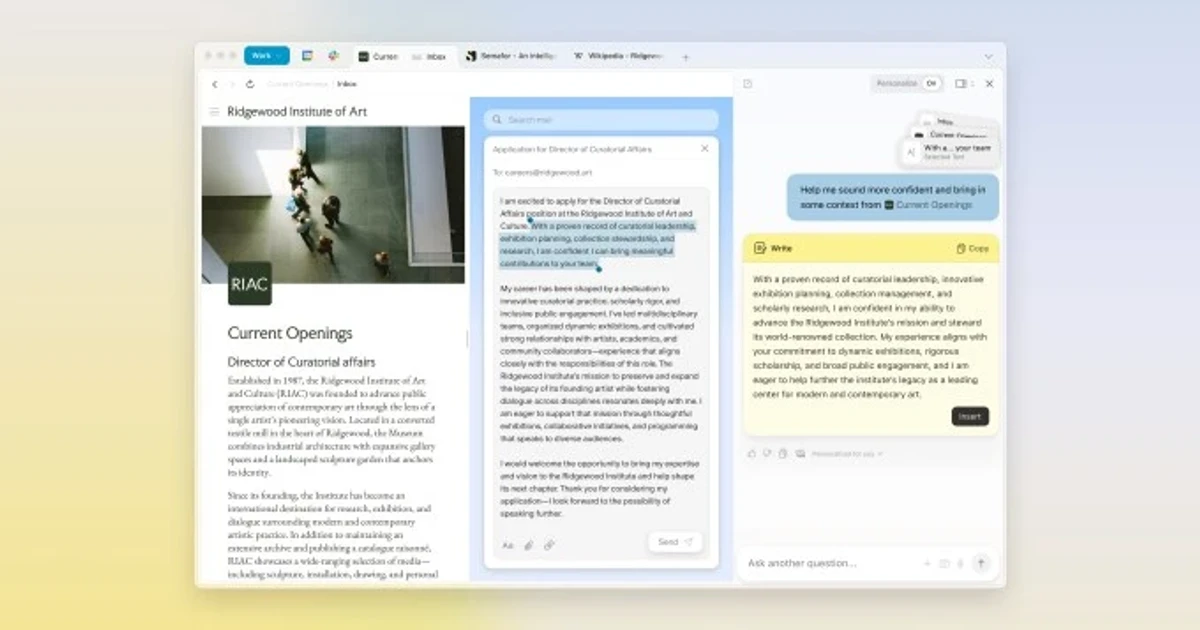
The sharpest sign that the browser market is moving toward AI-first products came from The Browser Company. The company stopped active development of Arc and shifted its focus to Dia, an AI-focused browser. That change followed Atlassian’s agreement to acquire The Browser Company on September 4, 2025, a deal that underscored how valuable browser interfaces have become as productivity and collaboration tools.
Arc’s pivot matters because it shows how quickly browser strategy can change once AI becomes central to product planning. Instead of trying to compete as a general-purpose browser with a polished interface, the company chose to pursue a model where AI is the core experience. That is the clearest evidence yet that the next wave of browser competition may be less about tabs and more about what happens inside them.
What the next browser fight looks like
The modern browser war is now being fought on three fronts: privacy, AI, and speed. Chrome is pushing Gemini-powered features and security tools, Firefox is bundling privacy controls such as a free VPN, Safari is leaning on tracking protections and performance, and Brave is doubling down on blocking and anti-tracking. The result is a market where the biggest browser still dominates, but the most meaningful competition comes from what each browser promises to do for the user before a page even finishes loading.
Sources
- [1]techcrunch.com
- [2]gs.statcounter.com
- [3]blog.google
- [4]blog.mozilla.org
- [5]apple.com
- [6]brave.com
- [7]atlassian.com
- [8]webkit.org