US News
Bryan Stevenson looks ahead at America’s unfinished justice work
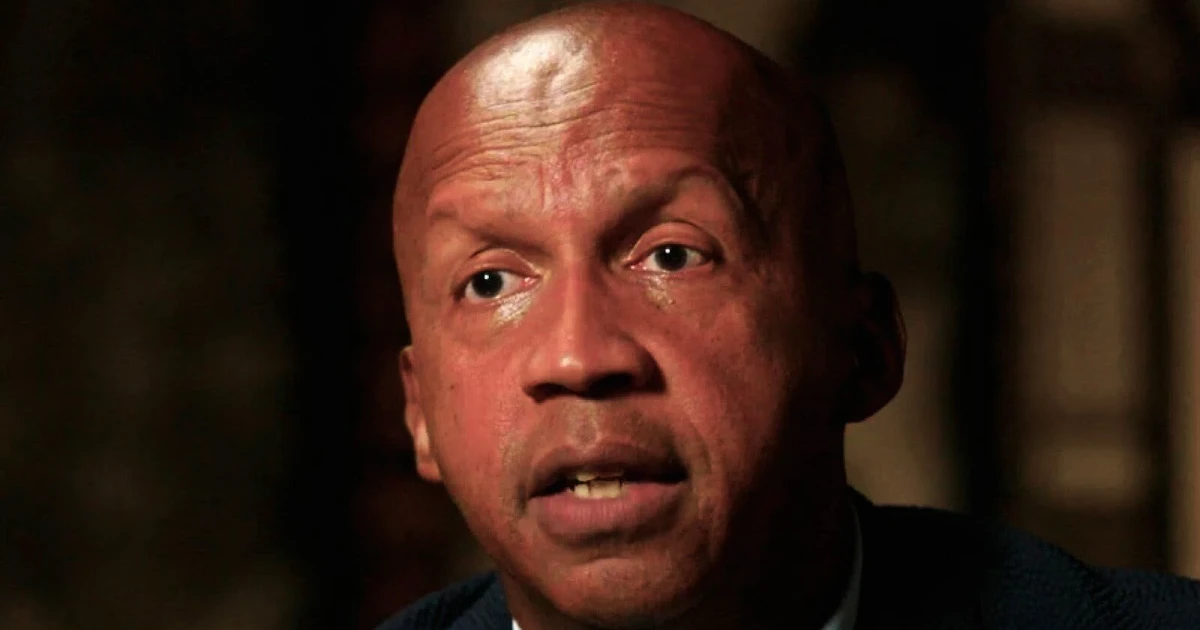
Bryan Stevenson has spent decades arguing that America’s promise is not self-executing, and the country’s 250th anniversary makes that gap impossible to ignore. Through the Equal Justice Initiative, which he founded in 1989, he has built a public case for ending mass incarceration, confronting racial and economic injustice, and protecting basic human rights for the most vulnerable people in American society.
A 250th anniversary measured by repair, not ceremony
Stevenson’s version of American patriotism is exacting because it is rooted in unfinished work. The challenge he puts before the country is not whether it can celebrate 250 years, but whether it can show visible progress on the harms it has long deferred: racial terror, segregation, excessive punishment, and the presumption that some people’s lives count less than others. That framing gives the semiquincentennial a different test: whether the nation can point to measurable change in justice, public memory, and democratic belonging.
EJI’s own mission statement draws that boundary clearly. The organization says it is committed to ending mass incarceration and excessive punishment in the United States, challenging racial and economic injustice, and protecting basic human rights. In 2026, the group still frames its work as confronting history to overcome racial inequality, which places Stevenson’s public role firmly inside a national argument about what kind of memory leads to accountability.
The moral argument behind Stevenson’s public role
Stevenson’s profile widened further when President Joe Biden presented him with the 2021 National Humanities Medal at a White House ceremony in Washington, D.C. on March 21, 2023. The National Endowment for the Humanities described the honor as recognizing Stevenson “for his moral call to redeem the soul of our Nation,” while Biden said Stevenson was making a “moral call to redeem the soul of our nation.”
That recognition matters because it places Stevenson’s work in the realm of civic repair, not only legal reform. He has made the case that telling the truth about the past is not a symbolic exercise, but part of the infrastructure needed to move the country toward a more honest democracy. His public voice now carries the weight of both a lawyer who has challenged punishment systems and a civic builder who has created places designed to hold memory in public view.
Montgomery as a geography of memory
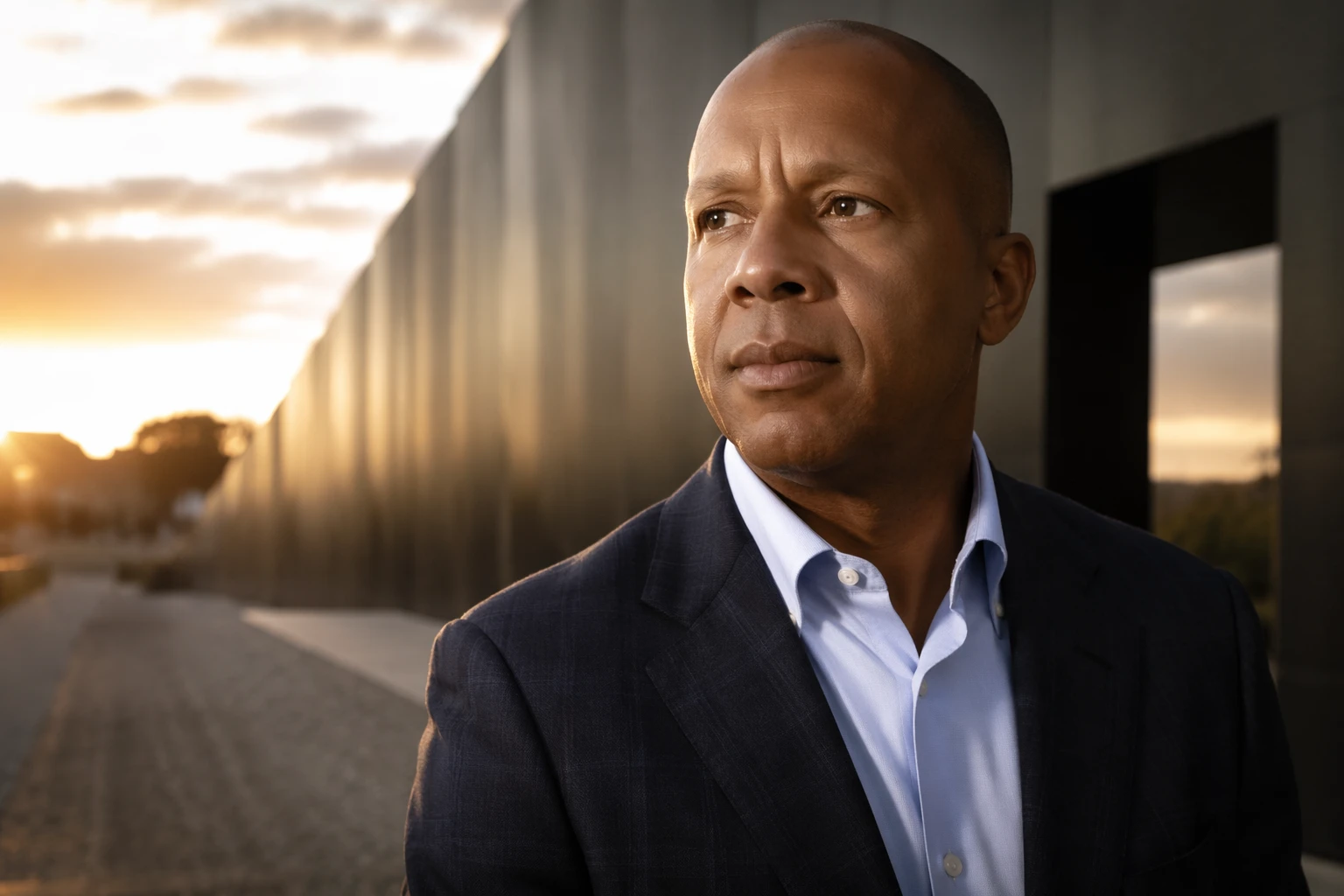
Stevenson’s most visible answer to the country’s unfinished justice work is in Montgomery, Alabama, where he led the creation of EJI’s Legacy Sites. Those sites include the Legacy Museum, the National Memorial for Peace and Justice, Freedom Monument Sculpture Park, and Montgomery Square, creating a network that ties historical narrative to physical place.
The National Memorial for Peace and Justice and the Legacy Museum opened to the public on April 26, 2018. EJI describes the memorial as the nation’s first memorial dedicated to enslaved Black people, lynching victims, people humiliated by segregation and Jim Crow, and those burdened by present-day presumptions of guilt and police violence. That is a sweeping historical frame, and it places slavery, racial terror, segregation, and modern criminal-legal disparities in the same continuum rather than treating them as separate chapters.
Freedom Monument Sculpture Park extends that geography. The 17-acre site overlooks the Alabama River, and EJI says it sits where tens of thousands of enslaved people were trafficked. The location turns the riverfront into more than scenery: it becomes a site where the public can confront how commerce, forced labor, and violence shaped the landscape of the city itself.
What public memory looks like when it is built to last
The Legacy Sites matter because they move public memory out of abstraction and into civic space. A memorial, a museum, and a sculpture park do different work, but together they create a durable record of the lives and systems Stevenson wants the country to face. They also make Montgomery a place where visitors encounter the history of slavery, lynching, Jim Crow, and mass incarceration in direct succession instead of in isolation.
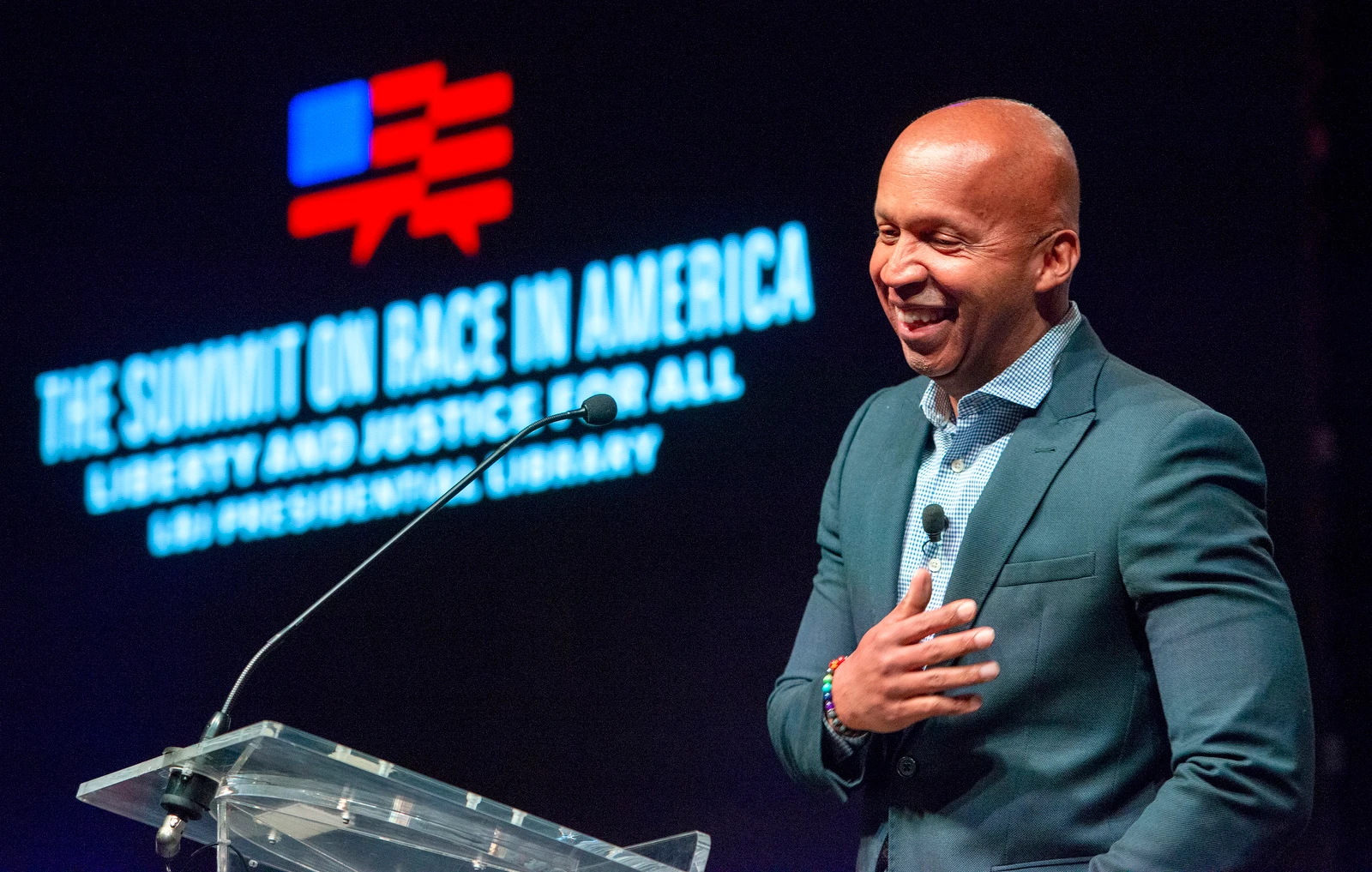
That built environment has had measurable civic impact. Reporting in 2024 said EJI memorials had drawn millions of visitors and helped drive downtown growth in Montgomery. That kind of effect turns public history into an economic and urban force as well as a moral one, showing that remembrance can alter the flow of people, investment, and attention in a city.
The scale matters because it shows that public memory is not a side project. When millions of visitors come to Montgomery for these sites, the city becomes part of a national classroom on race, punishment, and citizenship. Stevenson’s work makes the point that the public square can be redesigned to carry more truth than many school textbooks or ceremonial speeches do.
The standards America 250 should meet
If the 250th anniversary is going to prove anything, it should produce evidence that the country is narrowing the distance between its ideals and its institutions. On Stevenson’s terms, that means more than applause for the Declaration’s language. It means confronting the systems that turned that language into a promise selectively delivered, especially for Black Americans and other vulnerable communities.
The clearest standards are already embedded in EJI’s work: a smaller footprint of mass incarceration and excessive punishment, stronger protections against racial and economic injustice, and a public memory that does not sanitize slavery, lynching, segregation, or contemporary police violence. The Legacy Sites show what that standard looks like in practice, because they are built not as monuments to national innocence, but as evidence of unfinished obligation.
Stevenson’s place in the 250th anniversary is therefore less about celebration than accountability. His work in Montgomery insists that the country’s next chapter will be judged by whether it can make justice visible, memory unavoidable, and democracy broad enough to include those it has most often left outside the frame.
Sources
- [1]nytimes.com
- [2]eji.org
- [3]neh.gov
- [4]legacysites.eji.org
- [5]alabamanewscenter.com
- [6]birminghamtimes.com